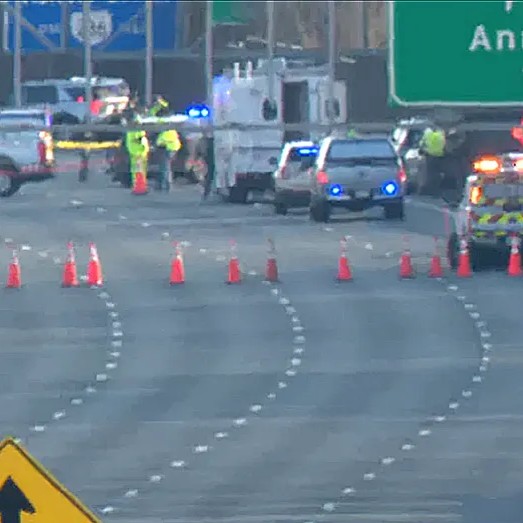


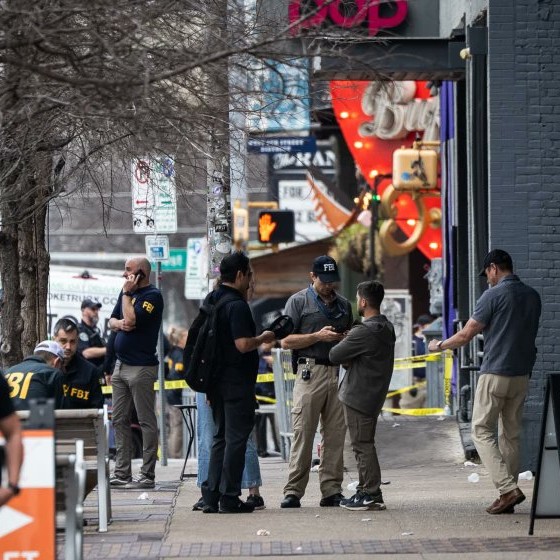
Federal investigators say a downtown Austin shooting that killed three people and wounded 14 others is “potentially an act of terrorism,” but they have not yet determined whether it meets the legal threshold for a terrorism case.
TLDR
Investigators in Austin are examining whether a mass shooting that left three dead and at least 14 injured qualifies as terrorism under federal law. The suspect, killed by police, has been identified, and federal task forces are reviewing his background, digital activity, and possible ideological influences.
According to Fox News, citing federal law enforcement officials and Austin police, the gunman was identified as 53-year-old Ndiaga Diagne, a naturalized United States citizen originally from Senegal who lived in Pflugerville, Texas. The FBI and the Austin Police Department are jointly investigating, and the FBI’s San Antonio Field Office has brought in the Joint Terrorism Task Force.
Investigators Weigh Terrorism Motive
At a news conference, Alex Dorn, acting special agent in charge of the FBI’s San Antonio Field Office, said there were indicators on Diagne and in his vehicle that suggested a potential link to terrorism. According to Fox News, Dorn told reporters the case was “potentially an act of terrorism,” while stressing that it was too early to reach a firm conclusion about motive.
Fox News reported, citing multiple unnamed federal officials, that Diagne wore clothing with religious and political imagery, including the word “Allah” and an Iranian flag motif, and that his immigration history included entry on a tourist visa, marriage to a United States citizen, and naturalization. Those details, while relevant for investigators, do not by themselves establish a terrorism offense, which in federal law typically requires evidence that violence was carried out to intimidate or coerce a civilian population or influence government policy.
How the Attack Unfolded on Sixth Street
According to Austin police statements reported by Fox News, the shooting began outside Buford’s Backyard Beer Garden on West Sixth Street, a part of the city’s entertainment district that draws large weekend crowds. Police Chief Lisa Davis said the suspect drove a large sport utility vehicle around the block several times, then activated his hazard lights, rolled down a window, and fired a pistol toward patrons outside the bar.
Chief Davis said the driver then continued west on Sixth Street, parked near Wood Street, exited with a rifle, and kept firing at pedestrians before officers, already staged nearby for crowd control, responded within roughly a minute. Officers shot and killed the suspect at an intersection, ending the attack. Authorities later established a Victim Services Unit hotline to assist families and survivors.
BREAKING: A shooting outside a bar in Austin, Texas, left three dead and 14 injured. The FBI is investigating the incident as a potential act of terrorism. The shooting occurred in the city’s Sixth Street entertainment district, a popular nightlife area. pic.twitter.com/sadVJGz4XL
— Apollo News (@ApollonewsUS) March 2, 2026
Politics, Public Safety, and What Comes Next
The shooting quickly drew political commentary. According to Fox News, Senator John Cornyn of Texas linked the incident to broader disagreements over border and immigration policy, arguing that it underscored concerns about vetting people who enter the country. Those remarks, however, go beyond what investigators have publicly established about Diagne’s path to citizenship and the specific factors that may have led to the attack.
Beyond the terrorism question, the incident has intensified scrutiny of safety on Austin’s Sixth Street corridor. Local outlet KVUE has reported that businesses along the strip have raised concerns about recurring violence and late-night disorder, and one nearby business owner described regular “chaos” outside certain bars. Federal agents, according to Fox News, have executed at least one search warrant in Pflugerville and are examining Diagne’s devices, social media accounts, and communications to map out any radicalization pathway, contacts, or missed warning signs. The FBI, Austin police, and federal prosecutors have not yet announced final charges or a formal terrorism designation, leaving key questions about motive and classification unresolved as the investigation continues.