

TLDR
Mexican authorities report killing CJNG leader El Mencho in Jalisco after years as a top US target. The cartel is accused of large-scale drug trafficking into the United States and brutal violence in Mexico, but experts disagree on how much his death will change either trend.
From Most Wanted Figure to Reported Killing
For more than a decade, Nemesio Ruben Oseguera Cervantes was described by US and Mexican officials as one of the most powerful drug traffickers in the Western Hemisphere. He led the Jalisco New Generation Cartel, or CJNG, which authorities say combined high-volume drug trafficking with paramilitary-style violence.
According to Fox News, Mexican authorities, assisted by US intelligence, located El Mencho at a home in Jalisco and killed him during an attempt to capture him. Mexican officials have not publicly released a detailed after-action report, and independent investigators have not had access to the scene, so many operational specifics remain outside public view.
The US State Department had offered a multimillion-dollar reward for information leading to El Mencho’s arrest or conviction, describing him as among the most wanted fugitives in Mexico. A State Department narcotics rewards notice stated that CJNG had “the highest cocaine, heroin, and methamphetamine trafficking capacity in Mexico,” and identified El Mencho as its top leader.
Federal prosecutors in the United States previously charged Oseguera Cervantes with conspiracy to distribute methamphetamine, cocaine, heroin, and fentanyl for unlawful importation into the country, as well as with firearms offenses related to drug trafficking. Those charges, laid out in multiple sealed and unsealed indictments, remain allegations because he was never extradited or brought to trial.
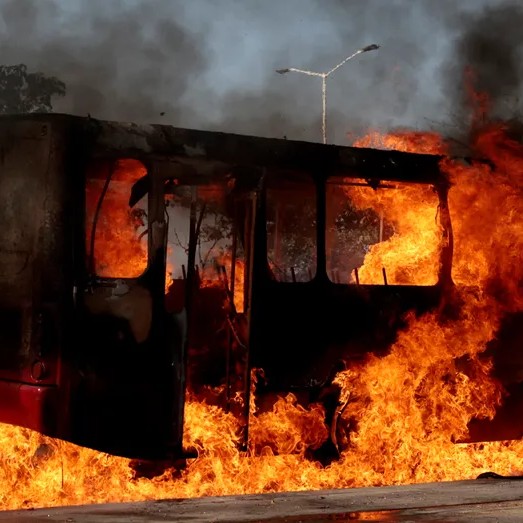
Fox News reported that, immediately after the operation that killed El Mencho, cartel members reacted by burning vehicles and erecting roadblocks around Guadalajara, the capital of Jalisco state. Flights at the city’s international airport were curtailed as authorities tried to reassert control over key routes in and out of the metropolitan area.
CJNG’s Role in the US Drug Trade
US national security and narcotics officials have long pointed to CJNG as a central player in the flow of synthetic opioids from Mexico into the United States. The State Department and the Drug Enforcement Administration have described the group as one of the primary exporters of methamphetamine and fentanyl, operating supply chains that reach far beyond the US Mexico border.
In a September 29th, 2025, press release, the DEA announced a coordinated operation targeting CJNG-linked networks that resulted in the seizure of 92.4 kilograms of fentanyl powder, 1,157,672 counterfeit pills, 6,062 kilograms of methamphetamine, 22,842 kilograms of cocaine, and 33 kilograms of heroin. The figures, while representing only one set of cases, illustrate the industrial scale of trafficking attributed to the cartel.
Robert Charles, a former assistant secretary of state in the US State Department’s Bureau of International Narcotics and Law Enforcement Affairs, told Fox News Digital that CJNG’s reach extends across the country. “This particular cartel is very violent, and they reach to every one of the 50 states in the United States,” he said, arguing that it is “not a stretch” to link the group to hundreds of thousands of American overdose deaths.
Public health data show that more than 100,000 people in the United States have been dying each year from drug overdoses in recent years, most involving synthetic opioids. However, national statistics do not specify which cartel produced or moved a given batch of drugs, making it impossible from public data alone to directly confirm any specific death toll attributable to CJNG or to El Mencho personally.
That gap between law enforcement assessments of cartel responsibility and the limits of available death attribution is one of the central accountability questions left by El Mencho’s killing. With no public trial and no judicial record connecting specific overdose deaths to particular shipments, much of the discussion remains at the level of estimates and expert opinion.
Violence on the Ground in Jalisco
The reported killing of El Mencho did not unfold quietly. Fox News and other outlets described Guadalajara’s streets lined with burned vehicles and improvised barricades as CJNG members allegedly tried to demonstrate that, even without their top leader, they could still paralyze a major city.
The US Embassy in Mexico issued an alert telling US citizens in Jalisco to shelter in place because of “ongoing security operations and related road blockages and criminal activity.” That language underscored that, for hours, state security forces and cartel gunmen were contesting control of public space in and around one of Mexico’s largest urban centers.
At least 23 convicted criminals on the loose in Mexico after thugs ram Ixtapa prison gate in Puerto Vallarta and kill one police officer during staged riot over “El Mencho” killing, leader CJNG.#geoposed 20.721058, -105.189797https://t.co/UpRb754c7Upic.twitter.com/jN0gvjGw6O pic.twitter.com/eLu0wou69r
— OSGINT (@posted_news) February 24, 2026
Such displays are not new in Mexico’s long conflict with major cartels. Academic studies and prior episodes, including high-profile attempts to arrest other cartel leaders, have documented how criminal groups sometimes respond to state action with blockades, vehicle burnings, and attacks on infrastructure, in part to increase the political cost of continued operations against them.
In the Jalisco case, full casualty figures from the clashes around El Mencho’s reported killing have not been made public. Mexican authorities have not released a comprehensive list of those killed or injured, nor a breakdown distinguishing alleged cartel members, security personnel, and bystanders, which limits outside assessment of the human cost of the operation.
A 22-Year-Old’s Death at a Cartel Roadblock
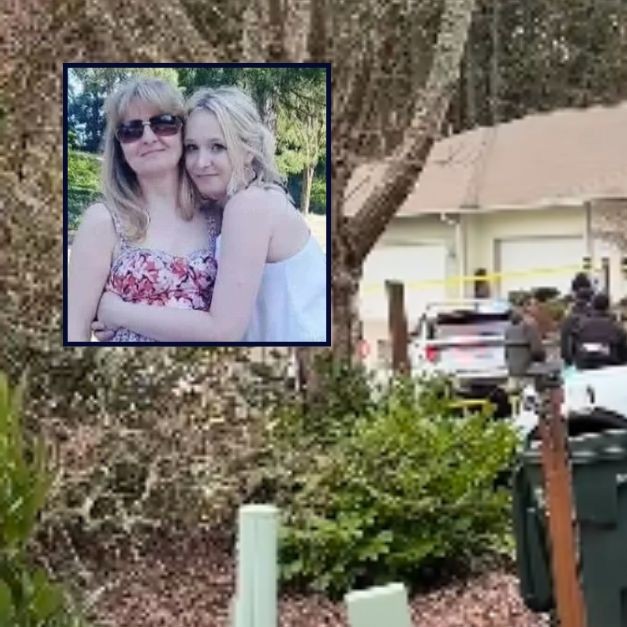
The cartel’s impact on civilians is not limited to macro-level trafficking and citywide blockades. In June 2025, 22-year-old Isabel Ashanti Gomez was shot and killed while riding with her father in a Ford F-150 near a cartel barrier in Mexico, according to reporting cited by Fox News from the New York Post.
Investigators told reporters that Gomez’s father attempted to drive through a makeshift roadblock believed to have been set up by CJNG. Gunmen, apparently believing the pickup carried a rival, opened fire on the truck. Gomez was fatally shot in the attack.
Hours before she was killed, Gomez had posted a message to her uncle on social media. “I hope you keep celebrating many more birthdays. See you later, after I’ve had a shower,” she wrote. The post, now widely quoted, is one of the few public records of her voice, and it has been held up as a reminder that cartel violence often cuts down people far from the top of the drug trade.
Officials have not released a full investigative dossier linking the shooters in Gomez’s case to a specific CJNG cell or commander in a court of law. The reported CJNG connection is based on law enforcement statements about the barrier and the circumstances of the attack, which have not yet been tested in a public trial.
What El Mencho’s Death May Change
With El Mencho reported dead, attention has turned to how CJNG might respond internally. The cartel has long been described as having a hub and spoke structure, with regional cells around Mexico and distribution networks in the United States. Analysts have warned that the removal of a figure at the top can trigger power struggles within such organizations.
In the short term, Mexican communities around CJNG strongholds may face elevated risks as potential successors try to consolidate control or as rival groups attempt to encroach on the cartel’s territory. Historically, leadership losses in large Mexican cartels have often been followed by spikes in violence, rather than immediate calm, as splinter factions compete.
On the US side, there is broad agreement among law enforcement and public health experts that the structural drivers of the synthetic opioid market extend beyond any single trafficker. Production labs, smuggling routes, distribution gangs, and demand all play roles. The DEA seizure figures from 2025 suggest that CJNG’s pipelines are large and diffuse, which may allow operations to continue even after a leader’s removal.
At the same time, the joint nature of the operation that killed El Mencho, as described by Fox News and US officials, underscores deepening cooperation between Washington and Mexico City on high-priority targets. Whether that cooperation will translate into sustained pressure on the networks that actually move fentanyl, methamphetamine, and cocaine across the border remains to be seen.
For now, several questions remain open. How will CJNG’s command structure evolve without the leader who defined its rise? Will the reported killing of El Mencho measurably reduce the flow of synthetic opioids into the United States, or will overdose numbers continue to track upward regardless of who runs which cartel? And in the absence of a public trial, how much of Nemesio Ruben Oseguera Cervantes’s alleged role in specific crimes will ever be documented in a courtroom record?
References