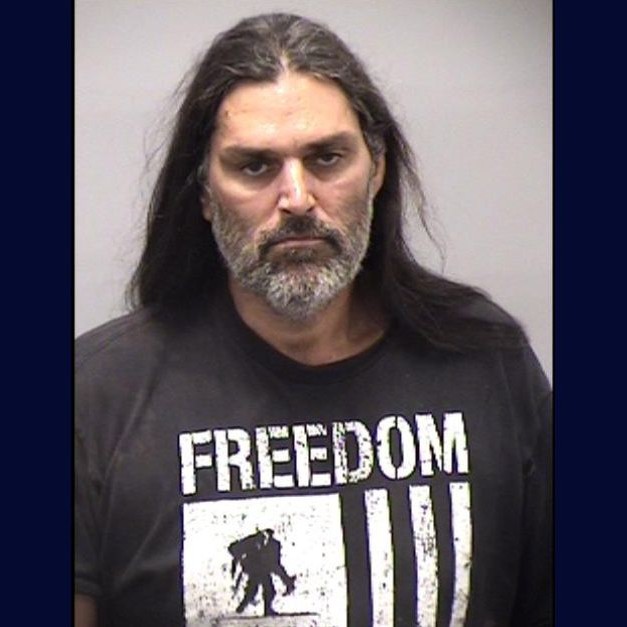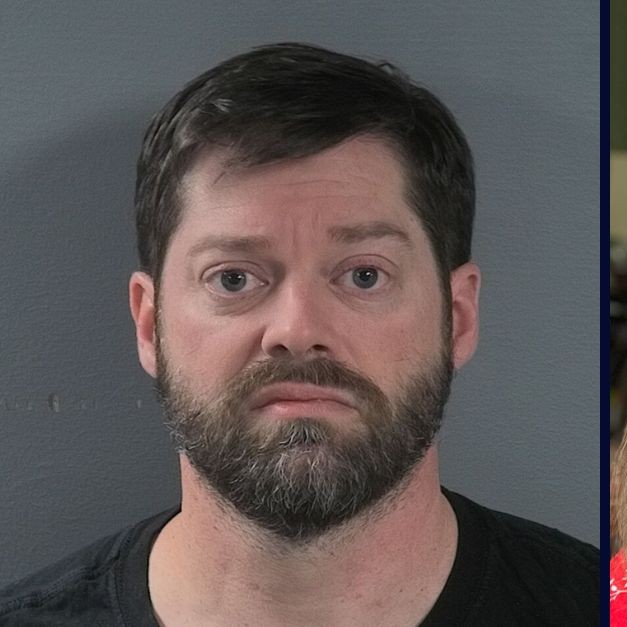



Federal border supervisor Andres Wilkinson now faces federal harboring charges after investigators say a woman who overstayed a visa lived in his Texas home, while filings describe her both as his niece and as a romantic partner, leaving key details about their relationship unresolved.

TLDR
Federal prosecutors allege CBP supervisor Andres Wilkinson housed Elva Edith Garcia-Vallejo, a noncitizen who overstayed a visa, at his Texas home, misrepresented her as his niece, and helped her avoid detection. He is charged with harboring a noncitizen and remains in federal custody.
According to Fox News, citing a federal complaint and the Department of Justice, Wilkinson appeared in a federal courtroom in May 2025 and was ordered held pending a detention hearing. He is accused of harboring a noncitizen at his residence in Texas and transporting her through U.S. Border Patrol checkpoints.
🚨 BREAKING:
DOJ Charges CBP Supervisor with Harboring an Illegal Alien – In a Romantic Relationship!A 25-year veteran Customs and Border Protection (CBP) supervisor, Andres Wilkinson (52), has been arrested and charged by the Department of Justice with harboring an illegal… pic.twitter.com/xCVDt2TXM0
— Ashley (TeamTrump47) (@TeamTrump47) February 12, 2026
Wilkinson, who joined U.S. Customs and Border Protection in 2001, was promoted in 2021 to a supervisory role charged with enforcing customs and immigration laws. Now, the same federal system he worked for is prosecuting him, alleging that he undermined the laws he was sworn to uphold.
A Supervisor Becomes a Defendant
The complaint portrays Wilkinson as a long-serving CBP official whose private life increasingly intersected with the immigration system he helped enforce. Federal prosecutors allege he entered into a romantic relationship with a woman identified in court documents as Elva Edith Garcia-Vallejo, a Mexican national who later lost lawful immigration status.
Garcia-Vallejo, according to the Fox News account of the filings, entered the United States on a non-immigrant visa in August 2023. Authorities say her authorized stay expired on February 4th, 2024. She initially lived in the border city of Laredo with her husband, who filed a petition for her to become a lawful permanent resident before withdrawing that request in April 2025.
At some point after her arrival, federal investigators say, Garcia-Vallejo began living with Wilkinson at his Texas home. Prosecutors describe a domestic arrangement that, if proven, goes beyond housing. They allege Wilkinson provided financial support, including paying for housing, providing credit cards, assisting with other financial obligations, and allowing her to use vehicles registered in his name.
According to the charges as reported by Fox News, authorities surveilled Wilkinson’s home from June through November 2025 and observed Garcia-Vallejo living there with him and her underage child. Investigators also reported seeing her use vehicles registered to Wilkinson.
Garcia-Vallejo was interviewed by authorities in February, and prosecutors allege she confirmed that she had been living with Wilkinson since August 2024. In a separate May 2025 document, federal investigators say Wilkinson himself told a regional behavioral health center that Garcia-Vallejo and her daughters had been part of his household since December 7th, 2024.
Niece, Romantic Partner, or Both?
One of the most striking aspects of the case is how official records describe the relationship between Wilkinson and Garcia-Vallejo. According to the complaint, a law enforcement database entry on May 14th, 2025, indicated that Garcia-Vallejo was Wilkinson’s niece and the daughter of a man Wilkinson listed as his brother in a 2023 background investigation.
The same complaint, as quoted by Fox News, states: “The woman admitted that she had been living with her uncle, SCBPO Wilkinson, since on or about August 2024.” SCBPO refers to Supervisory Customs and Border Protection Officer.
Federal prosecutors also say, however, that Wilkinson and Garcia-Vallejo were engaged in a romantic relationship and that he provided her significant financial and logistical support. The Fox News report notes that the complaint does not clarify whether they are related by blood, by marriage, or only by how Wilkinson described her in official paperwork.
Those overlapping descriptions create a key unresolved question: whether Wilkinson misrepresented a romantic partner as a relative in law enforcement systems, or whether the pair are relatives who also developed a romantic relationship, raising separate ethical and legal concerns. The available reporting does not indicate that prosecutors have brought a separate false statement charge, but the nature of their relationship is likely to receive close scrutiny in court.
The article itself alternately refers to the defendant as “Wilkinson” and “Wilkerson.” In reproducing the quoted language, this article follows the spelling that appears within the complaint excerpt, which identifies him as SCBPO Wilkinson.
A Compressed and Disputed Timeline
The timeline described in public reporting is dense and, in places, difficult to reconcile. Prosecutors say Garcia-Vallejo’s visa expired on February 4th, 2024. They allege she began living with Wilkinson in August 2024 and that he confirmed in writing that she and her daughters were part of his household as of December 7th, 2024.
The same account says that CBP investigators received information from a law enforcement database on May 14th, 2025, flagging Garcia-Vallejo as Wilkinson’s niece. Yet, according to Fox News, the surveillance of Wilkinson’s home is described as occurring from June through November 2025, which would place much of that surveillance after the database hit but within the same year.
Without the full complaint and supporting affidavits, it is not clear whether one of the dates has been misstated in the public narrative or whether investigators continued to build their case after the May 2025 database entry. What is clear is that prosecutors plan to use both Garcia-Vallejo’s own admissions and Wilkinson’s written statements about his household as evidence that he knowingly housed and supported a person who lacked lawful immigration status.
What Federal Harboring Law Requires
Harboring a noncitizen is a federal crime under 8 U.S. Code Section 1324, which covers bringing in, transporting, and concealing or shielding from detection individuals who are in the United States unlawfully. According to the statute, the government must generally show that a defendant knew or recklessly disregarded a person’s unlawful status and took actions intended to help that person remain in the country while avoiding detection.
Legal analysts note that harboring cases often involve landlords, employers, or smugglers, but they can also involve family members or romantic partners. The law does not require payment to establish the offense, although financial gain can increase potential penalties.
In this case, prosecutors allege that Wilkinson provided housing, transportation through U.S. Border Patrol checkpoints, and financial assistance to Garcia-Vallejo despite knowing that she had overstayed her visa. According to Fox News, they assert that he did so over an extended period as her immigration options narrowed.
Fox News reports that Wilkinson faces up to 10 years in prison and a $250,000 fine if convicted on the harboring charge. Actual sentences in federal cases depend on the number of counts, the defendant’s criminal history, the specific conduct proven at trial or admitted in a plea, and the advisory federal sentencing guidelines.
Institutional Stakes for CBP
Cases involving alleged misconduct by immigration and border officials are closely watched because of the discretion and authority those officials exercise. Supervisory CBP officers oversee front-line enforcement of customs and immigration laws at ports of entry and along the border. If the allegations against Wilkinson are proven, they would raise questions about how internal oversight and background checks functioned over the years he served in that role.
The reporting indicates that Wilkinson’s 2023 background investigation listed a man as his brother, and that Garcia-Vallejo is identified as that man’s daughter in a law enforcement database. Investigators also point to Wilkinson’s own written confirmation in May 2025 that Garcia-Vallejo and her daughters were living in his household.
These records, if introduced at trial, will likely be central to prosecutors’ efforts to show that Wilkinson was not simply providing temporary shelter but was instead supporting and shielding someone he knew did not have lawful status. Defense attorneys, in turn, can be expected to probe how those records were created and whether they accurately reflect the relationships and timelines involved.
Fox News reports that it sought comment from CBP and the Department of Homeland Security. As of the latest public reporting, neither agency had issued a detailed public statement about the case or about Wilkinson’s employment status.
What Comes Next
For now, Wilkinson remains in federal custody pending a detention hearing, where a judge will decide whether he can be released under conditions while the case proceeds. That hearing will give the first public indication of how prosecutors and defense counsel characterize the strength of the evidence and the risks of flight or danger to the community.
No plea has been publicly reported, and the complaint is only the starting point of the criminal process. The case may proceed to indictment by a grand jury, followed by arraignment, discovery, and motions challenging aspects of the government’s evidence, including surveillance and statements.
Key questions remain unanswered, including the precise nature of the relationship between Wilkinson and Garcia-Vallejo, the reasons for the discrepant descriptions in official records, and whether the timeline presented in the complaint will withstand adversarial scrutiny. How federal courts resolve those issues will shape not only Wilkinson’s fate but also the broader conversation about accountability within the agencies that enforce U.S. immigration law.