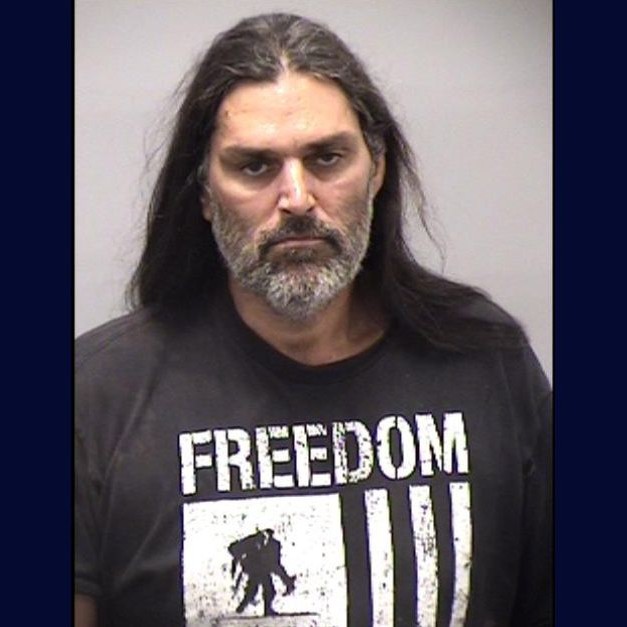


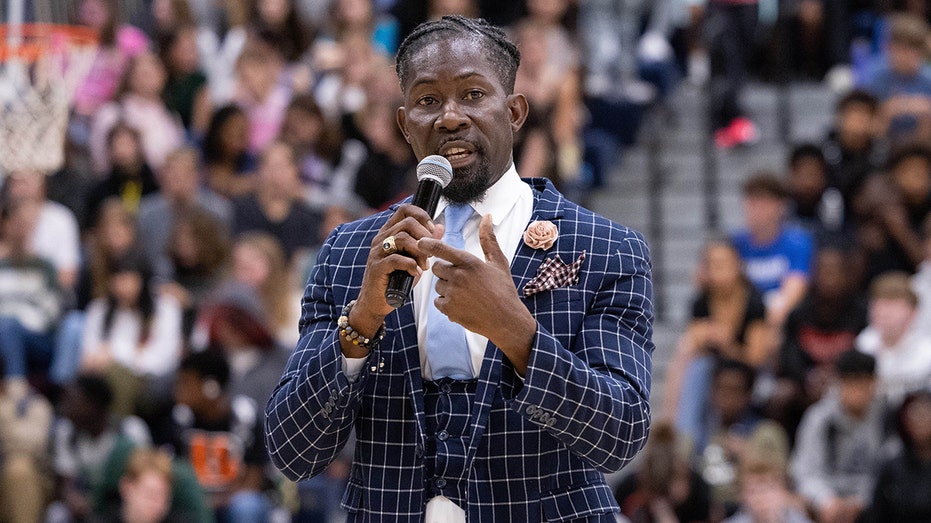
When Iowa’s largest school district hired a new superintendent in 2023, staff say his paperwork appeared routine. Federal court records now describe that same hiring form as a felony false claim of U.S. citizenship.
The former superintendent, Ian Andre Roberts, has pleaded guilty in federal court to two charges. Prosecutors say he falsely represented himself as a U.S. citizen on employment and licensing paperwork, and admitted to possessing firearms while in the country without lawful status. The case has forced school officials, state regulators, and immigration authorities to explain how a noncitizen under a removal order ended up in charge of a major public school system.
The Guilty Plea and Possible Sentence
According to reporting by Fox News, Roberts, a native of Guyana, recently entered a guilty plea to two federal counts.
Those counts are:
Count 1: Making a false claim of U.S. citizenship in connection with employment documents.
Count 2: Possession of firearms as a noncitizen who did not have lawful status in the United States.
Fox News, citing federal court filings, reports that Roberts initially pleaded not guilty and was scheduled for trial. His later decision to plead guilty exposes him to a combined statutory maximum of up to 20 years in federal prison on the two charges, although any eventual sentence will depend on federal sentencing guidelines and a judge’s decision.
The plea agreement described in that reporting states that Roberts also acknowledges the immigration consequences of his conviction. He was advised that he could be removed from the United States after serving any custodial sentence, and prosecutors agreed not to seek additional charges beyond the two counts to which he pleaded.
What Investigators Say About the Firearms
At the time of his arrest, federal immigration officers detained Roberts and searched his vehicle and residence. The plea agreement, as described in related Fox News coverage, states that Roberts admitted to possessing four firearms.
According to those court records:
Item 1: A loaded Glock handgun was found in his vehicle.
Item 2: A rifle, a shotgun, and a second pistol were recovered from his home.
Federal authorities say all of the firearms had moved in interstate commerce, which gave federal prosecutors jurisdiction. As part of his plea agreement, Roberts agreed to permanently forfeit the guns and formally waived any right to contest that forfeiture in the future.
The Department of Homeland Security has publicly described Roberts as having a prior criminal record involving weapons and narcotics offenses. Fox News reports that DHS officials characterized that record as “extensive,” although specific convictions and case details have not been made public in the same level of detail as the current federal indictment.
DHS Assistant Secretary Tricia McLaughlin was quoted at the time of his arrest as saying, “Ian Andre Roberts, a criminal illegal alien with multiple weapons charges and a drug trafficking charge, should have never been able to work around children. When ICE officers arrested this superintendent, he was in possession of an illegal handgun, a hunting knife, and nearly $3,000 in cash.” That statement appeared in Fox News’ earlier reporting on the case.
The Alleged False Citizenship Claims
The federal case centers not only on the firearms, but also on how Roberts obtained and kept his leadership role in Des Moines Public Schools.
A federal grand jury returned a two-count indictment against Roberts in October, according to Fox News. In that indictment and subsequent plea, Roberts admitted that he knowingly and intentionally made a “false attestation” on a federal employment eligibility form known as an I-9. That form is required of all new hires, who must attest to either U.S. citizenship, lawful permanent residence, or other authorized immigration status.
Court records cited by Fox News say Roberts checked the box claiming he was a U.S. citizen when he was hired as superintendent in Des Moines. District officials told The Associated Press, as relayed in the same coverage, that he supplied a Social Security card and a driver’s license to satisfy the identity and work authorization documentation requirements.
Fox News also reports that Roberts is accused of making a similar assertion of U.S. citizenship in an application submitted to the Iowa Board of Educational Examiners. That board oversees teaching and administrative licenses in the state. According to those reports, the board issued him a professional administrator license in 2023, and the citizenship claim was part of the paperwork the board relied on.
Immigration Status and a Prior Removal Order
One of the most significant unresolved questions is how Roberts was able to remain in the United States and advance into senior educational roles while, according to federal authorities, facing a removal order.
Fox News, citing immigration authorities, reports that:
Item 1: Roberts received a notice to appear before an immigration judge in October 2020, before his work authorization expired.
Item 2: He became subject to a final order of removal in 2024.
Those steps typically indicate that an immigration court has ordered a person removed from the United States after proceedings. Whether and how Roberts was able to continue working, and whether any enforcement actions were attempted between 2020 and his eventual arrest, are not fully detailed in publicly available accounts.
Roberts’ legal team has suggested that he did not believe he was under an active removal order. One of his attorneys, Alfredo Parrish, previously told reporters that Roberts believed, based on advice from prior counsel, that his immigration case had been “resolved successfully.” That statement was reported by Fox News and attributed to Parrish.
District officials, according to The Associated Press as cited in Fox’s reporting, have said they were not aware of any immigration-related red flags involving Roberts during the hiring process. There is no public indication, at least in current reporting, that federal immigration authorities directly notified the Des Moines district or the state licensure board about Roberts’ status before his arrest.
Screening, Oversight, and Institutional Gaps
The case has sharpened scrutiny on how school districts and state agencies verify the background and legal status of senior leaders.
For employment, federal law requires that every new hire complete an I-9 form and present documents that reasonably appear to be genuine. Employers are not generally required to act as expert document examiners, and they are limited in how they may question applicants about citizenship in order to avoid discrimination claims. According to statements provided to The Associated Press, the Des Moines district has said Roberts’ documents appeared valid and that no one involved in hiring him recalls any concerns noted at the time.
Licensing boards such as the Iowa Board of Educational Examiners rely on a combination of self-reported information, criminal background checks, and verification of prior credentials. Fox News reports that Roberts’ license was issued after he attested to U.S. citizenship. It remains unclear from public reporting whether any additional checks were conducted that might have flagged his immigration status or the removal order described by federal authorities.
DHS officials have used Roberts’ case to argue for closer coordination between immigration enforcement and institutions that employ or license people who work with children. Critics of expanded information sharing, however, often warn that tying school employment more closely to immigration enforcement can discourage noncitizen families from engaging with public education systems at all. Those broader policy debates sit in the background of this case, but the specific mechanisms that failed, if any, have not yet been laid out in formal investigative findings.
What Remains Unanswered
As of the latest reporting, Roberts has not yet been sentenced. A federal judge will review the plea agreement, pre-sentence investigation, and any submissions from both prosecution and defense before determining how much prison time, if any, he will serve. The court will also have to consider how his conviction interacts with his existing removal order.
Open questions remain. How did immigration and criminal history information described by DHS not intersect with the district’s or the state board’s screening? Were any database checks attempted that simply did not return matching records? Or did agencies operate in separate systems that did not communicate at all?
Until sentencing memoranda and any further public filings are released, much of that institutional story is still incomplete. What is clear, from the plea entered in federal court and the statements of both prosecutors and defense counsel, is that the person who led Des Moines Public Schools has now admitted to falsely claiming U.S. citizenship and to possessing firearms while lacking legal status in the country. How the systems around him allowed that to happen, and for how long, is a matter still waiting for fuller explanation in public records rather than in press releases.