Three visitors stood outside a short-term rental waiting for a replacement car when, their families say, a neighbor who had once been found legally insane watched from a distance, then walked over and opened fire.
What happened next is the subject of formal charges and a widening argument in Florida over when people with violent histories should be confined, treated, or allowed back into the community.
What We Know About the Killings
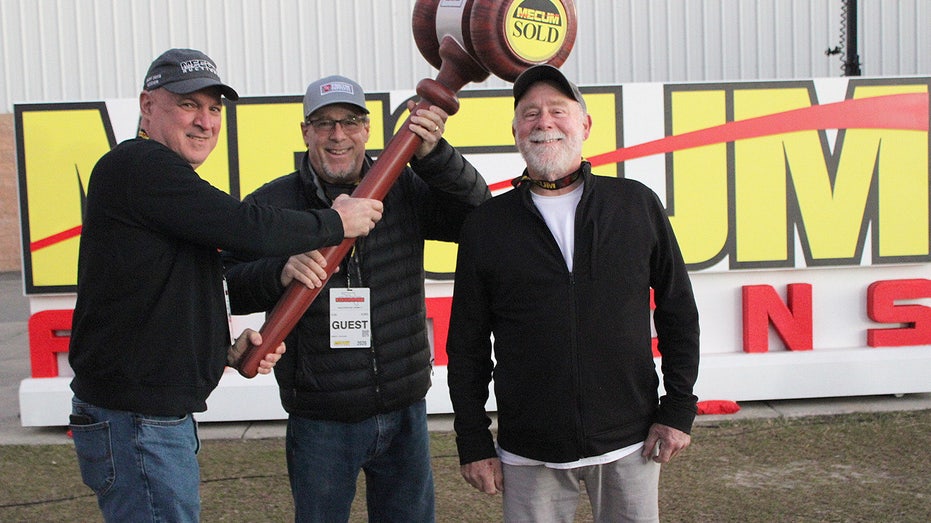
According to a joint statement from the victims’ relatives, shared with Fox News Digital, three men had traveled to Central Florida to attend the Mecum Car Show and were staying at an Airbnb in the Indian Point subdivision, not far from Walt Disney World.
The men were identified by the Osceola County Sheriff’s Office as:
Robert Luis Kraft, 70, of Holland, Michigan.
Douglas Joseph Kraft, 68, of Columbus, Ohio.
James John Puchan, 69, also of Columbus, Ohio.
The families said the group had been preparing to return home but had to extend their stay because of rental car problems. They stated that the fatal shooting occurred while the men were outside the property waiting for a replacement vehicle.
In their written statement, the families said that the suspect watched the men from a distance before approaching them. They wrote, “There were no known interactions between the men and this individual prior to the event; they were then approached and senselessly murdered. This was a random, tragic act.” Those claims have not yet been independently detailed in public law enforcement summaries.
Osceola County deputies responded to multiple 911 calls reporting gunfire around 12:14 p.m. on a Saturday, according to the Fox News Digital report that cites the sheriff’s office. When deputies arrived, they found all three men dead in front of the residence with apparent gunshot wounds.
Authorities at the scene reported seeing a man flee into a neighboring residence shortly after the shooting. Deputies later detained that individual and recovered two firearms, according to the sheriff’s office account quoted by Fox News Digital. Investigators have said they are still working to determine whether those weapons were used in the killings.
The Neighbor Now Accused
Deputies identified the suspect as 29-year-old Ahmad Jihad Bojeh, who lived next door to the rental home, according to the sheriff’s office and court information cited by Fox News Digital. Prosecutors have charged him with three counts of first-degree murder in connection with the deaths of Robert and Douglas Kraft and James Puchan.
At his first court appearance, Bojeh was denied bond. He is presumed innocent unless and until he is proven guilty in court. As of the latest reporting in the Fox News Digital story, the criminal case was in its early stages, and key evidence, including ballistic testing on the recovered firearms, remained under active investigation.
Public records reviewed by Fox News Digital show that Bojeh had a documented history of encounters with law enforcement before the shootings. Those records, as summarized in the outlet’s reporting, include a 2021 case in which he was charged with attempted first-degree murder with a firearm and aggravated battery after allegedly firing at a person and at random vehicles in a gas station parking lot in Kissimmee.
Court documents from that 2021 case, as described by Fox News Digital, indicate that Bojeh was found not guilty by reason of insanity. Additional records cited in the same reporting show prior arrests for felony drug possession and for misdemeanor resisting an officer without violence.
Those details, taken together, depict a defendant with years of documented contact with the criminal justice system. What is not yet clear from the available public reporting is exactly how his 2021 insanity verdict translated into treatment, supervision, and eventual release into the community before the 2024 tourist killings he now stands accused of committing.
How Florida’s Insanity Defense Works
Florida’s approach to the insanity defense is codified in state law and is grounded in the long-standing M’Naghten standard. Under section 775.027 of the Florida Statutes, a defendant is legally insane if, at the time of the crime, they had a mental infirmity, disease, or defect and, because of that condition, either did not know what they were doing or did not know it was wrong. The statute is publicly available through the Florida Senate’s website at flsenate.gov.
In Florida, a verdict of not guilty by reason of insanity does not mean a person simply walks free. Typically, the court orders a mental health evaluation and, if the individual is considered dangerous due to mental illness, they are committed to a secure treatment facility operated under the state’s Department of Children and Families. Release from such facilities usually requires further court review and professional assessments to determine that the person no longer poses a significant risk.
The Fox News Digital report does not include the specific court orders that followed Bojeh’s 2021 insanity verdict. It also does not detail the duration of any inpatient commitment, the nature of any outpatient supervision or mandatory treatment, or which professionals or agencies recommended any eventual change in his legal status.
Without those documents, it is not yet possible from public reporting alone to reconstruct the full chain of decisions, evaluations, and legal steps that preceded his presence in the Indian Point subdivision as a free neighbor in 2024. That gap in the record is now central to how families and officials are interpreting the case.
Attorney General Targets Legal ‘Loopholes’
Florida Attorney General James Uthmeier has used the case to call for changes to state law. Speaking to Fox News Digital about the killing of the three tourists, Uthmeier criticized what he described as weaknesses in how insanity defenses operate nationwide.
“Across the country, we see violent criminals getting to walk free, back into society, because of insanity defenses,” Uthmeier told the outlet. He argued that individuals who commit serious violence should remain confined either in prison or in secure mental health institutions.
According to the Fox News Digital report, Uthmeier is urging the Florida Legislature to narrow the insanity defense, although specific statutory language has not yet been made public in that coverage. It is also not clear from the available reporting which specific decision points in Bojeh’s earlier case Uthmeier believes were handled incorrectly or which offices, judges, or clinicians he believes should be held responsible.
Uthmeier also framed the issue in partisan terms, stating, “We won’t tolerate leftist prosecutors releasing murderers and violent criminals to hurt our families.” The article does not identify any particular prosecutor or office that advocated for Bojeh’s release, nor does it quote court filings that would outline the positions taken by prosecutors or defense counsel after the 2021 insanity verdict.
For readers trying to understand how a person with a prior attempted murder case and an insanity verdict came to live next door to tourists from Michigan and Ohio, this lack of documented detail leaves a crucial gap between political claims and the actual paper trail of hearings, evaluations, and orders.
Families Search for Accountability
The joint family statement, as quoted by Fox News Digital, portrays the three visitors as car enthusiasts who extended their trip only because of a rental car issue. Their relatives emphasize that there was, in their words, “no known interaction” between the men and the neighbor now accused of killing them before he allegedly approached and opened fire.
The Osceola County Sheriff, Christopher Blackmon, has sought to reassure local residents and visitors. “There is no threat to the community, as a suspect of these horrific and senseless murders has been caught and arrested by Osceola County deputies,” he said, according to the Fox News Digital report.
That assertion addresses the immediate risk of further violence in the neighborhood. It does not, on its own, answer the broader question of how risk was assessed and managed in the years between a prior violent incident at a Kissimmee gas station and the day three out-of-state visitors were shot on a quiet street.
Key documents that could illuminate that path include the 2021 insanity verdict order, any subsequent commitment orders, periodic mental health evaluations, recommendations for continued confinement or release, and final discharge or modification orders. None of those have yet been published in detail in open reporting, including the Fox News Digital account that first brought together many of the publicly known facts.
Until those records are examined and compared with what Florida law required at each step, debates over whether the state’s insanity statutes are too broad, too narrow, or inconsistently applied will largely hinge on partial information and political rhetoric.
For now, three families are left planning funerals for men who came to Central Florida for a car auction, while a 29-year-old neighbor faces three murder charges in an Osceola County courtroom. Between those two facts lies a trail of prior arrests, a documented insanity verdict, and a series of institutional decisions that remain only partly visible to the public.
Whether a closer look at that trail will confirm claims of legal loopholes, expose misapplied safeguards, or reveal something more complicated will depend on records that, so far, have not been fully brought into view.