

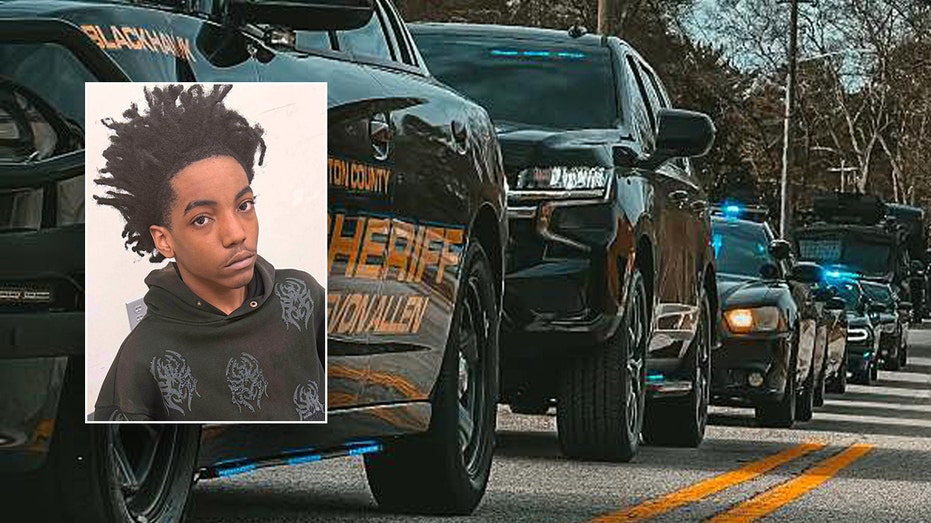
In Clayton County, Georgia, officers moved across several homes linked to a 16-year-old they believed had opened fire. The search ended not with a SWAT entry, but with a father walking his son into police custody.
What Police Say Happened in Lovejoy
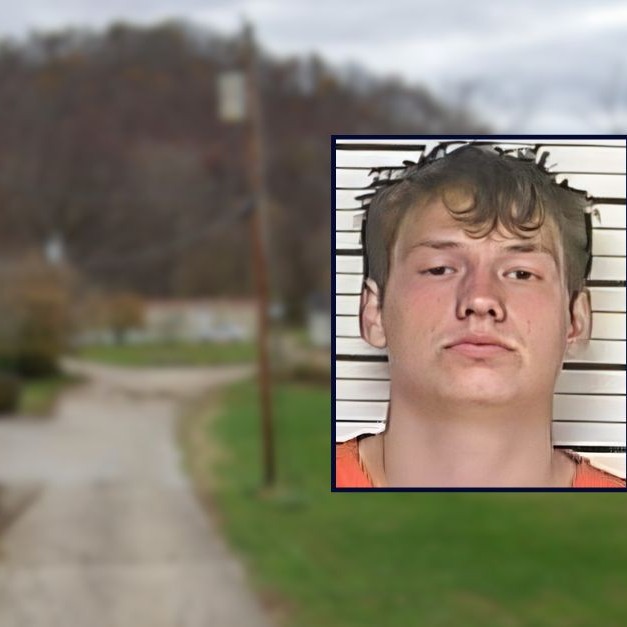
According to law enforcement statements reported by Fox News, 16-year-old Lequan Stephens was arrested in January 2026 in connection with two separate shootings in the south Atlanta suburbs. The first incident occurred in the city of Lovejoy, in Clayton County.
The Lovejoy Police Department told reporters that officers responded to reports of a shooting in the area of Lovejoy Crossing Lane on January 17. When they arrived, they found a juvenile in the front passenger seat of a vehicle with gunshot wounds to the face and neck. The victim’s name and current medical condition have not been publicly released.
Investigators said that a suspect fired into the vehicle, striking the passenger, then fled the scene. Based on that investigation, authorities later identified Stephens as the alleged shooter and obtained warrants for his arrest, according to the Fox News report that cites local police and sheriff’s officials.
At this stage, those statements are allegations by law enforcement. Court records and charging documents, which would detail the specific evidence behind the identification of Stephens as a suspect, have not been publicly summarized in available reporting.
The Second Case and State Investigators
The case did not remain a purely local matter. The Georgia Bureau of Investigation, the state agency that often assists with serious violent crimes, also obtained warrants for Stephens in connection with a separate shooting, according to the same Fox News report, which attributes that information to law enforcement officials.
Public reporting so far has not described when or where that second shooting occurred, who was involved, or whether anyone was injured or killed. The description is limited to the fact that state investigators sought warrants that also named Stephens.
Without access to the underlying GBI affidavits or case files, it is not clear whether the second shooting is alleged to involve the same firearm, the same group of people, or an unrelated incident. Officials have also not publicly outlined how they linked Stephens to that second case, beyond the existence of the warrants themselves.
A Coordinated Manhunt and a Family Decision
Once the warrants were issued, the Clayton County Sheriff’s Office described a multi-agency effort to find the teenager. According to the department’s statement, quoted by Fox News, deputies carried out a coordinated operation targeting several residences tied to Stephens’ relatives and acquaintances.
In that statement, the sheriff’s office said, “Law enforcement made it clear that Stephens had no place to hide and would receive no assistance.” The operation involved multiple agencies, although the specific units, the number of officers deployed, and the exact locations searched have not been publicly detailed.
Authorities said Stephens remained out of custody for more than 48 hours after the first shooting. During that period, he was considered a wanted suspect in at least one serious violent felony investigation. Officials have not said whether they believed he was armed while they searched for him, or whether they considered him a danger to the public at large.
The tipping point, according to law enforcement accounts, came when a family member intervened. After more than two days on the run, Stephens’ father brought him to police and turned him in. Fox News reports that the teen was then arrested on aggravated assault charges linked to the Lovejoy shooting, based on statements from the Clayton County Sheriff’s Office.
Georgia teen arrested after father turns him in following pair of shootings, police say https://t.co/bv0IIigLQ9 pic.twitter.com/jLmooAndG7
— New York Post (@nypost) January 21, 2026
Authorities have not released any public description of conversations with the father, what prompted his decision, or whether investigators had been in contact with the family before the surrender. There is also no public information yet on whether the father faces any legal exposure or whether officials view him solely as someone who cooperated.
The Charges and What They Mean
Stephens faces charges of aggravated assault, according to the Clayton County Sheriff’s Office, as reported by Fox News. In Georgia, aggravated assault is defined in state law and can apply when a person allegedly assaults another with a deadly weapon or with intent to murder, rape, or rob, among other scenarios. The statute, O.C.G.A. 16-5-21, is publicly available through legal reference websites such as Justia’s compilation of the Georgia Code.
The available reporting does not specify which subsection of the aggravated assault statute is being used in the charges against Stephens. Given the allegation that a firearm was used to shoot into a vehicle, prosecutors could potentially argue that the case falls under assault with a deadly weapon. However, that is an inference based on the description of events, and the precise legal theory will only be clear once formal charging documents are publicly accessible.
As of the latest reporting, Stephens has been described as a suspect and a defendant, not as someone who has been convicted of any offense related to these incidents. In the United States criminal system, he is presumed innocent unless and until prosecutors prove the charges beyond a reasonable doubt in court or he enters a guilty plea.
A Juvenile in a Serious Felony Case
Stephens is 16 years old. That age places him in a complex section of Georgia law, where young people can be treated in different ways depending on the offense. Under Georgia law, certain serious violent felonies can be tried in superior court instead of juvenile court when the accused is at least 13 years old. The rules for when and how that transfer occurs are laid out in state statutes governing juvenile jurisdiction and “designated felonies.” Those laws are published through the Georgia Code and summarized on legal reference sites such as Justia’s juvenile code section.
Public reporting has not yet clarified whether prosecutors intend to pursue the case in juvenile court or seek to have Stephens tried as an adult. That decision would determine several key issues, including potential sentencing ranges and whether court proceedings and records remain public or are sealed in part because of his age.
There is also no publicly reported information about whether Stephens has legal representation yet, what his attorney may argue in response to the allegations, or whether he has made any initial appearance in court. Early hearings in serious cases often focus on bond, conditions of release, and basic procedural rights.
What We Still Do Not Know
Several central questions in this case remain unanswered in the public record. Officials have not disclosed a possible motive for either shooting. They have not indicated whether Stephens and the juvenile victim in the Lovejoy car knew each other, nor whether there was any prior conflict between them.
The Georgia Bureau of Investigation’s involvement in a second shooting is confirmed by Fox News’ sourcing of law enforcement, but almost nothing has been released about that incident. At the time of writing, it is unclear whether that case involves additional victims, whether it took place before or after the Lovejoy shooting, or whether prosecutors plan to combine the cases in a single court proceeding.
Authorities have also not provided updates on the condition of the juvenile who was shot in the vehicle. The initial description from police was limited to the location of the injuries, to the face and neck, and did not address prognosis or long-term impact. Without hospital statements, court filings, or family accounts, the extent of harm to that young person remains unknown to the public.
What is clear from official accounts is limited but significant. A teenager now faces felony charges tied to gunfire. A juvenile victim is recovering from serious wounds. State and local agencies coordinated a search. In the end, it was a parent, not a raid, who brought the suspect through the station doors. How that decision will shape both the legal outcome and the community’s understanding of this case is something the public will only learn as records and court hearings begin to fill in the gaps.