

In a short video from a snowy Minnesota street, a federal agent tells people with cameras that they are “protecting” a child sex offender. What the clip does not show is who that person is, what evidence exists, or where the line sits between protest and a federal crime.
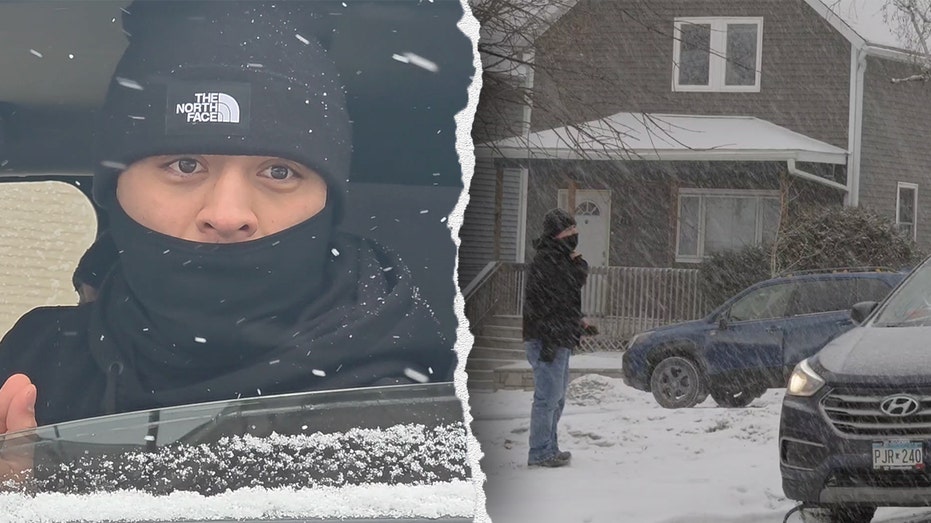
The footage, described in a Fox News Digital report, was posted to X and quickly drew hundreds of thousands of views. In the video, an Immigration and Customs Enforcement (ICE) officer in St. Paul says nearby drivers are honking and interfering with an operation to arrest what he calls a “child sex offender.” Some people near him insist they are press, not agitators, and question what the agent is telling them.
What The Viral Video Shows, According To One Public Account
Based on the Fox News article, which includes quotes from the clip, the confrontation unfolds in at least two moments. In one, the officer faces people out of frame and says, “We’re here to arrest a child sex offender and you guys are out here honking.” Someone responds, “No, we’re press. We’re not honking.”
In another part of the video, the agent points toward a nearby vehicle and says, “That vehicle right there is honking and impeding our investigations while we’re trying to arrest a child sex offender. That’s who you guys are protecting. Insane.” Later he is shown standing beside a car that continues to blast its horn. He tells someone inside, “Trust me, I understand,” just before the horn sounds again.
Viral video shows ICE agent telling agitators they’re disrupting arrest of child sex offender in Minnesota pic.twitter.com/QoIhmJwCXQ
— Dyonne (@kgpnet) January 19, 2026
Fox News reports that at least one woman urges a driver not to cooperate, saying, “Just go. They’re lying. Don’t listen to them.” The outlet describes the people around the operation as “agitators” who allegedly follow and harass federal officers around the Twin Cities, sometimes throwing snowballs or yelling through bullhorns at close range.
Those details all come from a single news organization and from what it says appears on the video. Without access to the full, unedited recording and incident reports, the public has no independent way to confirm exactly what happened before or after the moments that went viral.
The Claim Of A ‘Child Sex Offender’
The most explosive phrase in the video is also the least documented in public. The agent repeatedly tells people that ICE is there to arrest a “child sex offender.” The Fox article does not name the target of the operation, list any charges, or cite court records.
Under its stated priorities, ICE says its Enforcement and Removal Operations unit focuses on people who “pose a threat to national security, public safety, and border security,” including individuals with certain criminal convictions and recent border crossers. That description appears in agency materials that outline enforcement policy, such as the overview at ice.gov. In practice, operations can involve both people with criminal records and those facing only civil immigration violations.
Without a name or case number, it is not possible to check whether the person ICE sought that day in St. Paul had been charged in state or federal court with a sex offense involving a child, whether the case involved a prior conviction, or whether the term reflects an internal ICE allegation that has not been tested in court.
That gap matters for accountability. When law enforcement invokes the label “child sex offender” during an arrest, it frames anyone who questions the operation as standing between officers and a serious threat. The public has an interest in knowing when that label is backed by charges and convictions and when it is not.
Interference, Protest, And Federal Law
The video also highlights a legal line that is far less clear on the street than it is in statutes. There is no dispute that people nearby were filming. According to Fox News, drivers were honking. One woman allegedly urged a car to keep moving and not to listen to agents.
Under federal law, forcibly assaulting, resisting, or impeding a federal officer is a crime that can carry prison time. The statute, 18 U.S.C. 111, is published at the Legal Information Institute at law.cornell.edu. Courts have applied that law to more than physical attacks. In some cases, conduct like blocking an officer’s path or using a vehicle to prevent an arrest has been treated as “resisting” or “impeding.”
At the same time, federal appeals courts around the country have recognized that people generally have a First Amendment right to record police and other officials performing their duties in public, as long as they do not physically interfere. The American Civil Liberties Union summarizes those rulings and the limits of that right in its public guide on recording the police, available at aclu.org.
Honking a car horn at close range, yelling objections, or refusing to leave when ordered can all be cited by officers as interference. Whether such behavior is a crime depends on the specifics. Was the car blocking a lane the officers needed to use? Did the horn prevent officers from hearing one another’s commands? Were clear, lawful orders to move being ignored. The public descriptions of the St. Paul incident do not answer those questions.
A Reported Shooting And Escalating Confrontations
Fox News places the horn-honking video in the broader context of rising confrontations around immigration enforcement in Minnesota. The outlet reports that in early January 2026, 37-year-old Renee Nicole Good was shot and killed by an ICE officer during what it describes as an immigration operation in the Twin Cities. According to that account, Good was allegedly blocking the operation and driving toward an officer when she was shot.
This description again comes from a single report. The article does not link to a local police statement, a medical examiner’s report, or a public investigation by the U.S. attorney or the Department of Homeland Security. As of the latest information this system was trained on, there is no accessible record available here to corroborate or expand on those specific claims.
In a typical use of deadly force by a federal officer, the Department of Homeland Security’s Office of Inspector General and the agency’s internal affairs unit may review the incident. DHS OIG describes its oversight and investigative role at oig.dhs.gov. Local law enforcement can also open a parallel criminal investigation. Those processes can take months or longer, and their findings are not always made public in full.
Fox News also reports that President Donald Trump’s administration was preparing 1,500 troops for potential deployment to Minnesota, citing a senior U.S. official. That description reflects what the outlet reported at the time. Independent verification of any such deployment plan is beyond the scope of the information available to this system.
Online Reactions Move Faster Than Facts
The video drew quick responses from prominent political figures, again according to Fox’s account. Homeland Security Assistant Secretary Tricia McLaughlin reportedly wrote on X, “God bless the men & women of [ICE] and [Customs and Border Protection] who risk their lives to arrest these criminals.” White House press secretary Karoline Leavitt posted “God Bless ICE,” and the article says the official White House account reposted that message. Elon Musk is quoted as reacting with a single word: “Crazy.”
Those online statements are easy to see and share, particularly when they come from verified accounts. What is far harder for members of the public is to locate basic underlying documents. There is no charging document or warrant in the Fox piece to clarify the status of the alleged “child sex offender.” There is no incident report linked for the shooting of Renee Nicole Good. There are no publicly described disciplinary findings or policy reviews tied to the specific use of pepper spray or tear gas that Fox says have occurred during other clashes in the Twin Cities.
Research by organizations such as the Pew Research Center has found that viral videos of police encounters can powerfully shape public views of law enforcement and protest, long before full investigations are completed. Pew’s 2016 report on views of police and race, for example, noted that widely shared recordings function as de facto evidence for many viewers, even when key context is missing. That report is available at pewresearch.org.
What Remains Unclear In The Minnesota Case
For anyone trying to understand the public safety and civil liberties stakes in this St. Paul operation, several basic facts are still unavailable in the public record provided here.
We do not know:
Item 1: Who the alleged “child sex offender” is, what charges they face, or whether they have prior convictions related to children.
Item 2: Whether the operation involved an arrest warrant, a search warrant, a civil immigration pick up, or a combination.
Item 3: Whether any of the individuals honking, filming, or urging drivers to move were arrested or charged with interfering with federal officers.
Item 4: What internal reviews, if any, ICE or DHS have opened into the broader pattern of confrontations reported in the Twin Cities, including the death of Renee Nicole Good?
Until those details are documented by agencies, courts, or independent investigators and made public, the viral video from the Minnesota snow is only a narrow slice of a much larger story. Viewers see a federal agent invoking the label “child sex offender” and accusing bystanders of helping a criminal. What they cannot yet see is whether the law, the facts, and the process behind those accusations hold up under scrutiny.