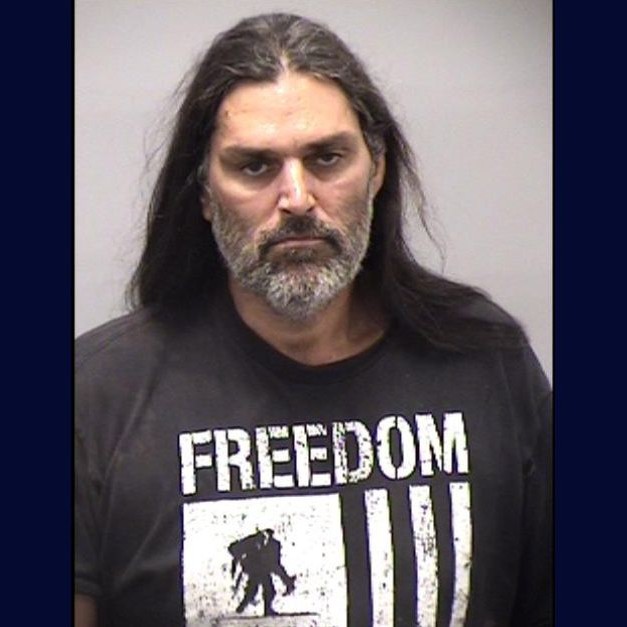

Officers at a federal jail in Brooklyn say a man walked up to their intake desk, claimed he was an FBI agent with a court order, and carried a backpack that held a barbecue fork and a pizza cutter.
The Alleged Rescue Attempt
According to reporting by Fox News, a criminal complaint filed in the Eastern District of New York states that a Minnesota resident identified as Mark Anderson appeared at the Metropolitan Detention Center in Brooklyn and claimed authority to remove an inmate from custody.
The complaint, as described in that reporting, says Anderson approached the jail’s intake area at about 6:50 p.m. and told uniformed Bureau of Prisons staff that he was an FBI agent carrying paperwork purportedly signed by a judge. The complaint itself did not identify which inmate he allegedly sought to free.
Fox News reports that a law enforcement source, who is not named in the article, said the inmate was Luigi Mangione. Mangione is accused of killing UnitedHealthcare CEO Brian Thompson in December 2024. That accusation remains pending. There is no indication in the Fox News account that Mangione has been convicted in that case.
When staff at the Metropolitan Detention Center asked Anderson for federal credentials, he allegedly produced a Minnesota driver’s license instead. He also allegedly stated that he was carrying weapons and threw a stack of documents at officers, which an FBI agent later described as legal claims against the United States Department of Justice, according to the Fox News report.
Officers detained Anderson immediately and searched his backpack. The search turned up a large barbecue-type fork and a pizza cutter. There is no indication in the available reporting that either item was brandished or used. Authorities have not publicly described any specific plan to use those objects to access a secure area.
Fox News reports that the New York City Police Department and the FBI responded to the jail, and Anderson was taken into federal custody. No inmate was released. Officials told Fox that operations at the facility were not disrupted.
FBI IMPERSONATION: Mark Anderson of Mankato, Minnesota was arrested and charged with impersonating an FBI agent. Authorities say he showed up to a federal jail in New York City and told officers he had a court order to release Luigi Mangione.
READ MORE: https://t.co/fSgEPtD3O3 pic.twitter.com/C5TSPkql8Z
— News12LI (@News12LI) January 30, 2026
A High-Profile Inmate at the Center
The focus on Mangione adds another layer to an already closely watched federal case. According to Fox News, Mangione has been held at the Metropolitan Detention Center since his arrest in connection with the fatal shooting of UnitedHealthcare CEO Brian Thompson. The reported killing of a major health insurance executive drew national coverage and prompted scrutiny of corporate security practices.
The Mangione case itself has generated a steady stream of legal filings. Fox News has previously reported on evidentiary disputes in that matter, including litigation over a backpack search and the release of evidence photographs that prosecutors say show Mangione’s possessions at the time of his arrest. Those proceedings are separate from the new impersonation case involving Anderson, although both converge at the same federal detention center.
In this latest incident, the criminal complaint described by Fox News does not state that Mangione was involved in the alleged escape attempt. The connection between Anderson and Mangione, including whether they had any prior relationship, is not detailed in the publicly reported materials. Fox News attributes the identification of Mangione as the intended inmate to a single unnamed law enforcement source, rather than to the court filing itself.
The Charge of Impersonating a Federal Officer
Anderson is charged with impersonating a federal officer. According to Fox News reporting, the felony carries a potential federal sentence of up to three years in prison. That aligns with 18 U.S.C. 912, the federal statute that makes it a crime to falsely pretend to be a United States officer or employee and act in that capacity or obtain something of value in that role.
The statute provides that a person who does so can be “imprisoned not more than three years” or fined, or both, according to the text of the law published by the Legal Information Institute at Cornell Law School here. Prosecutors would need to prove not only that the person claimed federal authority but also that they took some action in that pretended role.
In this case, based on the Fox News description of the complaint, the alleged actions include approaching Bureau of Prisons staff, asserting FBI status, declaring that he possessed a court order, and presenting documents as if they were official. If those allegations are accurate and can be substantiated, they fall squarely within the conduct that 18 U.S.C. 912 was designed to address.
The complaint described in the Fox News piece does not, at least as summarized, indicate that Anderson obtained money or property. The reported allegation centers on an attempt to obtain a person’s release from custody under color of false federal authority.
Inside a Troubled Federal Jail
The Metropolitan Detention Center is a federal facility run by the Bureau of Prisons. It holds both pretrial detainees and sentenced individuals. The Bureau’s description of the facility lists it as an administrative security institution in Brooklyn that houses people of all security levels, including those facing high-profile federal charges, according to BOP.
In recent years, federal oversight bodies have scrutinized operations at the Metropolitan Detention Center. The Department of Justice’s Office of the Inspector General has issued reports examining infrastructure failures, conditions of confinement, and security practices across the Bureau of Prisons, including at high-security and administrative facilities. Those reviews have documented gaps in staffing, training, and basic infrastructure that can affect both safety and day-to-day operations, according to OIG publications.
The incident described in the Anderson complaint centers on the facility’s front-line procedures for verifying outside authority. According to the Fox News account, officers at the jail did not accept Anderson’s claims without credentials. They asked for federal identification, questioned the documents he handed over, and detained him when his story and paperwork did not match official requirements.
Authorities subsequently told Fox that no inmate was released and that the incident did not disrupt operations. That description suggests that, at least in this instance, staff followed verification steps designed to prevent unauthorized removals from custody.
What We Still Do Not Know
The criminal case against Anderson is only beginning. As of the Fox News report, there is no public information about how he traveled from Minnesota to New York, whether he has any connection to Mangione or to others in custody at the Metropolitan Detention Center, or what prompted him to allegedly attempt to free a detainee using a false law enforcement identity.
The reporting does not indicate whether Anderson has retained counsel or entered a plea. Federal defendants typically make an initial appearance in court shortly after arrest, where they are informed of the charges and their rights. Court records from that appearance, which would clarify his legal position, were not cited in the Fox News story provided.
It is also not clear from the available information how close Anderson came to gaining any access beyond the intake area. The presence of items like a barbecue fork and a pizza cutter in his backpack is unusual, but authorities have not publicly outlined any theory about how, if at all, those tools related to the alleged plan.
Fox’s attribution of Mangione as the intended beneficiary of the attempted release rests on one unnamed law enforcement source. The criminal complaint summary in the same reporting does not appear to contain that detail. Until the complaint itself, or subsequent filings, are publicly released and reviewed, the exact target of the alleged impersonation scheme remains partly a matter of sourced but secondhand reporting rather than direct court documentation.
What is clear from the statute and from the case history that can be seen in similar prosecutions is that impersonating a federal officer is treated as a stand-alone federal crime, even when no one is actually released, and no property changes hands. The next set of court filings in Anderson’s case will determine how prosecutors intend to frame what happened inside that Brooklyn jail intake area and whether any additional charges will follow.