

When 84-year-old Nancy Guthrie disappeared from her Catalina Foothills home in an apparent abduction, Pima County investigators soon sought help from federal agents, yet nearly two weeks later, there is still no arrest and growing disagreement over how the investigation and wider crime policies are being handled.
TLDR
Eighty-four-year-old Nancy Guthrie remains missing after an apparent abduction from her Catalina Foothills home near Tucson. The FBI is now involved. As the search continues, local crime conditions, choices by county and city leaders, and coordination with federal agencies have become central, disputed issues in the case.
Guthrie, the longtime resident of an affluent enclave just north of Tucson and mother of television journalist Savannah Guthrie, was reported abducted from her residence in the Catalina Foothills, an area often described by residents and officials as comparatively low in reported crime. According to Fox News Digital, the case quickly grew into a multiagency search after home surveillance video captured a masked person on her doorstep before she vanished.
That same reporting, which cited unnamed federal law enforcement officials, described frustration within federal agencies about elements of the response by Pima County Sheriff Chris Nanos, including when the FBI was notified and how certain evidence was handled. Those characterizations have not been fully addressed in public detail by the sheriff, leaving a gap between what is alleged and what is documented in official records.
Key Facts of the Disappearance
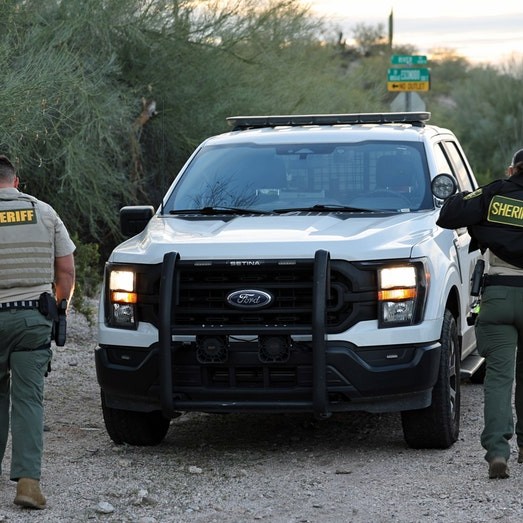
Publicly available information about Guthrie’s disappearance remains limited. Pima County authorities have said she was taken from her home in the Catalina Foothills, a community just outside Tucson city limits. The neighborhood is residential, with large lots and desert terrain, and is patrolled by the Pima County Sheriff’s Department rather than the Tucson Police Department.
Fox News Digital reported that investigators obtained surveillance video that appears to show a masked person approaching Guthrie’s front steps around the time she went missing. The outlet also reported that the footage generated thousands of public tips, but no public identification of a suspect. Officials have not released a detailed timeline of events or a public description of any vehicle that may have been involved.
Latest on abduction of Nancy Guthrie from her home outside Tucson, AZ.
New identifying details about suspect: male, approximately 5’9” – 5’10” tall, with an average build. In the video, he is wearing a black, 25-liter ‘Ozark Trail Hiker Pack’ backpack. pic.twitter.com/bxGP8dMGa6
— Jake Tapper 🦅 (@jaketapper) February 12, 2026
Federal agents are now formally assisting. According to Fox News Digital, FBI personnel worked directly with Guthrie’s family on a recorded response to what investigators treated as a possible ransom demand. Ransom communications, if confirmed, can trigger federal jurisdiction under kidnapping statutes, but authorities have not publicly stated whether they view the disappearance as a federal kidnapping case, a state investigation with federal support, or some combination.
Key details remain undisclosed: whether there were signs of forced entry at the home, what specific evidence was collected on scene, and how investigators currently assess Guthrie’s risk level. Without those facts, public debate has centered less on the forensic investigation and more on broader questions about crime, homelessness, and law enforcement strategy in and around Tucson.
A City Debating What Drives Crime
Guthrie’s abduction took place in unincorporated Pima County, but much of the commentary has focused on the city of Tucson, where violent incidents, visible encampments, and open-air drug use have become politically charged issues. The Tucson Crime Free Coalition, an advocacy group of business owners and residents, argues that policy choices in the city have made neighboring communities less safe.
Josh Jacobson, a local business owner active in the coalition, has been sharply critical of both municipal policy and regional law enforcement capacity. Encampments linked to drug use and property crime, he said, exist a few miles from the Guthrie residence, on or near government-owned land. Jacobson argues that the scale of those encampments reflects a failure to balance services and enforcement.
In a recent interview, Jacobson described Tucson city proper, not the surrounding county, as the primary driver of local crime problems. “It is really the city of Tucson, that is where crime spins out of control, and our deputies are really involved trying to push crime back,” he said. His comments draw a sharp distinction between Pima County as a whole and Tucson as an urban core where drug and property crimes concentrate.
Jacobson and other critics also argue that the city’s decision to make public transit fare-free during the COVID-19 pandemic removed a layer of accountability on buses and at bus stops. They contend that fare-free buses have been used as getaway vehicles after thefts and as informal hubs for drug sales and public drug use. Law enforcement agencies have acknowledged resource constraints that can delay responses to 911 calls, but officials have not released comprehensive data tying specific policy decisions, such as fare-free transit, to changes in crime patterns.
For Guthrie’s case specifically, there is no public indication that transit played a role; reporting notes that the nearest bus stop is more than two miles from her home, and experts referenced in news coverage have suggested that, if she was abducted, it likely involved a private vehicle. The broader policy debate has nonetheless attached itself to her disappearance, reflecting how a single, high-profile crime can become a proxy for longstanding disputes over policing and social services.
Allegations of Friction With Federal Investigators
Beyond questions of city policy, the case has intensified scrutiny of how Pima County works with federal partners, especially along a major drug trafficking corridor. Tucson sits about 60 miles north of the Mexico border, and Pima County spans routes long described by federal and local officials as central to narcotics smuggling into the United States.
Jacobson, echoing concerns he has raised in other contexts, portrays the county as reluctant to work closely with agencies such as the U.S. Border Patrol and ICE. “Pima County is one of the largest drug trafficking corridors in the state,” he said, arguing that coordination with federal agencies is essential to controlling both drug flows and associated violent and property crimes. His statements reflect an advocacy perspective, not a formal audit of interagency cooperation.
According to reporting by Fox News Digital that cited unnamed federal law enforcement sources, those tensions surfaced in Guthrie’s case. The outlet reported that Sheriff Nanos waited roughly two days before formally bringing the FBI into the investigation, and that some key items of physical evidence were sent to a private laboratory in Florida instead of the FBI’s forensic facility in Virginia.
From a procedural standpoint, decisions about when to request FBI involvement and where to send evidence can have significant implications. The FBI laboratory can offer advanced testing and integrated national databases, but private labs may provide speed or specialized services. Without a public explanation from the sheriff’s office, it is not clear whether the choice was driven by capacity constraints, evidentiary strategy, or other factors.
The same Fox News Digital account also described a moment when the FBI’s special agent in charge of Phoenix met with Guthrie’s family to record a response to the reported ransom communication, while Sheriff Nanos attended a college basketball game. Critics have framed that detail as evidence of misplaced priorities. The sheriff has not, in widely cited public comments, directly addressed that allegation or provided his own timeline of activities during those critical hours.
What Remains Unclear in the Case
For all the attention on policy and interagency friction, the core questions in the Guthrie case remain unanswered. Authorities have not announced a suspect, described a credible motive, or confirmed the authenticity and content of any ransom communications. There is no public confirmation of whether investigators believe Guthrie knew her abductor, was targeted because of her daughter’s public profile, or was selected opportunistically.
The absence of these details highlights a common tension in high-profile investigations. Families and communities want information, but premature disclosure can compromise leads, taint potential jurors, or encourage false confessions. At the same time, limited transparency can allow unverified narratives to take hold, including sweeping claims about crime trends based on a single, still-unresolved case.
What is documented is narrow but significant: an elderly woman disappeared from a home in a neighborhood long viewed as relatively safe; a masked person appeared on camera at her doorstep; local and federal authorities are now engaged in a complex investigation; and advocates are using the case to press for changes in how Tucson and Pima County confront drugs, homelessness, and enforcement.
Whether those policy fights translate into concrete changes in staffing, coordination with federal agencies, or oversight of programs such as fare-free transit may depend less on the rhetoric surrounding Guthrie’s abduction and more on what investigators eventually reveal about how, and by whom, the crime was carried out.