


More than 15 years after 18-year-old David Manriquez was found shot in the head while hiding in a bedroom closet, prosecutors in Nevada finally secured a first-degree murder plea from the ex-boyfriend accused of killing him, leaving a court to decide how much of Romero’s remaining life will be spent in prison.
TLDR
Jonathan Romero, 35, has pleaded guilty to first-degree murder for the 2008 killing of 18-year-old David Manriquez in a Las Vegas bedroom closet. After more than 15 years as a fugitive, he now faces 20 to 50 years in prison at a March 26th, 2026, sentencing.
Closet Killing in a Las Vegas Home
According to reporting by Law & Crime, which cites testimony presented to a Clark County grand jury and coverage by local CBS affiliate KLAS, the shooting took place in July 2008 inside a home in Las Vegas. Prosecutors alleged that Jonathan Romero forced his way into his ex-girlfriend’s residence after their relationship had ended.
The ex-girlfriend testified to the grand jury that Romero arrived uninvited at her house, pushed the door open, and went upstairs. She said Romero first looked into a room on the left, then entered the master bedroom, where her new boyfriend, David Manriquez, was hiding in a closet.
In that account, Romero found Manriquez in the closet and shot him in the back of the head. Law & Crime reported that police and prosecutors have described the killing as an execution-style shooting, based on the position of the victim and the nature of the wound.
Police testimony to the grand jury, summarized in the same reporting, indicated that Manriquez was shot multiple times before Romero fled the home and ran down the street. A detective said investigators followed a blood trail that started inside the residence, continued out the front door, and extended for several blocks.
At the time of the plea, Romero was identified as 35 years old, while Manriquez was 18 when he was killed. Law & Crime reported that the two men did not know each other before Romero’s ex-girlfriend began dating Manriquez after ending her relationship with Romero.
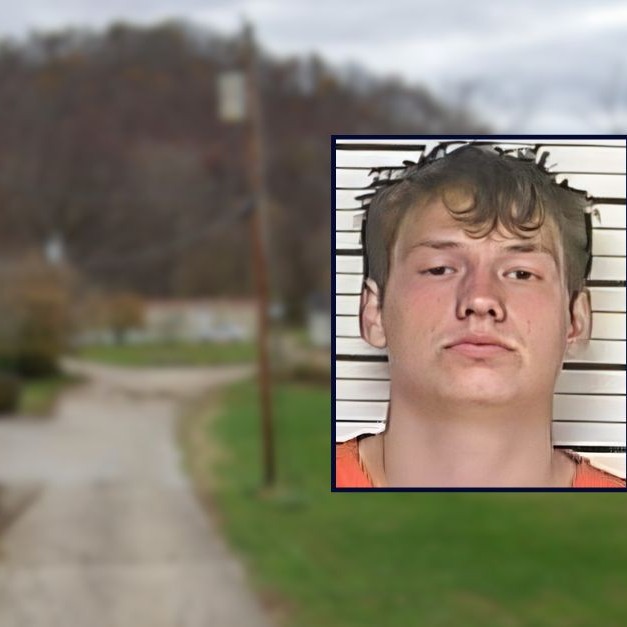
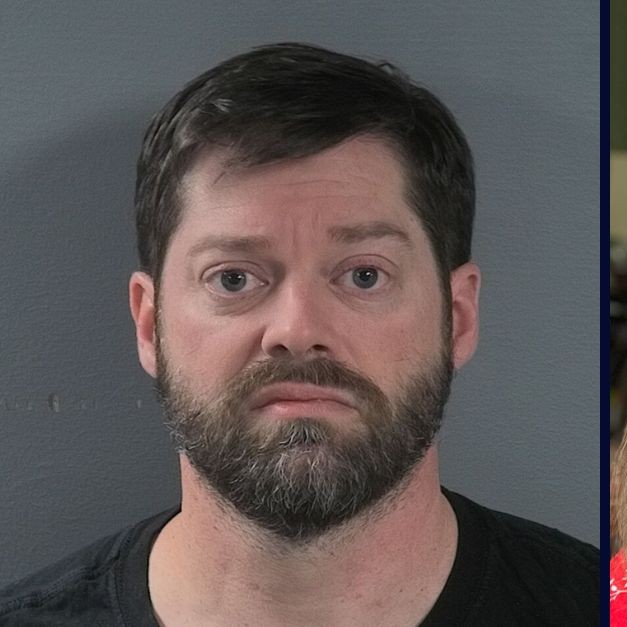
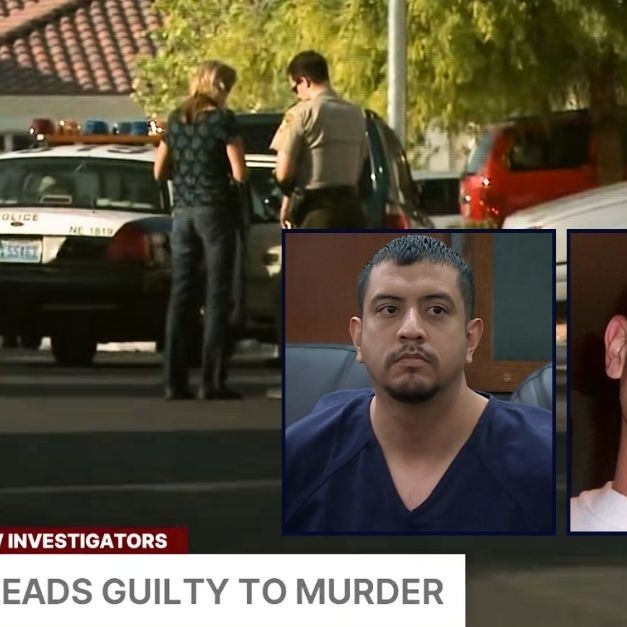
Left inset: Jonathan Romero. Right inset: David Manriquez. Background: Police at the Nevada home where Jonathan Romero killed David Manriquez in an execution-style shooting. (KLAS/YouTube)
From Open Warrant to Arrest in Mexico
Despite the physical evidence described to the grand jury and the witness account from Romero’s ex-girlfriend, officers did not take Romero into custody in the immediate aftermath of the shooting. Law & Crime reported that Romero left the scene and remained out of reach of law enforcement for more than 15 years.
According to that reporting, which again cites KLAS, Romero was ultimately located and arrested in Mexico in May 2025. The details of how authorities tracked him there, which agencies were involved in the investigation, and how Mexican officials handled his case before he was returned to Nevada have not been fully described in the public reporting.
What is documented is the timeline. After Romero’s arrest in Mexico, he was brought back to Clark County to face charges. In June 2025, a county grand jury indicted him in connection with Manriquez’s death. Law & Crime reported that Romero initially pleaded not guilty to multiple counts, including murder with a deadly weapon, attempted murder with a deadly weapon, and burglary while in possession of a deadly weapon.
Those charges reflected prosecutors’ allegation that Romero not only killed Manriquez, but also unlawfully entered the home and created a risk of additional violence. The available reporting does not spell out precisely how prosecutors believed the attempted murder count applied, or who the alleged second intended victim was, although the ex-girlfriend was in the home at the time of the shooting.
Plea Deal Reshapes the Case
In February 2026, according to Law & Crime, Romero changed his plea in Clark County District Court and admitted guilt to one count of first-degree murder. The report states that the plea agreement resolved the case on that single count, although it does not describe in detail how the original additional charges were addressed by the court.
Under Nevada law, first-degree murder covers killings that are willful, deliberate, and premeditated, as well as certain felony murders. By accepting a plea to first-degree murder, Romero admitted criminal responsibility for intentionally killing Manriquez. The plea allowed prosecutors to avoid a trial that would have required witnesses, including Romero’s former girlfriend and investigating officers, to testify again about the events inside the house.
Law & Crime reported that Romero’s agreement calls for a sentence between 20 and 50 years in prison, with credit for time he has already served in custody since his arrest. That range is below the maximum penalties available for first-degree murder under Nevada statutes, which can include life imprisonment.
The report notes that Romero’s sentencing hearing is scheduled for March 26th, 2026. At that hearing, a judge will determine where within the agreed-upon range Romero’s sentence will fall. The credit for time served will also be calculated, reflecting his months in custody following his capture in May 2025.
Plea agreements in homicide cases often involve tradeoffs that are not fully visible in public filings. Prosecutors may weigh the strength of the evidence, the passage of time, the availability of witnesses, and the wishes of the victim’s family. Defense attorneys may advise clients to plead guilty to avoid the risk of a harsher sentence after trial. The specific negotiations between Romero’s lawyers and the Clark County district attorney’s office have not been publicly detailed.
Family Seeks Accountability After Long Delay
For Manriquez’s family, the plea comes after more than a decade without an arrest. In an interview with KLAS in 2025, quoted by Law & Crime, Manriquez’s father, Jaime Manriquez, described the family’s focus on accountability rather than revenge. He said, “We just want him to pay what he did to my son.”
Manriquez’s sister, Ruby Manriquez, told KLAS that the family had begun to doubt Romero would ever be taken into custody. She said, “He’s a coward. We kind of were not ever expecting him to get caught. It was a shock. We were expecting you know, God to handle it, but he’ll get his justice here, and hopefully it’s enough.”
Their comments captured the strain of a case that remained open for years with little public movement. For families in long-unsolved or open homicide investigations, the absence of charges or an apprehended suspect can mean repeated grief with every new anniversary, and limited information about what investigators are doing behind the scenes.
Now, with Romero’s guilty plea, the legal question has shifted from whether he is responsible for Manriquez’s death to how severe his punishment will be. The sentencing hearing will likely include victim impact statements, in which family members can describe how the killing and the years without an arrest have affected them.
What Sentencing Will Decide
When Romero appears for sentencing on March 26th, 2026, the court will have to weigh several documented factors. Among them are the location of the killing inside a private home, the allegation that Romero forced his way into the residence, the testimony that Manriquez was shot in the back of the head while hiding in a closet, and Romero’s decision to flee and live outside the reach of Nevada authorities for more than 15 years.
Balanced against those facts will be Romero’s decision to plead guilty, which spares the court and the victim’s family a trial, and his time already spent in custody since his 2025 arrest. The judge may also consider Romero’s criminal history, if any, along with any statements he chooses to make at the hearing.
Law & Crime reported that Romero faces 20 to 50 years in prison under the plea agreement, with the specific term to be set at sentencing. The available reporting does not indicate whether either side will argue for a particular number within that range, or whether parole eligibility will be a significant point of discussion in court.
For now, the case stands at a turning point. The factual outline of what happened in the Las Vegas home in July 2008 has been accepted in court through Romero’s plea. What remains unresolved is how heavily the court will weigh the violent circumstances of the killing and Romero’s years as a fugitive when it decides how long he will remain behind bars.
References