

The first 911 call reported blood pooling under a kitchen sink in a quiet Minnesota subdivision. Minutes later, another caller said a man had left what looked like a human body part on a stranger’s front step.
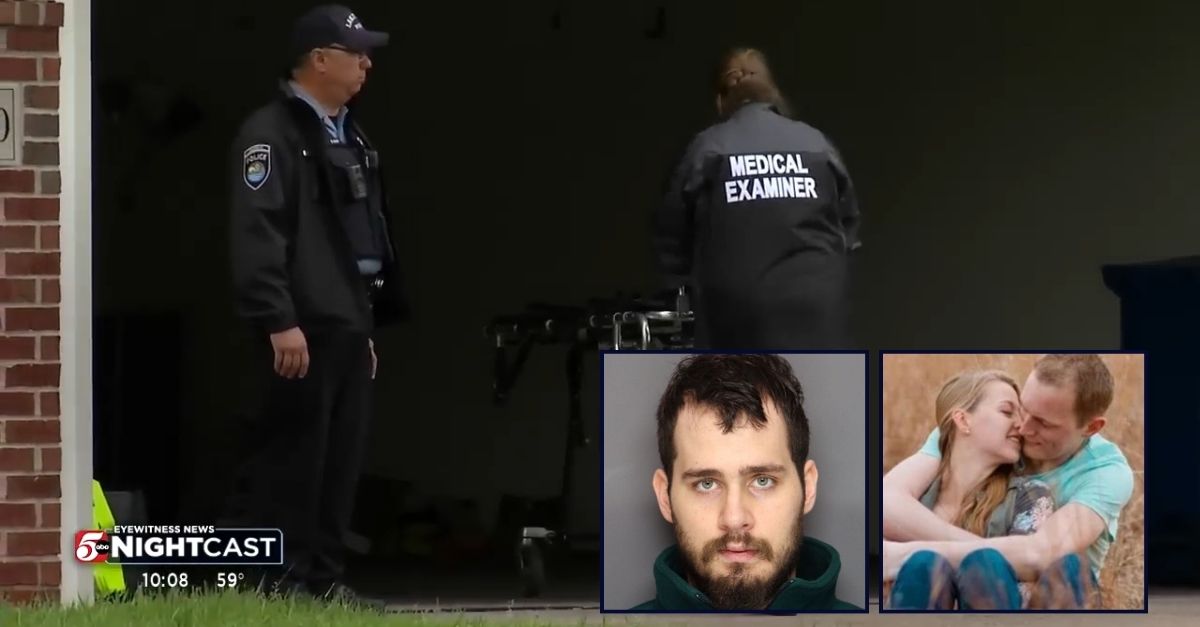
Prosecutors now say those two calls are linked to 24-year-old Jack Joseph Ball of Lakeville, who has pleaded guilty to killing his pregnant sister, 30-year-old Bethany Ann Israel, and her unborn child. In public filings, the Dakota County Attorney’s Office has described a sequence of events based on family accounts, police observations, and writings attributed to Ball, while acknowledging that his mental state before and during the killing remains a central unresolved issue.
What Investigators Say Happened Inside the House
According to a summary from the Dakota County Attorney’s Office, Israel went to Ball’s Lakeville home for dinner and stopped responding to family members as the evening went on. When they could not reach either sibling, the siblings’ mother drove to the house to check on them.
Prosecutors say the mother saw Ball drive away from the residence at high speed as she arrived. When she went inside, she found a large amount of blood and called 911. Responding officers reported finding a substantial pool of blood on the kitchen floor beneath the sink and more blood on nearby cabinets, according to the indictment description cited by Law&Crime.
Inside the home, investigators documented what they later described as several blood-covered cutting tools. In a press release, the county attorney’s office said police found “several tools and large knives, all covered in blood, and several dismembered body parts” throughout the house. Law&Crime reported that officers also observed a bloody saw, a hatchet, and large knives, along with a knife on the living room floor near a staircase.
Those details, if accurate, suggest that significant parts of the attack and dismemberment happened inside the small suburban home. The public documents released so far do not indicate how long Israel remained alive after the assault began, or whether any neighbors heard or saw anything prior to the mother’s arrival.
A Second 911 Call Miles Away
While the Lakeville scene was still being secured, authorities say a second 911 call came in from Rosemount, another community in Dakota County. A resident there reported that home security footage had captured a man placing what appeared to be a body part on their front step, according to the attorney’s office summary of the investigation.
Officers searched the surrounding area and located Ball in the backyard of a nearby home, according to prosecutors. He had what officials described as a self-inflicted injury to his neck. Police arranged medical transport to a local hospital, and after treatment he was taken into custody.
Based on these accounts, law enforcement concluded that Ball had not only killed and dismembered his sister but had also intentionally placed parts of her remains at other locations. Authorities have not publicly released a complete list of where remains were found or whether those locations had any personal or symbolic connection to Ball or Israel.
The Charges and the Guilty Plea
In January 2025, a Dakota County grand jury indicted Ball on two counts of premeditated first-degree murder, one for Israel and one for her unborn child, along with related charges. The indictment was announced in a public release that emphasized the alleged use of tools and the discovery of dismembered body parts inside the Lakeville home.
Minnesota law allows prosecutors to bring a separate homicide charge for the killing of an unborn child in certain circumstances, and Dakota County authorities used that provision here. Ball had also faced second-degree murder counts that have since been dismissed under the terms of a plea agreement.
According to a later release from the same office, Ball pleaded guilty to both counts of premeditated first-degree murder in district court. Prosecutors said they would recommend a life sentence as part of the deal. In Minnesota, a conviction for premeditated first-degree murder typically carries a mandatory life term, with the specific conditions of release eligibility set at sentencing.
The timing and details of Ball’s formal sentencing have not been fully described in the documents cited by Law&Crime. It remains publicly unclear whether Israel’s family members intend to give victim impact statements, or whether defense counsel will present additional information about Ball’s mental health history at the hearing.
Journals, Motive, and Mental Illness Claims
Investigators say they recovered several handwritten journals from Ball’s residence. According to prosecutors, those journals include entries in which Ball wrote that he was angry with Israel because she was pregnant and “no longer innocent.” Those statements, if accurately quoted, offer one of the few direct windows into Ball’s thinking in the period leading up to the homicide. The public record so far does not identify any specific ideological group, online forum, or religious teaching that might have influenced those views, nor does it outline any prior incidents of violence involving Ball.
The Dakota County Attorney’s Office has also stated that Ball “asserted a defense of mental illness” before submitting his guilty plea. In Minnesota, an insanity or mental illness defense typically requires a showing that the defendant did not understand the nature of their act or that it was wrong at the time of the offense. Court records referenced by Law&Crime do not specify what evaluations, diagnoses, or expert opinions, if any, were produced before Ball changed his plea.
Once Ball admitted guilt to premeditated first-degree murder, the case shifted from litigating criminal responsibility to determining the exact terms of his life sentence. Prosecutors have said they will seek to hold him fully accountable. Dakota County Attorney Kathy Keena stated, “My office will work hard to ensure the victims receive justice and will provide the necessary support for the victims’ family.”
Defense attorneys have not publicly released a detailed narrative of Ball’s background or mental health. Without that, the public record reflects only prosecution statements and limited defense posture, which leaves key questions about his long-term condition and any prior warning signs unanswered.
Who Bethany Ann Israel Was to Her Family
While most official documents in the case focus on evidence and charges, a fundraiser created by Israel’s family offers a different kind of record. According to the description on a GoFundMe campaign cited by Law&Crime, they remembered her as a “cherished wife, daughter, sister, and an expectant mother” and said she had a “radiant spirit and unwavering kindness.”
That short tribute is one of the only public documents centered on Israel herself rather than on the violence of her death. It underscores that she was not just the subject of a case file but someone whose relatives were preparing to welcome a new baby into their family.
The contrast between those family statements and the language in Ball’s journals is stark. In the public materials available so far, there is no indication that Israel had threatened or harmed her brother, or that there had been any prior criminal complaints between them. Prosecutors have not alleged any conduct by Israel that might explain, in conventional terms, why she became the target of Ball’s anger.
What Remains Unclear
Despite the guilty plea and detailed descriptions of the crime scene, important aspects of this case remain out of public view. The available records do not reveal how long Ball had been writing about Israel in his journals before the killing, how quickly the violence unfolded after she arrived for dinner, or what, if any, interventions were attempted in response to earlier signs of distress or instability.
There is also no publicly available transcript of any psychiatric testimony or report that may have been generated before Ball abandoned his mental illness defense. Without those documents, it is difficult to assess how courts and clinicians understood the relationship between his beliefs, his mental health, and his decision to kill his sister and her unborn child.
As the case moves toward a permanent sentence, what is documented in public is a detailed trail of physical evidence, 911 calls, and written words. What remains mostly absent from the record is a full account of how those beliefs formed, whether anyone around Ball saw warning signs, and whether anything could have interrupted the path that ended with Israel’s family left to grieve both a daughter and a future child.