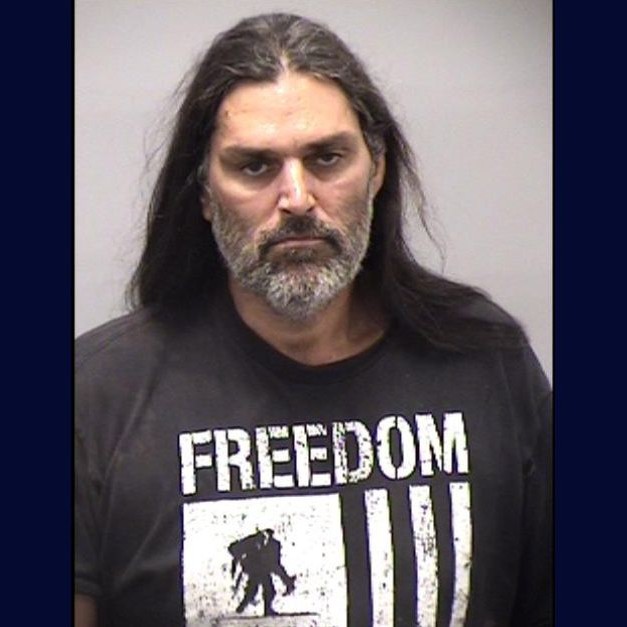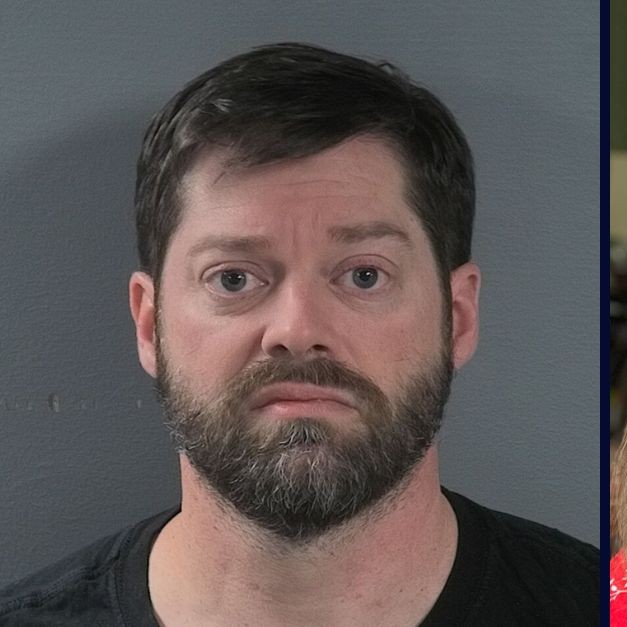




In a Bexar County courtroom, prosecutors say a 2022 family eviction dispute ended in capital murder, while the defense presses jurors to scrutinize a wounded stepfather’s shifting memories and a jailhouse letter that no witness has definitively traced to the accused.
The defendant, 47-year-old Frank Falcon, is on trial in San Antonio, where he is charged with one count of capital murder in the shooting death of his mother, 66-year-old Linda Webster, according to Bexar County court records. The same gunfire injured Webster’s husband and Falcon’s stepfather, 67-year-old Mark Webster, and unfolded in front of Falcon’s then-9-year-old daughter, who was not physically harmed, according to reporting by Law & Crime.
The Night on Gillette Boulevard
The shooting occurred during the early morning hours of July 14th, 2022, inside a home on Gillette Boulevard on San Antonio’s South Side. According to Law & Crime, officers arrived around 2 a.m. to find Linda Webster dead and Mark Webster suffering from a gunshot wound to his head. Falcon’s young daughter was in the house during the incident but was not injured, authorities said.
Police initially arrested Falcon on charges that included aggravated assault with a deadly weapon in connection with Mark Webster’s injuries. That additional count was later dropped when a grand jury indicted Falcon on the capital murder charge in October 2022, according to court records cited by Law & Crime. Capital murder in Texas carries some of the state’s harshest penalties.
Jurors have been told that Falcon was at the scene and later fled before being subdued with what an officer described as a Taser-like device, according to a courtroom account by KSAT. They also viewed evidence that included a pair of black latex gloves that one responding officer testified Falcon was wearing when he first encountered police.
An Eviction and Unpaid Taxes as Alleged Motive
The state’s theory centers on a property arrangement that prosecutors say deteriorated into an eviction and ended in violence. According to KSAT’s reporting from inside the courtroom, prosecutors have argued that Falcon was allowed to live rent-free in another home owned by his mother so long as he paid the property’s taxes.
In 2022, however, the Websters allegedly received a bill for roughly $10,000 that showed no property tax payments had been made on the residence for four years. Prosecutors say that discovery led Linda and Mark Webster to decide to evict Falcon, who was in his mid-40s at the time. They allege that Falcon responded to the impending eviction by returning to the Websters’ home on Gillette Boulevard and opening fire.
The defense has not yet offered a full alternative narrative in open court. According to Law & Crime, Falcon’s attorneys waived their opening statement, a strategic decision that allows them to wait and see the strength and contours of the prosecution’s case before laying out their own account of events.
A Key Witness With Shifting Recollections
Much of the trial’s early tension has focused on Mark Webster, the only surviving adult who was inside the home during the shooting. His recollections, recorded at different times, have varied in important ways.
According to Law & Crime, Mark Webster initially told a 911 dispatcher that it was “probably” Falcon who shot them. In a later interview, he told a detective he was unsure who the shooter was and described the assailant as a “black shadow.” Those inconsistencies became central to a defense motion to suppress some of his statements, as defense counsel questioned whether his identifications were reliable enough to be heard by the jury.
In a pretrial hearing held outside the jury’s presence, Webster testified through tears that he struggles with memory problems, according to the San Antonio Express-News. He also said he would be surprised if he had not identified Falcon to police. According to Law & Crime, the court ultimately allowed jurors to hear portions of his statements, including footage from a police body camera.
In that body camera video, Mark Webster can be heard telling officers, “I think it was Frank Falcon, my stepson,” according to Law & Crime’s account of the proceedings. The phrasing reflected uncertainty, yet it was more direct than his description of a “black shadow” to the detective. The court’s decision to admit the statements means jurors must now assess how much weight to give a witness who acknowledges memory issues but consistently points back to the defendant.
Forensic Evidence and Police Observations
Beyond eyewitness testimony, prosecutors have highlighted physical evidence that they say ties Falcon to the killing. In opening statements, prosecutor Lauren Scott told jurors that the bullet removed from Linda Webster’s body matched a firearm that investigators later recovered from Falcon’s vehicle, according to Law & Crime and KSAT.
Jurors also heard from one of the first officers to respond to the shooting. The officer testified that Falcon stood out because he was wearing black latex gloves when they saw him at the scene, according to KSAT. By the time Falcon was arrested, the officer said, those gloves were on the ground. The gloves were collected and later shown in court, giving jurors a visual reference for a detail the officer described as unusual under the circumstances.
Prosecutors have emphasized Falcon’s actions after the shooting as well. According to Law & Crime, jurors were told that Falcon fled the scene and had to be brought under control with a Taser-like device before he was taken into custody. The defense has not publicly offered an explanation for that flight, at least in the available courtroom reporting.
The Jailhouse Letter and a Fight Over Words
A letter that arrived at the Websters’ home after the shooting has become another focal point in the legal fight over what jurors may consider. According to Law & Crime, the envelope listed the return address of the Bexar County jail. Mark Webster testified that he assumed the letter came from Falcon, although, according to the reporting, no witness has testified to seeing Falcon write or send it.
The letter, addressed to Linda Webster’s granddaughter, contained a short message: “I am sorry for what I did to your grandma.” Prosecutors have argued that the letter amounts to an apology that jurors can view as an implied admission of responsibility. The defense moved to suppress the letter, questioning both its authorship and its potential impact on jurors, but that effort was unsuccessful, according to Law & Crime.
The letter’s evidentiary value will likely depend on how jurors weigh Webster’s assumption against the lack of more direct proof about who actually wrote it. The available reporting does not describe any forensic analysis of handwriting or the envelope, and the court’s ruling means those limits are part of the record jurors must consider.
Life in Prison on the Line
If Falcon is convicted of capital murder, he faces an automatic sentence of life in prison, according to Law & Crime. Texas law allows capital charges in certain killings within a family or household, and prosecutors have used that statute here in charging the death of Falcon’s mother.
For jurors, the task in the coming days is to reconcile several strands of evidence. They have the prosecution’s narrative of a broken property-tax agreement and an eviction that escalated into fatal violence. They have a stepfather whose accounts moved from “probably” to a more direct identification, while he openly acknowledges memory problems. They have physical evidence in the form of a matched bullet and gun, black latex gloves, and testimony about flight from the scene. They also have an unsworn letter that appears to apologize for harm to “your grandma,” but whose origin is not fully documented in public reporting.
The trial is expected to continue with additional witnesses and evidence before the case reaches the jury. As proceedings move forward, the unresolved questions about memory, motive, and authorship of the letter will remain at the center of whether the panel concludes that the state has proved capital murder beyond a reasonable doubt.
Sources
- Law & Crime: Sorry for What I Did to Your Grandma Man Shot and Killed His Mother in Front of His 9-Year-Old Daughter After Eviction for Not Paying Property Taxes Authorities Say
- KSAT: Trial Begins for Man Accused of Killing Mother in South Side Home
- San Antonio Express-News: Stepfather Recalls Deadly Night in South Side Shooting Trial