


Case overview
In September 1935, wrapped parcels containing dismembered human remains began appearing along the Edinburgh–Carlisle road and in a ravine near Moffat, Scotland. Within weeks, forensic pathologists identified two victims—Isabella Ruxton and Mary Rogerson—and traced the evidence to Dr. Buck Ruxton, a Lancaster physician whose volatile marriage and methodical disposal efforts made the case one of Britain’s most documented murder investigations of the interwar period.
The discovery
On September 29, 1935, a woman crossing a bridge over the Gardenholme Linn, a stream near Moffat in Dumfriesshire, noticed a bundle wrapped in newspaper lodged against a boulder. She alerted her brother, who retrieved the parcel and discovered human remains inside. Over the following days, search teams recovered more than seventy pieces of human tissue from the ravine and surrounding areas, including limbs, torsos, and internal organs wrapped in bedsheets, pillowcases, and editions of the Sunday Graphic dated September 15, 1935.
The bodies had been systematically dismembered and mutilated. Fingertips had been removed, faces rendered unrecognizable, and teeth extracted. The level of anatomical precision suggested medical knowledge. Investigators suspected the perpetrator had attempted to prevent identification.
Identifying the victims
Professor John Glaister, a forensic pathologist at the University of Glasgow, led the examination alongside Dr. Gilbert Millar and Professor James Brash from the University of Edinburgh. Using anatomical reconstruction, tissue analysis, and photographic superimposition, the team worked to identify the remains. Fingerprints could not be recovered, and dental records were incomplete, but the examiners found enough physical markers to proceed.
The first body was that of a woman in her mid-thirties who had given birth to at least one child. The second was a younger woman, likely in her early twenties. Investigators cross-referenced missing-person reports from the region and identified two women who fit the profile: Isabella Ruxton, 34, the common-law wife of Dr. Buck Ruxton, and Mary Rogerson, 20, the housemaid employed by the Ruxton household in Lancaster.
Both women had been reported missing on September 16, 1935, the day after the newspapers used to wrap the remains had been printed. Isabella Ruxton had last been seen alive on September 14. Her husband claimed she had left for a trip to Edinburgh and had not returned. Neighbors and household staff reported no such trip had been planned.
The investigation turns to Lancaster
Dr. Buck Ruxton, born Bukhtyar Rustomji Ratanji Hakim in Bombay in 1899, had moved to Britain in the 1920s and established a medical practice in Lancaster. He married Isabella Van Ess, a divorcée with two children, in 1928, though the marriage was never legally formalized. Friends and patients described Ruxton as charming but volatile, prone to outbursts of jealousy and accusations of infidelity.
On September 15, the day after Isabella and Mary disappeared, Ruxton visited a patient and appeared visibly scratched and bruised. He claimed he had injured himself while opening a tin of fruit. That same day, he asked a house cleaner, Agnes Oxley, to come to the residence. When she arrived on September 16, Ruxton told her not to enter the upstairs bathroom, claiming he had injured his hand and stained the bathtub. Oxley later observed carpets missing from the staircase and stains throughout the house.
Ruxton also asked a friend to help dispose of carpets and a bloodstained suit, claiming they had been ruined during a household accident. He delivered parcels to various locations in the days following the disappearance, including a trip north toward Scotland on September 19. Witnesses later identified his car near Moffat around the time the remains were discovered.
Forensic breakthroughs
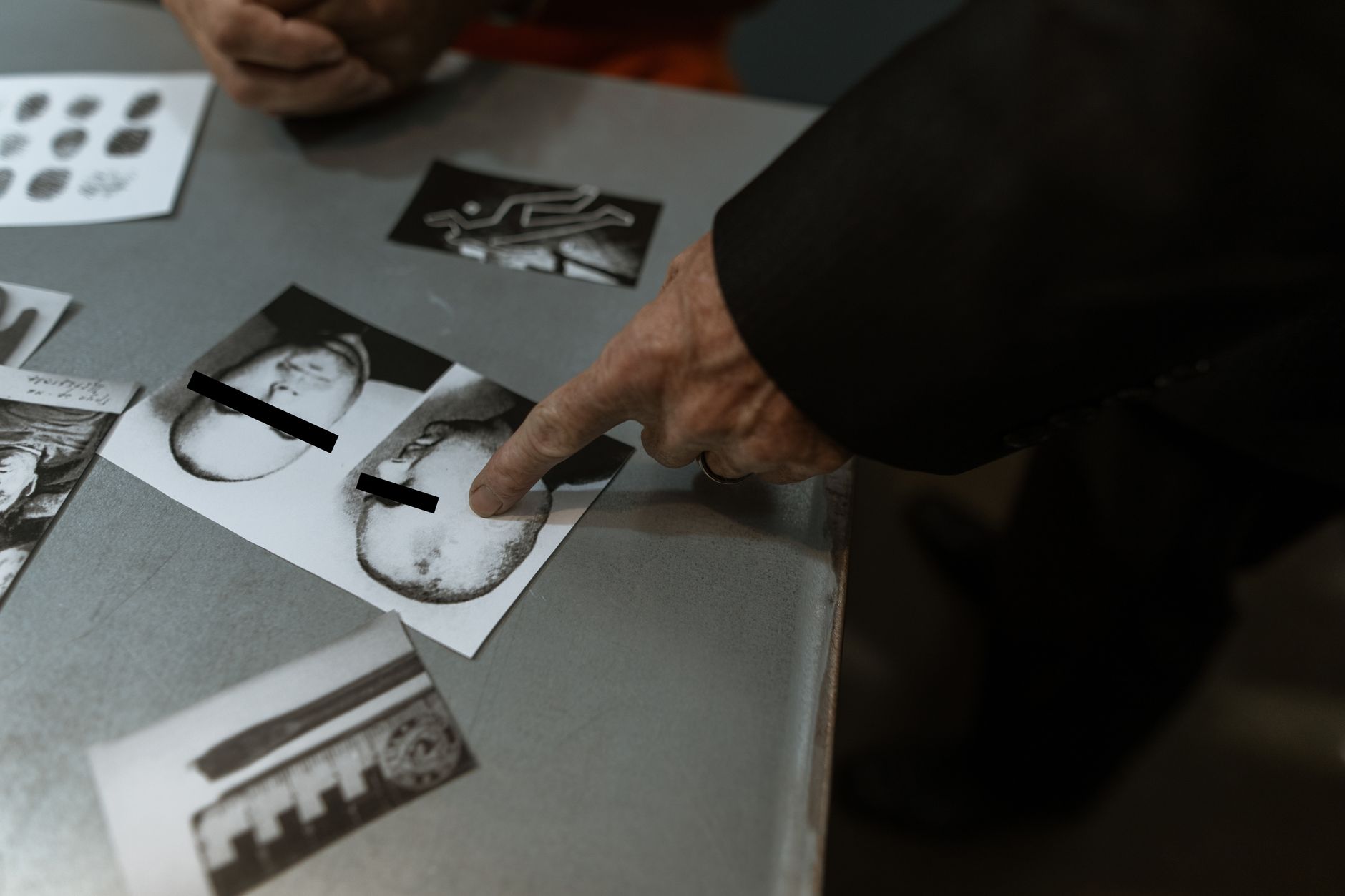
The investigation marked one of the first major uses of photographic superimposition in British criminal forensic work. Professor Brash overlaid photographs of Isabella Ruxton’s face onto images of one of the skulls recovered from the ravine. The alignment of anatomical landmarks—eye sockets, nasal structure, and jawline—supported the identification. While the technique was not considered definitive proof in itself, it provided corroborative weight alongside tissue analysis and circumstantial evidence.
Entomologists examined maggots recovered from the remains to estimate time of death. Larvae development suggested the bodies had been exposed for approximately two weeks, consistent with the timeline of Isabella and Mary’s disappearance. Forensic botanists analyzed vegetation found with the parcels and linked soil samples to areas near the Ruxton home.
Pathologists determined both women had been killed by blunt force trauma and asphyxiation. The dismemberment had occurred post-mortem, likely in a bathtub or similar confined space. Blood traces found in the Ruxton household matched the victims’ blood types, a relatively new forensic tool at the time.
The trial
Buck Ruxton was arrested on October 13, 1935, and charged with the murders of Isabella Ruxton and Mary Rogerson. His trial began on March 2, 1936, at the Manchester Assizes and lasted eleven days. The prosecution, led by J.C. Jackson KC, presented forensic evidence, witness testimony, and circumstantial details linking Ruxton to the crime. The defense, headed by Norman Birkett KC, argued the identification of the remains was not conclusive and that the timeline presented by the prosecution contained gaps.
Birkett challenged the reliability of photographic superimposition, noting it had never been tested in a British courtroom. He questioned whether the anatomical reconstruction could definitively prove the remains belonged to Isabella Ruxton and Mary Rogerson rather than two other unidentified women. The defense also pointed to inconsistencies in witness statements and argued that Ruxton’s explanations for the household disturbances were plausible.
The prosecution countered with testimony from neighbors, patients, and household staff who described Ruxton’s erratic behavior, his public accusations of infidelity, and his documented presence near the disposal sites. Forensic experts testified that the combination of anatomical markers, tissue degradation timelines, and physical evidence from the Ruxton home created a convergent case that could not be reasonably attributed to coincidence.
The jury deliberated for one hour before returning a guilty verdict on March 13, 1936. Ruxton was sentenced to death. He maintained his innocence until hours before his execution, when he reportedly made a partial confession to his solicitor, acknowledging responsibility for Isabella’s death but claiming it had been accidental. He was hanged at Strangeways Prison in Manchester on May 12, 1936.
Press coverage and public reaction
The Ruxton case became one of the most heavily covered criminal trials in British history. Newspapers printed daily updates, diagrams of the crime scene, and illustrated reconstructions of the forensic analysis. The News of the World serialized a dramatic retelling, and public fascination extended beyond the courtroom into music halls, where a skipping-rhyme version of the murders circulated among children.
The case also fueled debates about the admissibility of forensic science in criminal proceedings. Some legal scholars praised the trial as a landmark moment for evidence-based prosecution, while others expressed concern that juries might be unduly swayed by scientific testimony they did not fully understand. Questions about the certainty of photographic superimposition persisted for decades, though the technique would later be refined and used in subsequent high-profile cases.
Unresolved questions
Despite Ruxton’s conviction, certain aspects of the case remain debated. The motive for Mary Rogerson’s murder was never clearly established. Prosecutors theorized she had witnessed Isabella’s killing and was killed to eliminate a witness, but no direct evidence supported this claim. Ruxton’s defense suggested alternative explanations, including the possibility that another party had been involved, though no credible suspect was ever identified.
The partial confession Ruxton gave before his execution was never made public in full, and no transcript exists in the surviving court records. His description of the events leading to Isabella’s death—whether it was premeditated or occurred during a violent altercation—was never independently corroborated.
Some forensic historians have revisited the case to assess whether the scientific methods used in 1936 would meet modern evidentiary standards. While the photographic superimposition and entomological analysis were innovative for their time, contemporary forensic protocols require corroborative DNA evidence, which was not available in the 1930s. The absence of such definitive markers has led some scholars to argue that, while Ruxton was almost certainly guilty, the case illustrates the limits of historical forensic methods when viewed through a modern lens.
Legacy
The Ruxton murders remain a foundational case in the development of forensic pathology and criminal investigation in Britain. The trial demonstrated the potential of multidisciplinary scientific collaboration in solving complex homicide cases and set precedents for the use of photographic evidence, entomology, and anatomical reconstruction in court.
The case also highlighted the role of media in shaping public perception of criminal justice. The extensive press coverage, while contributing to public awareness, raised concerns about trial by newspaper and the potential for sensationalism to interfere with judicial proceedings. These tensions would echo in later high-profile cases throughout the twentieth century.
Where to look next
- Documentary: “The Jigsaw Murders” (BBC)
- Book: “The Trial of Buck Ruxton” by R.H. Blundell and G.H. Wilson
- Book: “Murderous Innocence” by Tom Wood