On February 9th, 2026, U.S. Southern Command acknowledged that a “lethal kinetic strike” on a drug-trafficking vessel in the Eastern Pacific killed two people and left one survivor, but officials have not publicly detailed who was targeted, where exactly the strike occurred, or how the operation is legally framed.
TLDR
U.S. Southern Command says forces carried out a February 9th lethal strike on a drug-trafficking vessel in the Eastern Pacific, killing two people and leaving one survivor. The Pentagon has not released identities, precise location, or detailed legal justification for the expanding maritime campaign.
Strike on Suspected Narco-Terrorist Vessel
In a brief statement, U.S. Southern Command, known as SOUTHCOM, said Joint Task Force Southern Spear conducted the February 9th strike on a vessel it described as being operated by designated terrorist organizations. According to Fox News, the command said intelligence showed the craft moving along known “narco-trafficking routes” in the Eastern Pacific.
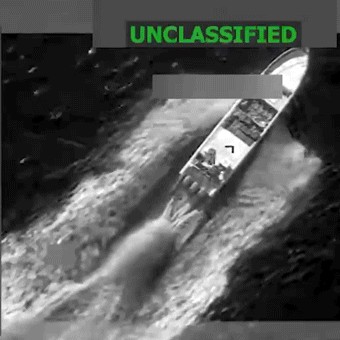
The statement, originally posted on X, said the task force carried out a “lethal kinetic strike” at the direction of SOUTHCOM commander General Francis L. Donovan. Officials said the strike disabled the vessel, and aerial footage released by the command reportedly shows the craft losing power and coming to a stop shortly after impact.
🚨 U.S. Military Delivers Justice in Eastern Pacific 🚨
SOUTHCOM just confirmed: A precision lethal kinetic strike took out a narco-trafficking vessel operated by Designated Terrorist Organizations.
Outcome:
– 2 narco-terrorists eliminated
– 1 survivor — US Coast Guard… pic.twitter.com/nhnoVLGe4T— 🇺🇸JB MAGA 🇺🇸 (@JBMAGA03) February 10, 2026
Two people on board were killed, according to the military account, and one person survived. SOUTHCOM said U.S. forces immediately notified the U.S. Coast Guard to initiate search and rescue procedures for the survivor, suggesting some coordination between combatant command forces and maritime law enforcement after the strike.
The military has not publicly identified the deceased or the survivor, nor has it said which group they were allegedly affiliated with, what flag the vessel sailed under, or whether any weapons or drugs were recovered. Those omissions leave the public record limited largely to the Pentagon’s own characterization of the targets as narco-traffickers linked to terrorism.
A Growing Maritime Campaign Since September
SOUTHCOM framed the February 9th operation as part of an ongoing campaign that began in September 2025, targeting drug-trafficking networks it associates with terrorism. According to Fox News, U.S. forces have conducted dozens of strikes in the Eastern Pacific and Caribbean during that period.
The command has highlighted Venezuelan group Tren de Aragua and Colombia’s Ejercito de Liberacion Nacional among the organizations it says benefit from maritime drug trafficking. Officials have described these operations as intended to disrupt “narco-terrorist” networks by striking vessels used to move drugs and money through regional waters.
The February 9th operation was the third reported lethal maritime strike of 2026. Fox News reported that, in January, U.S. forces struck another vessel, killing two people and leaving a lone survivor. A separate operation in early February reportedly killed two more suspected narco-terrorists in a similar strike against a small craft that officials said was also operated by a designated terrorist organization.
SOUTHCOM has said its targets over the past six months have included submersibles, fishing boats, and high-speed vessels, reflecting the variety of platforms traffickers use to move cocaine and other drugs north through the Eastern Pacific corridor. Historically, many of these interdictions resulted in seizures and arrests rather than lethal force, which makes the current pattern of kinetic operations notable.
What U.S. Officials Have Not Said
While the command’s statement emphasizes intelligence and terrorist designations, it leaves several factual questions unanswered. The military has not disclosed the precise location of the February 9th strike, including whether it occurred on the high seas or within any nation’s territorial waters.
Jurisdiction matters because it helps determine which laws apply, what rules of engagement govern the use of force, and which authorities are responsible for post-strike investigations. Without information about the maritime zone or flag state, it is difficult for outside observers to assess which legal framework SOUTHCOM believes it is operating under.
There is also no public information about whether U.S. forces attempted to stop, hail, or board the vessel before using lethal force, or whether the craft posed any immediate threat to U.S. personnel or other ships in the area. The available accounts describe the vessel as transiting along trafficking routes, but do not describe hostile actions or resistance.
Officials have not said what happened to the sole reported survivor after the Coast Guard search and rescue effort. It remains unclear whether that individual was taken into U.S. custody, turned over to another government, treated only as a rescued mariner, or considered a detainee subject to criminal prosecution.
The government has likewise declined, at least in public releases, to specify what physical evidence was recovered. Standard maritime drug interdictions often involve photographs of seized narcotics, weapons, or cash, along with details of quantities and routes. In these kinetic operations, however, the public narrative focuses on the strike itself and on alleged affiliations, rather than on concrete seizures.
Legal Framework and Accountability Questions
The United States has long conducted maritime drug interdiction in cooperation with regional partners, using a mix of Coast Guard, Navy, and allied assets. Those efforts typically rely on statutory counter-narcotics authorities and international agreements that emphasize law enforcement, detention, and prosecution.
The February 9th operation, by contrast, is described first and foremost as a “lethal kinetic strike” against a vessel designated as supporting terrorism. That phrasing suggests the mission may be tied, at least in part, to counterterrorism authorities and rules of engagement closer to armed conflict models than to traditional maritime policing.
According to publicly available defense policy documents, U.S. commanders are expected to apply rules of engagement that align with domestic law, the law of armed conflict, where applicable, and host nation agreements. In practice, the classification of a target as a terrorist actor, a drug trafficker, or both can influence how those rules are interpreted.
For accountability, key questions include whether independent investigations follow fatal strikes, how civilian status is assessed, and what standards of evidence must be met before labeling a target a member or asset of a designated terrorist organization. None of those mechanisms has been described in the brief SOUTHCOM communications about the February 9th strike or the earlier January and February operations.
In the absence of fuller documentation, external observers cannot independently verify whether those killed were combatants, criminal suspects, or potential bystanders, or whether nonlethal options were available. The government’s own statements remain the primary, and in some respects the only, narrative of what occurred at sea.
Regional and Procedural Implications
SOUTHCOM, which oversees U.S. military activity in Central America, South America, and the Caribbean, operates in a region where drug trafficking has long funded armed groups and contributed to instability. Partner governments have often urged Washington to support interdiction efforts, but they also track closely how U.S. military power is used near their waters.
If these strikes are taking place in or near another country’s exclusive economic zone or territorial sea, host-nation consent and notification become critical procedural elements. SOUTHCOM’s public statements do not identify any partner governments involved in the February 9th mission, leaving it unclear which states, if any, formally endorsed the operation.
Another unresolved issue is the ultimate disposition of any evidence or intelligence collected during such missions. In cases that move into criminal courts, chain-of-custody rules and disclosure obligations apply. Where operations are treated as part of an armed conflict or counterterrorism campaign, information may remain classified, limiting outside review.
Internally, the pattern of strikes since September suggests that Joint Task Force Southern Spear is now a central tool in U.S. efforts to pressure maritime drug networks. Whether Congress receives regular briefings on these actions, and under which authorization they are reported, has not been addressed in public statements about the February 9th strike.
What Comes Next
For now, the February 9th account rests on a few key assertions from SOUTHCOM: that a vessel along “narco-trafficking routes” was operating on behalf of designated terrorist organizations, that a “lethal kinetic strike” was ordered, and that two people died while one survived and was the subject of a search and rescue effort.
Missing from the public record are names, nationalities, the location and maritime status of the engagement, and any official explanation of what legal authorities justified the use of lethal force in this context. Without those specifics, the operation illustrates how modern counter-narcotics and counterterrorism campaigns can unfold largely out of public view.
Future disclosures, whether through additional Pentagon statements, congressional oversight, or court proceedings involving any survivors, may clarify how U.S. officials classify these missions and what safeguards exist against misidentification. Until then, the February 9th strike remains a case study in how much, and how little, is revealed when lethal force is used far from shore against alleged criminal networks.