


A newly unsealed federal indictment in the United States charges alleged Sinaloa cartel fentanyl producer Ivan Valerio Sainz Salazar with trafficking and weapons offenses, but key questions remain about how quickly he could be brought before a U.S. judge and what evidence will ultimately be tested in court.
According to Fox News, which cites U.S. federal prosecutors and Mexican officials, Sainz Salazar, known by the alias “Mantecas,” is accused of manufacturing millions of fentanyl pills for a faction linked to the Sinaloa cartel and of helping move the synthetic opioid into the United States, where it has been tied to record overdose deaths.
Who Prosecutors Say Sainz Salazar Is
Federal prosecutors describe Sainz Salazar as a 40-year-old Mexican citizen who allegedly served as a top fentanyl chemist and producer for a Sinaloa cartel faction connected to the so-called Chapitos, the sons of convicted cartel boss Joaquin “El Chapo” Guzman. According to the Fox News report, they allege he oversaw labs, arranged transactions under armed protection, and helped turn fentanyl into pill form for shipment north.
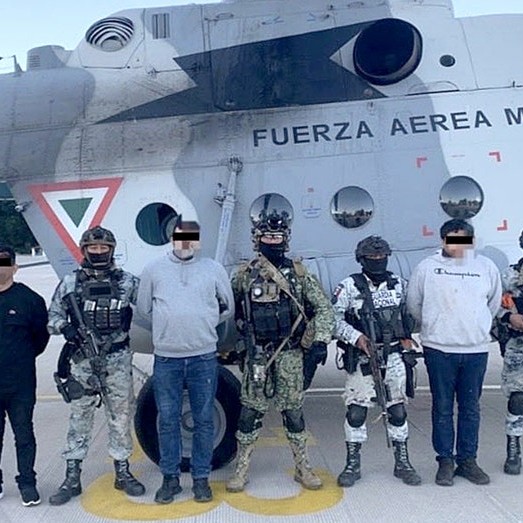
Mexican authorities arrested Sainz Salazar and several alleged associates in Badiraguato, Sinaloa, on January 19th, 2026, according to Mexico’s Secretary of Security and Civilian Protection, Omar H. Garcia Harfuch, as reported by Fox News. In a public statement cited in that reporting, Garcia Harfuch said security forces detained a man identified as Ivan Valerio “N,” alias “Mantecas,” along with seven others, and seized firearms, vehicles, and what he described as a synthetic drug production site.
Mexican officials say the investigation is ongoing. The Fox News report does not clarify whether formal extradition proceedings to the United States have begun, leaving a significant procedural step unresolved.
Inside the Newly Unsealed Indictment
The U.S. Department of Justice, according to Fox News, has charged Sainz Salazar with two major narcotics counts: conspiring to import fentanyl into the United States and conspiring to distribute it domestically. Each of those counts reportedly carries a mandatory minimum sentence of 10 years in prison and a maximum sentence of life, if he is convicted.
In addition to the drug charges, prosecutors have charged Sainz Salazar with using and possessing machine guns and destructive devices in connection with the alleged drug conspiracy, along with a related firearms conspiracy charge. One of those weapons counts carries a mandatory minimum of 30 years in prison and a maximum of life in custody, according to the Fox News account of the indictment.
The indictment, as described in that reporting, alleges that between roughly 2022 and 2025, Sainz Salazar helped produce millions of fentanyl pills. Prosecutors say those pills were part of a broader operation that moved large quantities of the drug into the United States and that armed enforcers protected the laboratories, routes, and leadership.
U.S. Attorney Jay Clayton, quoted in the Fox News story, framed the case as part of a broader effort to disrupt the cartel’s fentanyl pipeline into the United States.
“As alleged, Sainz Salazar served as a major producer of the Sinaloa Cartel’s fentanyl shipments bound for the United States,” Clayton said. “Fentanyl kills, and violent dealers in fentanyl must be taken off our streets. Today’s charges target a major producer behind the Chapitos’ supply chain and underscore the commitment of the women and men of our Office to holding traffickers at all levels of the production and distribution chain accountable.”
Alleged Sinaloa Cartel fentanyl producer charged in newly unsealed US federal indictment https://t.co/50icoq5km1 pic.twitter.com/bvZ56PX24F
— New York Post (@nypost) February 6, 2026
Those statements describe the government’s position. Sainz Salazar has not had the opportunity, at least publicly, to respond to the allegations in a U.S. courtroom, and the indictment itself is an accusation, not a finding of guilt.
Link to the Chapitos Fentanyl Network
The Chapitos, a group of brothers related to El Chapo, have become a focal point of U.S. fentanyl enforcement in recent years. According to Fox News and prior Justice Department statements in other cases, U.S. authorities describe that faction as central to the industrial-scale production and trafficking of fentanyl that reaches American markets.
In earlier prosecutions not directly tied to Sainz Salazar, U.S. prosecutors have alleged that the Chapitos greatly expanded synthetic drug operations after El Chapo’s conviction and life sentence in the United States. Officials say the faction leveraged cross-border smuggling routes, including tunnels, and used armed groups to protect high-volume manufacturing and distribution networks.
Fox News reports that Joaquin Guzman Lopez, one of El Chapo’s sons, pleaded guilty in a Chicago federal courtroom to drug-trafficking and continuing criminal enterprise charges. According to that report, he acknowledged overseeing drug shipments to the United States, including loads moved through underground tunnels, and reached a plea agreement that avoided an automatic life sentence.
Fox News also notes that another brother, Ovidio Guzman Lopez, reached a plea agreement months earlier on trafficking and money laundering charges, and that El Chapo remains in a U.S. maximum-security prison serving life without parole for his role in running a multibillion-dollar trafficking organization. Those cases form the background for the latest Sinaloa-related fentanyl indictment but are separate proceedings, with their own records and evidence.
In this context, U.S. prosecutors now allege that Sainz Salazar was a critical producer feeding the Chapitos’ supply chain. The specific details of how investigators tied particular labs, pills, or financial flows to him have not been fully described in the publicly available reporting.
Legal Stakes and Procedural Questions
If Sainz Salazar is extradited and convicted on the charged offenses, he would face at least several decades in prison. The reported sentencing structure, with mandatory minimums of 10 years on each of the two narcotics counts and 30 years on one firearms count, means that even partial convictions could result in an effective life sentence, depending on how a judge orders any terms to run.
The weapons allegations are especially significant. U.S. law treats the use or possession of machine guns and destructive devices in relation to drug trafficking as an aggravated form of gun crime, triggering lengthy mandatory prison terms that must run consecutively to other sentences in many circumstances. That charging strategy is common in cartel-related cases, where prosecutors seek to reflect both the drug volume and the level of violence tied to the operation.
At this point, several procedural issues remain publicly unclear. The Fox News report does not specify whether U.S. authorities have filed a formal extradition request with Mexico, what Mexican charges, if any, Sainz Salazar may face domestically, or whether he intends to fight transfer to a U.S. court.
Mexican and U.S. authorities have a history of high-profile extraditions in cartel cases, but the timing often depends on parallel investigations, domestic prosecutions, and diplomatic negotiations. For now, the timeline for any U.S. arraignment is uncertain.
What Remains Unresolved
The newly reported indictment presents a clear narrative from U.S. prosecutors: that a Sinaloa-linked producer helped fuel a deadly fentanyl pipeline into the United States and did so under the protection of heavily armed enforcers. That version of events, however, has not yet been tested in front of a jury.
Key factual questions remain. Among them are how investigators developed their case against Sainz Salazar, what role cooperating witnesses or intercepted communications may play, and whether forensic evidence links specific labs or shipments to him personally rather than to the broader organization.
There are also open questions about coordination between Mexican authorities, who carried out the arrest and say their investigation continues, and U.S. prosecutors, who obtained the indictment. How they sequence any Mexican proceedings, extradition, and a potential U.S. trial will shape the pace and scope of accountability.
Until those answers emerge through court filings and hearings, the case of Ivan Valerio Sainz Salazar sits at the intersection of two systems, one indictment, and an ongoing effort to show how far up the fentanyl supply chain U.S. prosecutors can reach.
Sources