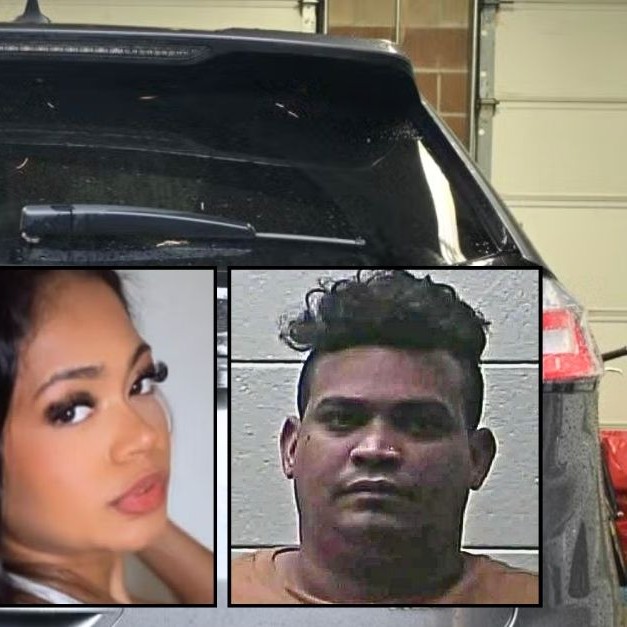
Three workers at a Greece, New York, bar are charged with felony evidence tampering after a 68-year-old patron fell, struck his head, and later died. The case was built around surveillance video that police say undercuts the employees’ account and leaves open questions about their response.
The patron, identified by police as 68-year-old widower John Acito, spent the night of December 16th, 2025, at Dave’s Long Pond Pub in the Monroe County town of Greece. According to Law & Crime, citing a Greece Police Department press release, Acito was a regular customer who had lost his wife in 2023 and stayed at the bar into the early morning hours.
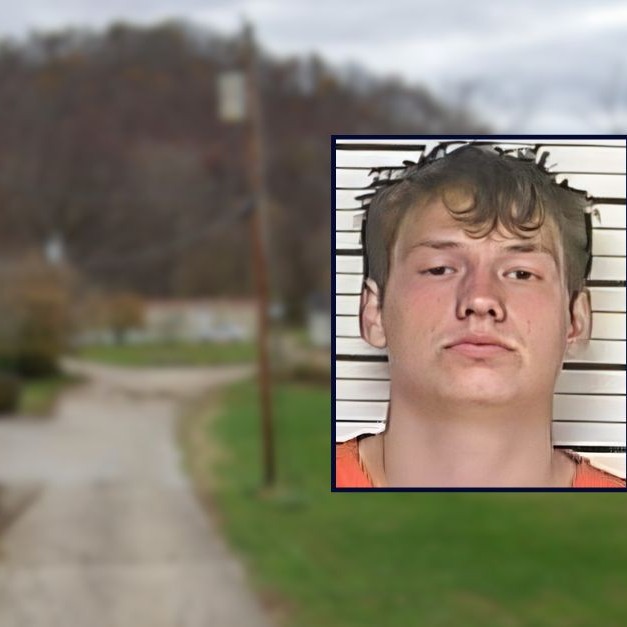
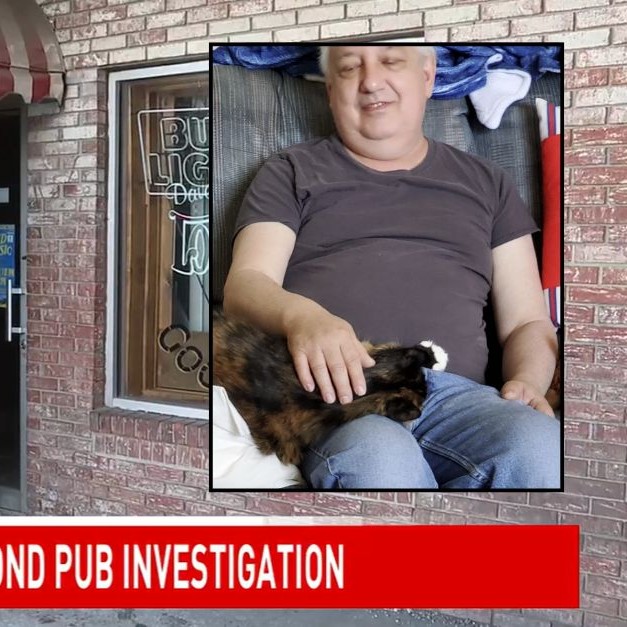
Image: Background news footage of Dave’s Long Pond Pub in Greece, New York, and inset image of John Acito, as carried by WHAM and Vay-Schleich & Meeson Funeral and Cremation Chapels.
What Police Say Happened Inside the Bar
According to the Greece Police Department, as described in Law & Crime’s reporting, surveillance cameras inside the pub showed Acito swaying, then falling and striking his head first on a table and then on the floor. Police said he remained on the floor, unconscious or unresponsive, for an estimated 30 to 40 minutes while staff continued their closing duties.
Local station WHAM, cited by Law & Crime, reported that officers were dispatched to the bar at 3:24 a.m. for a report of an unconscious man in the parking lot. When first responders arrived, they found Acito outside, not inside, and he was transported to a hospital with what authorities described as a “significant head injury.” He remained in a coma for roughly two weeks and died on January 1st, 2026.
The medical examiner later determined that Acito’s death resulted from complications of that head injury and classified the death as an accident. That conclusion is central to how investigators and prosecutors have framed the criminal case that followed.
Staff Account Versus Surveillance Footage
From the outset, investigators focused less on the fall itself and more on what bar employees told police about where and how they found Acito. According to Law & Crime, three members of the staff initially reported that they discovered him passed out outside the establishment, in or near the parking lot.
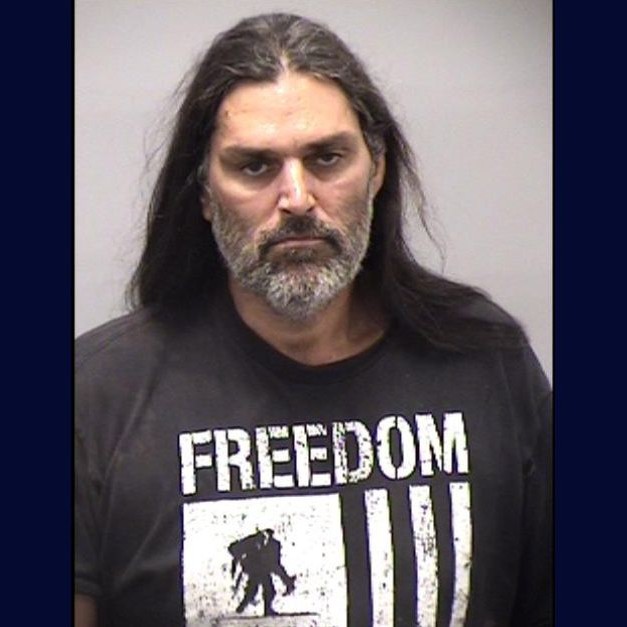
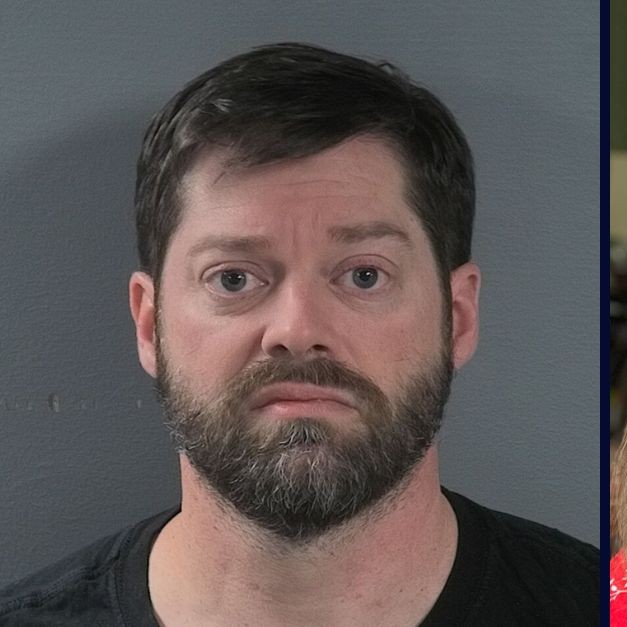
Those workers, identified by police as bar owner David Geer, 64, cook John Moore, 58, and bartender Crystal McWilliams, 42, are now charged with tampering with evidence. Police allege that their original story was not just incomplete but incompatible with what was recorded on the bar’s surveillance system.
In the press release, as summarized by Law & Crime, Greece police said the video showed employees placing Acito’s jacket on him while he was still motionless inside, then moving him toward the front door. Detective Sergeant Jeffrey Dill told WHAM, according to the same reporting, that the footage captured Geer, Moore, and McWilliams dragging the unconscious man to the doorway to make it appear as if he had been outside the bar when he collapsed. Dill said the video then showed staff mopping the floor to remove what he described as drag marks.
“They were concerned with trying to protect the bar,” Dill told WHAM, in remarks quoted by Law & Crime.
Those alleged actions form the basis of the tampering charges. Prosecutors will ultimately have to prove in court that the employees knowingly altered or staged the scene in a way intended to mislead investigators about where Acito was injured or how he came to be on the ground outside.
After-Hours Drinking and a Delayed Call
The timing of the incident has also drawn scrutiny. Dill told WHAM, as reported by Law & Crime, that Acito continued to be served alcohol at the pub as late as 3 a.m., roughly one hour after the legal 2 a.m. closing time for bars in Monroe County. Serving alcohol after hours can carry administrative consequences for a bar’s license, but the criminal case now unfolding focuses on what allegedly happened after Acito fell.
Police said the surveillance footage showed Acito lying on the floor for 30 to 40 minutes before any call for help. According to Law & Crime, investigators have alleged that during this window, staff focused on closing tasks and moving Acito toward the exit rather than immediately contacting emergency services.
The medical examiner, however, concluded that the delay in medical intervention did not contribute to Acito’s death. That finding is medically and legally significant because it undercuts any theory that a faster call to 911 would have changed the outcome. Dill nonetheless told WHAM that, in his view, workers “had an opportunity to get him help immediately, and they did not take that action,” framing their alleged decisions in terms of responsibility rather than causation.
The distinction matters. The current charges do not claim that staff caused Acito’s fatal injury or that their response legally contributed to his death. Instead, they focus on what police characterize as an attempted cover-up of how and where that injury occurred.
Why the Charge Is Evidence Tampering, Not Homicide
According to Law & Crime, authorities have not charged Geer, Moore, or McWilliams in connection with causing Acito’s death. The medical examiner’s classification of the death as an accident and the conclusion that response time did not alter the medical outcome are key reasons the case presently centers on evidence tampering.
Under New York law, tampering with physical evidence is a felony that typically involves destroying, concealing, or fabricating material that might be used in an official proceeding or investigation. In practical terms, that can include actions such as moving an injured person to a different location to create the impression that an incident occurred somewhere else, or cleaning a scene in a way intended to obscure what happened.
In this case, police allege that the workers staged the discovery of Acito in the parking lot and then mopped the interior of the bar to erase signs that his injuries were sustained inside. Whether those actions meet the legal definition of tampering is now for prosecutors to argue and a court to decide.
Because no homicide or manslaughter charge has been filed, the criminal case does not ask a jury to decide whether anyone is criminally liable for Acito’s death itself. Instead, the focus is on the integrity of the investigation that followed and on how much leeway, if any, workers have when reacting to a medical emergency that occurs on their watch.
The three defendants are presumed innocent unless and until proven guilty in court. As of the latest reporting by Law & Crime, no public record of pleas or trial dates had been detailed, and the case remained at an early procedural stage.
What Comes Next in Court
Law & Crime reported that Geer, Moore, and McWilliams are expected to appear in Greece Town Court on the tampering charges, though specific court dates had not been made public at the time of that report. Their first appearances are likely to involve arraignment, entry of pleas, and discussion of release conditions while the case is pending.
Tampering with physical evidence in New York is a Class E felony. While sentencing decisions depend on criminal history and case specifics, the maximum state prison sentence for a Class E felony is typically up to four years. Defendants convicted of such offenses can also face probation and long-term impacts on employment and licensing.
Beyond the criminal courtroom, the case raises potential questions for regulatory authorities that oversee alcohol-serving establishments, as well as for any future civil proceedings. Law & Crime’s account does not detail any separate administrative or civil actions, and publicly reported information so far has centered on the criminal investigation and the evidence tampering charges.
For now, the legal questions are narrow but consequential. A town court in Monroe County will eventually have to decide whether the movements captured on the bar’s cameras and the cleaning that followed amounted to a crime. In the absence of a homicide charge, the central issue for the court is not why Acito fell, but whether what allegedly happened afterward crossed the line into felony tampering with evidence.
Sources