

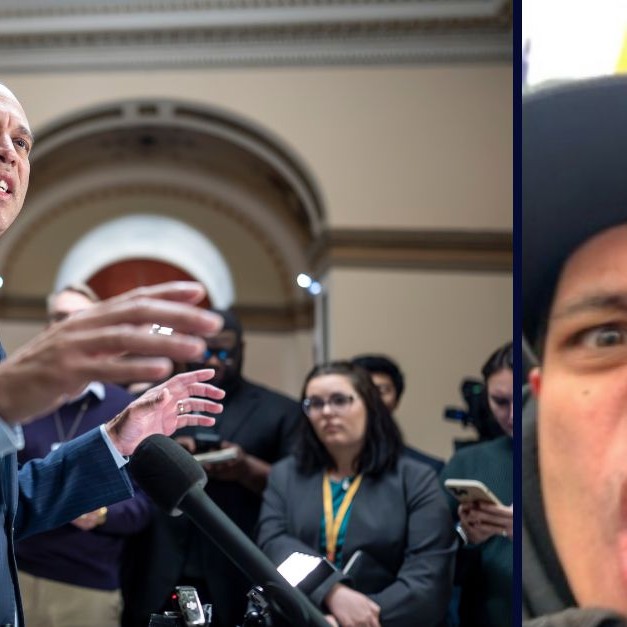
A 35-year-old New York man who once rifled through senators’ papers during the January 6th Capitol breach, and later received a presidential pardon, has now pleaded guilty in state court to harassing House Minority Leader Hakeem Jeffries through death threats that prosecutors initially charged as a terrorist threat.
TLDR
Christopher Moynihan, a Trump-pardoned January 6th rioter, pleaded guilty in Dutchess County, New York, to second-degree aggravated harassment for texted death threats against House Minority Leader Hakeem Jeffries, after prosecutors agreed to drop an initial felony count of making a terrorist threat.
Threatening Texts Lead to Misdemeanor Plea
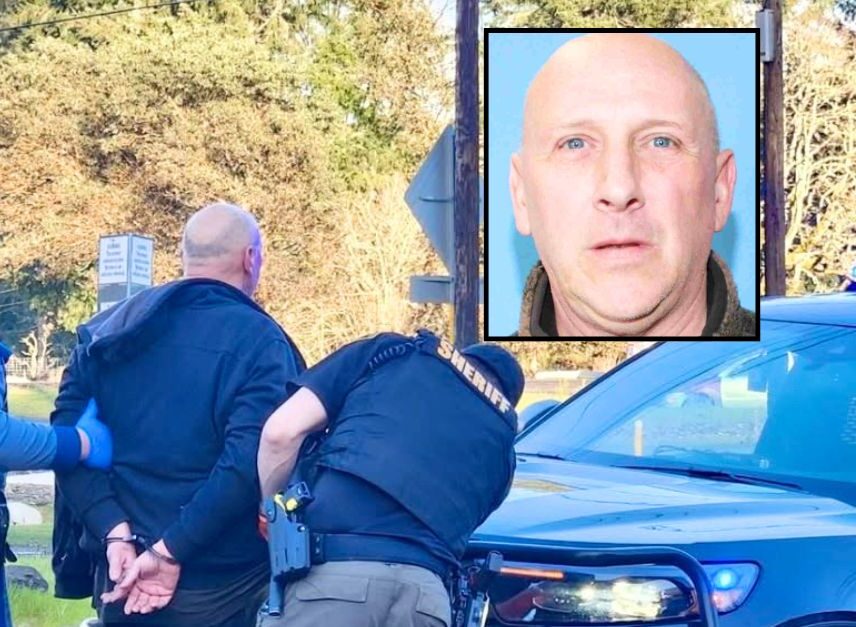
Left: House Minority Leader Hakeem Jeffries speaks to reporters at the Capitol. Right: Christopher Moynihan is seen during the January 6th breach in imagery filed by the FBI.
Christopher Moynihan, 35, became widely known after a video showed him rifling through papers on a senator’s desk during the January 6th attack on the Capitol. According to the Dutchess County District Attorney’s Office, he is now again a convicted defendant, this time in a state harassment case involving threats against Jeffries.
In a press release posted in February 2026, District Attorney Anthony Parisi announced that Moynihan pleaded guilty to second-degree aggravated harassment, a misdemeanor. As part of the plea agreement, prosecutors dismissed a felony count of making a terrorist threat that had been filed after Moynihan’s arrest.
Parisi said the outcome balanced accountability and safety. “Threats against elected officials are not political speech, they are criminal acts that strike at the heart of public safety and our democratic system. My office treats these cases with the utmost seriousness because words intended to intimidate or terrorize can have real-world consequences,” he said.
The criminal complaint, described by CBS News, alleged that Moynihan sent a series of text messages focused on an upcoming Jeffries speech in New York City. One message read, “Hakeem Jeffries makes a speech in a few days in NYC I cannot allow this terrorist to live.” Another added, “Even if I am hated, he must be eliminated, I will kill him for the future.”
Investigators said the messages referred to Jeffries’s scheduled remarks at the Economic Club of New York. Publicly available records do not describe any alleged attempt by Moynihan to travel to the event or confront Jeffries, and the case centers on the messages themselves rather than any physical attack.
Jeffries Cites Credible Threat and Trump Pardon
In a statement posted by his congressional office, Jeffries called the messages a “credible” threat and said he believed Moynihan had “every intention to carry it out.” The House Democratic leader framed the case as part of a broader pattern of danger facing elected officials.
Jeffries also linked the episode to former President Donald Trump’s clemency decisions. “The person arrested, along with thousands of violent felons who stormed the US Capitol during the January 6th attack, was pardoned by Donald Trump on the President’s very first day in office,” he said, arguing that many people released under the blanket pardon “have committed additional crimes throughout the country.”
According to Law & Crime and Jeffries’ statement, Moynihan was among those granted clemency on January 20th, 2025, in a sweeping pardon of individuals convicted in connection with the January 6th breach. That decision came after Moynihan had already served most of a 21-month federal sentence and begun a term of supervised release for his role in the attack.
Jeffries’s comments highlight a tension that the harassment plea does not fully resolve. The congressman has portrayed the threat as proof that some January 6th defendants remained dangerous after clemency, while the state plea results in a misdemeanor conviction without a public explanation from prosecutors of why the more serious felony count was abandoned.
From Capitol Breach to State Court Case
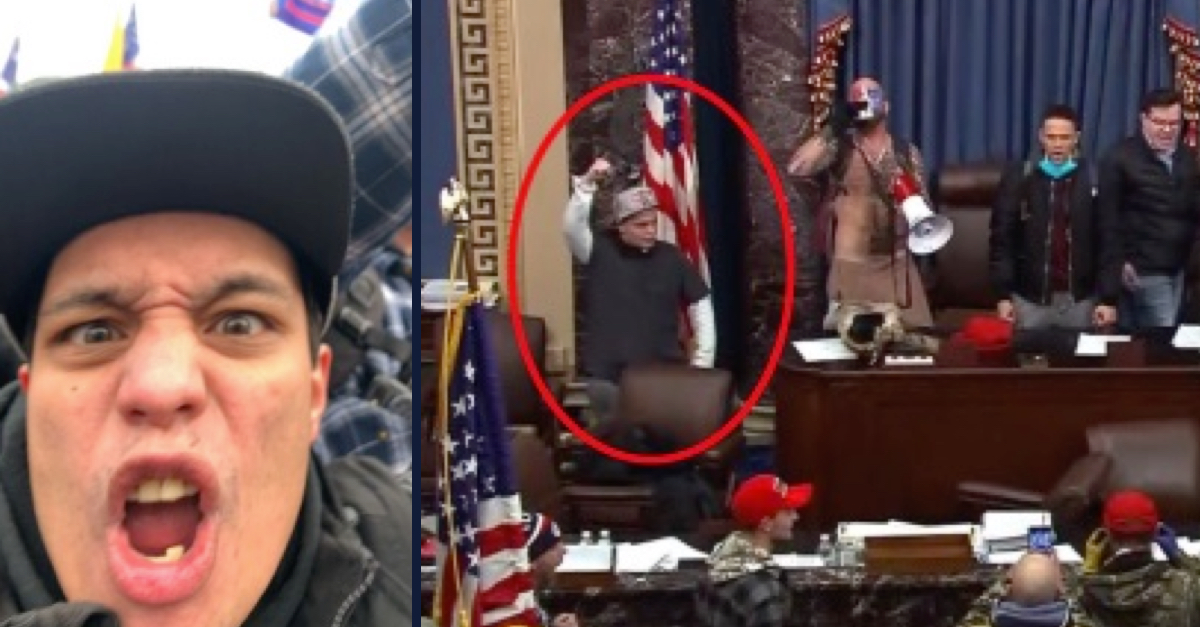
Federal court records, including a stipulated trial and two Department of Justice press releases, outline how Moynihan first came to national attention. According to those documents, he joined a group of rioters who pushed through a police security line on the east side of the Capitol building on January 6th, 2021.
Investigators said Moynihan entered the Capitol at around 2:40 p.m., roughly half an hour after the first breach. By about 2:45 p.m., he was in the evacuated Senate gallery. Video shows him approaching a senator’s desk, going through a notebook, removing papers, and taking images with his cellphone while others roamed the chamber.
In one clip, recorded by a journalist, Moynihan can be heard saying that there had to be something in the papers that supporters of Trump could “use against” lawmakers who were certifying Joe Biden’s election win. That moment became one of the more widely circulated scenes from inside the Senate chamber.
In August 2022, a federal judge found Moynihan guilty of obstructing an official proceeding of Congress, a felony that carried a potential 20-year sentence, as well as five misdemeanor counts related to unlawful entry and disorderly conduct. In February 2023, the Justice Department announced that he had been sentenced to 21 months in prison, three years of supervised release, and $2,000 in restitution toward damage and security costs at the Capitol.
A government sentencing memo described Moynihan as an active participant in the breach. “Moynihan watched as rioters attacked police trying to defend the [Rotunda] door, and continued pushing his way forward,” prosecutors wrote. “Moynihan also occupied the dais of the Senate, joining other rioters in shouts and chanting. Moynihan did not leave the Senate Chamber until he was forced out by police.”
Defense attorney A.J. Kramer presented a sharply different account in his own filing, emphasizing that Moynihan entered the building with a large crowd and spent his time walking, chanting, and briefly looking through papers. “He entered the Capitol with a large crowd of people, walked through the halls chanting along with others in the crowd, and walked into the Senate chamber,” Kramer wrote. “There, he looked through papers on a Senator’s desk, taking video with his phone.”
The video that captured Moynihan at the desk also shows other high-profile rioters, including Jacob Chansley, often called the “QAnon shaman,” and Paul Hodgkins, the first January 6th defendant to plead guilty to the obstruction charge. The Supreme Court later ruled that prosecutors had applied that obstruction statute too broadly in many January 6th cases, a decision that prompted new litigation over how the law should be used.
By the time Trump issued the January 20th, 2025, pardon that included Moynihan, many of the original January 6th sentences had been served or were nearing completion. The pardon nonetheless wiped away remaining federal penalties and ended supervised release, even as debates over the scope of the obstruction charge and the wider handling of the riot continued.
What the Plea Leaves Unanswered
Local officials in Dutchess County first announced Moynihan’s arrest on the harassment and terrorist-threat counts after taking him into custody at the county justice center. At that stage, they said he was being held on $10,000 cash bail, a $30,000 bond, or an $80,000 partially secured bond, with a court appearance set later that week.
The February 2026 announcement that Moynihan had pleaded guilty to the misdemeanor shows how the case ultimately moved away from the original felony framing. Prosecutors did not publicly detail why they agreed to dismiss the charge of making a terrorist threat, beyond Parisi’s statement that the resolution “ensures accountability and public safety.”
The gap between the stark language in the complaint and the lower-level conviction illustrates how threat prosecutions can evolve. Text messages that one side describes as evidence of an intent to kill a sitting House leader can ultimately be resolved as a harassment offense, carrying less exposure than a felony linked to terrorism.
Sentencing details in the harassment case have not yet drawn the same national attention as the plea. For Jeffries, however, Moynihan’s trajectory from Capitol rioter to pardoned federal defendant to state harassment offender continues to raise a larger question of how institutions respond when people who have received clemency later face new allegations of targeting public officials.
References
- Law & Crime: I Will Kill Him for the Future: Notorious Jan. 6 Rioter Pardoned by Trump Pleads Guilty to Threatening to Assassinate High-Ranking Congressman
- Dutchess County District Attorney: Pleasant Valley Man Pleads Guilty in Matter Connected to Minority Leader Jeffries
- CBS News: Pardoned Capitol Rioter Charged With Threatening Hakeem Jeffries in NYC
- U.S. Department of Justice: New York Man Sentenced for Felony Charge for Actions During Jan. 6 Capitol Breach
- U.S. Department of Justice: New York Man Found Guilty for Felony Charge for Actions During Jan. 6 Capitol Breach
- Office of Hakeem Jeffries: Leader Jeffries Statement on Death Threat and Rearrest of Convicted January 6th Offender