

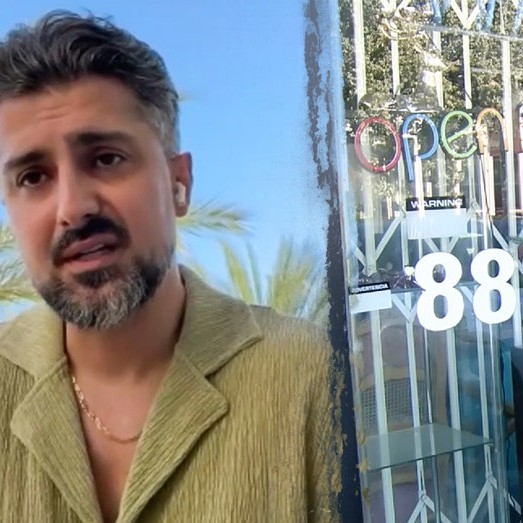
After a burglar dropped through the roof of Nafiseh Jeweler on Ventura Boulevard and left with an estimated $100,000 in jewelry, co-owner Touraj Nezafati says his family is now weighing whether to shut the doors on their three-decade Los Angeles business altogether.
TLDR
Co-owner Touraj Nezafati says a roof burglary at Nafiseh Jeweler, which reportedly took about $100,000 in jewelry, is the latest in a series of crimes against his family. With no suspect publicly identified, they are weighing closure or a move out of Los Angeles.
A Burglary Through the Roof
According to Fox 11 Los Angeles, the most recent burglary occurred around 2:30 a.m. at Nafiseh Jeweler, a family business on Ventura Boulevard in Los Angeles. Surveillance footage, described in the broadcast and in a later Fox News report, shows a man entering the shop through the roof and leaving again in under 10 minutes.
The intruder reportedly covered exterior cameras before forcing his way in. Once inside, he moved directly toward areas where valuables were kept, behavior that the family believes suggests advanced knowledge of the layout. In that brief window, the man is said to have taken an estimated $100,000 worth of jewelry before escaping back through the same opening.
Nezafati told Fox 11 that the person appeared to have planned his entry carefully, attacking the ceiling and dropping into the building from above. The store, he said, has a two-level interior. The burglar first confronted what Nezafati described as an 18-foot drop, then crawled toward a section where the floor below was closer before jumping down.
Despite the obvious risks of climbing and jumping inside the darkened store, the man did not conceal his identity. Fox News reported that he did not wear gloves and did not cover his face, meaning investigators could have clear images and potential fingerprints to work with if the case is pursued.
A Pattern of Victimization
The roof break-in is not the first crime the family has reported. According to the Fox News account, Nezafati said the business was burglarized about six months earlier. After that earlier incident, he told the outlet, assailants twice followed family members home and forced their way into the residence.
Those home invasions, as described by Nezafati, extend the impact of the store burglaries beyond financial loss and into daily life. They are his description of events, reported through the television interview. Publicly available records confirming or detailing those incidents were not discussed in the Fox coverage, leaving important questions about how the earlier cases were investigated or classified.
In his interview with Fox 11, Nezafati described how that pattern of victimization has reshaped the family’s routine. He said they now fear even the short trip between their storefront and their home. “We are even scared to go outside from the jewelry store to home,” he said. “We are always scared. What if we get robbed on the way? What if somebody puts a gun on our head and says, ‘Go back to the store and open the safe?'”
By his account, this is no longer a matter of one-off property crime. It is an ongoing security concern that spans work and home, and that has left the family questioning whether the city where they have worked for about 30 years can still offer basic safety.
What Is Known and What Is Not
Across the Fox 11 and Fox News reporting, several details about the roof burglary are clear. The location, Ventura Boulevard in Los Angeles, is known. The approximate time, around 2:30 a.m., is stated. The method of entry, through a breached roof with cameras covered, is described on the record by the co-owner.
The estimated loss figure, about $100,000 in stolen jewelry, also comes from the family’s account. Insurance documentation, inventory lists, and any independent valuation that might confirm or adjust that estimate are not discussed in the publicly reported story. For now, that number remains a reported estimate, not a court-tested figure.
There is also no publicly reported information in the Fox coverage about an arrest, named suspect, or formal charges in connection with the roof burglary or the earlier incidents the family described. The man on the surveillance footage is consistently identified only as a suspect. Without a public arrest report or charging document, his identity, criminal history, and possible connections to the previous crimes remain unknown.
The reports likewise do not spell out how local law enforcement has classified these events. In burglary and home invasion cases, the way an incident is coded and written in the initial report can influence which unit investigates, how much detective time is devoted to it, and whether the crime is considered part of a broader pattern. None of that procedural detail has been made public through the coverage cited so far.
Living With Crime as a Business Decision
The family’s response to this uncertainty is blunt. Nezafati told Fox News that after decades in Los Angeles, they are considering two options. One is closing Nafiseh Jeweler permanently. The other is relocating the business to Orange County, which he presented as a potentially safer alternative.
The comment that has circulated most widely is his summary of how he now views the city where he has spent much of his working life. “It is time to go from LA. LA has changed,” he said. The statement does not attempt to quantify how crime has changed in Los Angeles or in their specific neighborhood. Instead, it reflects how a series of reported incidents has altered his perception of the city’s risks and rewards.
For small businesses, especially those that handle high-value goods like jewelry, security costs and crime exposure are part of the basic business equation. Reinforcing a roof, upgrading surveillance, hiring guards, and improving safes are all possible responses, but they come with significant expense. Insurance coverage can offset some losses, yet repeated claims can increase premiums or affect future insurability.
Those pressures are not unique to Nafiseh Jeweler. Jewelers, pawn shops, and other high-value retailers across California have described similar concerns in public hearings and industry forums in recent years. The specific numbers vary by city and neighborhood, but the underlying problem is the same. A single successful burglary has the potential to erase years of narrow profit margins, especially for family-run shops.
Crime, Confidence, and Public Accountability
Cases like the Nafiseh Jeweler burglary sit at the intersection of individual victimization and broader public policy. On one level, this is a single store, a single family, and an unidentified man who climbed through a roof in the early morning hours. On another level, it connects to ongoing debates about police staffing, prosecutorial priorities, and the effectiveness of laws governing property crime.
The public record available so far does not show how quickly officers arrived, what evidence was collected, whether detectives have identified a person of interest, or how this case fits into any wider pattern of similar burglaries along Ventura Boulevard. Without that information, it is not possible to say whether the problem is primarily investigative capacity, legal thresholds for charging, organized targeting of jewelers, or some mix of those factors.
What the reporting does make clear is that, at least for this family, confidence in local security has eroded. Their willingness to remain in Los Angeles, as stated in the interviews, now depends not only on whether this particular suspect is ever identified, but on whether they believe future protection will be meaningfully different.
That raises a set of unanswered questions that extend beyond one storefront. Will investigators publicly link this burglary to any prior incidents at the business or the family home? Will authorities release additional information from the surveillance footage to solicit wider tips? And, for customers on Ventura Boulevard and in similar corridors, how many more stories like this will unfold before that uncertainty is resolved?