


Case overview
On December 1, 1948, an unidentified man was found dead on Somerton Beach in Adelaide, Australia, with no wallet, no identification, and labels removed from his clothing. Despite forensic analysis, witness interviews, and decades of public fascination, investigators never confirmed his identity or cause of death. The case remains one of Australia’s most enduring unsolved mysteries.
The discovery on Somerton Beach
A couple walking along Somerton Beach on the morning of December 1, 1948, noticed a man lying against the seawall, dressed in a suit and tie. When they returned hours later, he had not moved. Police were called and confirmed he was dead. There were no signs of violence, no identification, and no immediate explanation for his death.
The body was transported to Royal Adelaide Hospital for examination. Pathologist John Barkley Bennett conducted the autopsy and found the man’s stomach contained a partly digested pasty, but no clear toxicological evidence of poisoning. The internal organs showed congestion consistent with certain types of poisoning, but no poison could be conclusively identified with the forensic methods available in 1948.
What investigators found
The deceased man appeared to be in his 40s, approximately 5 feet 11 inches tall, with gray-blue eyes, ginger-brown hair, and well-maintained hands that suggested he had not performed manual labor. His clothing was of good quality but carried no maker’s labels. The labels had been deliberately removed or torn out.
In his pockets, police found a used bus ticket from Adelaide to Glenelg, an unused second-class rail ticket, an aluminum American comb, a pack of chewing gum, and cigarettes of a brand he had not been smoking. A half-smoked cigarette of a different brand lay behind his ear. No wallet, money, or identification was present.
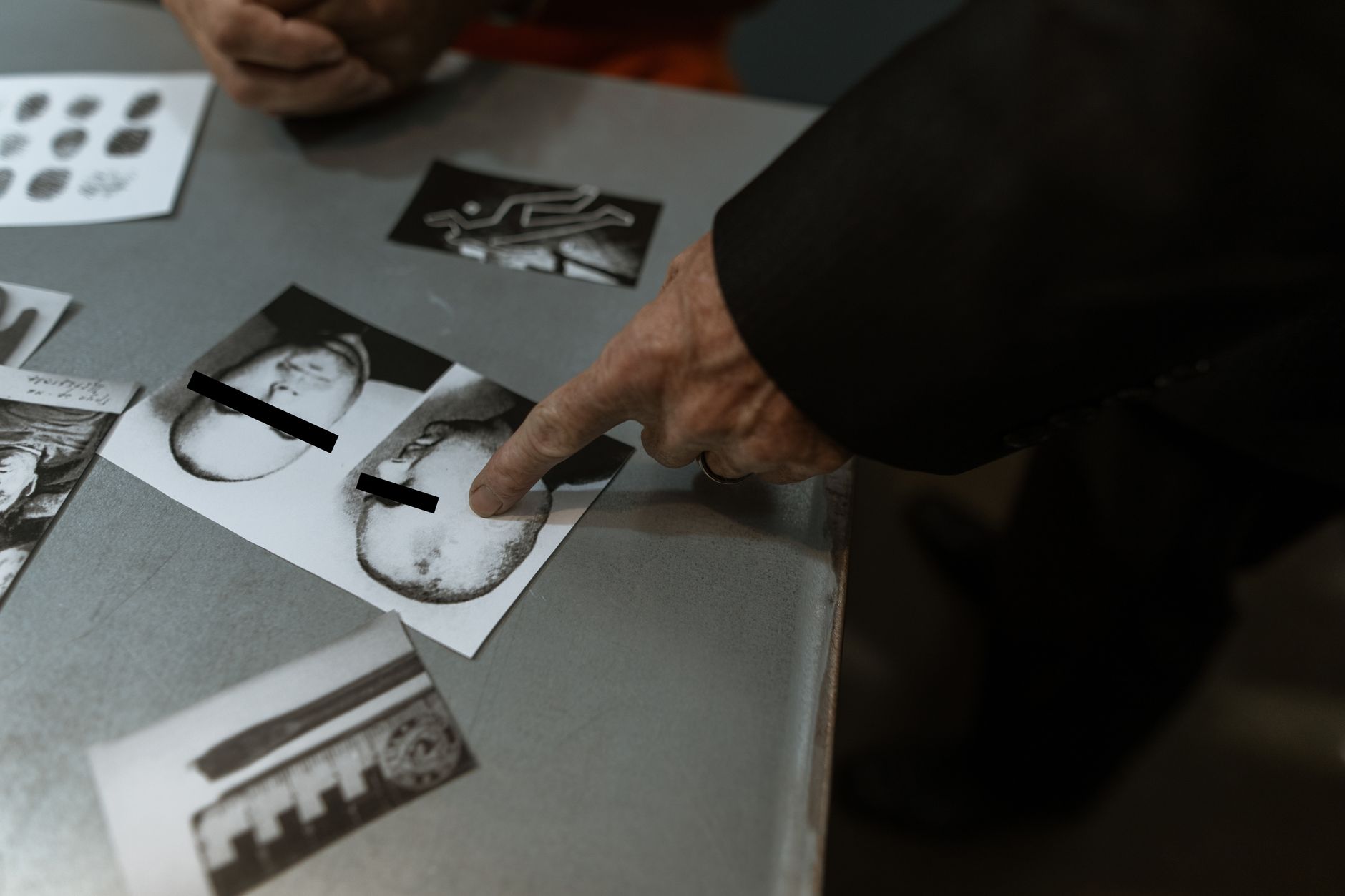
Investigators canvassed missing persons reports and dental records across Australia and abroad. No matches were found. Fingerprints were checked against military and criminal databases with no result.
The suitcase and the Tamam Shud scrap
In mid-January 1949, a brown suitcase was recovered from the cloakroom at Adelaide Railway Station. It had been checked in around the time of the man’s death. Inside were clothes with labels removed, a stenciling brush, scissors, and a knife. Some items bore the name “T. Keane” or “Kean,” but investigators could not confirm whether this was the man’s real name or a false identifier.
During a re-examination of the body’s clothing in April 1949, investigators found a small rolled scrap of paper in a hidden pocket of the man’s trousers. The paper bore two words printed in ornate script: “Tamam Shud,” transliterated Persian for “ended” or “finished.” The scrap had been torn from the final page of a rare edition of “The Rubaiyat of Omar Khayyam,” a 12th-century Persian poem.
Police issued a public appeal for the book. A man came forward in July 1949, reporting he had found a copy of “The Rubaiyat” in the back seat of his unlocked car parked near Somerton Beach on the night of November 30, 1948. The final page had been torn out, and the tear matched the scrap found on the body.
The coded message and telephone number
On the rear cover of the book, investigators found five lines of handwritten letters that appeared to be a code. The sequence has never been deciphered. Cryptographers, intelligence agencies, and amateurs have analyzed the letters for decades without producing a verified solution. Some investigators believed it was a cipher; others considered it abbreviations, initials, or random markings.
The book also contained a phone number penciled in the back. The number belonged to a woman living in Glenelg, a suburb near Somerton Beach. Police interviewed her, and she said she had given a copy of “The Rubaiyat” to an acquaintance during World War II but did not recognize the dead man. She declined to be publicly identified and was referred to in press coverage as “Jestyn,” a pseudonym. The nature of her relationship with the deceased, if any, remains unclear.
Theories and dead ends
Speculation surrounding the Somerton Man case ranged from espionage to suicide to accidental poisoning. Some investigators theorized the man was a foreign agent involved in Cold War intelligence, given the timing, the cipher, and the removed labels. Others pointed to the lack of confirmed poison and questioned whether a professional would die so conspicuously. The unidentified man’s dental work suggested he may have been American, but no records matched.
Efforts to identify him through photographs published in Australian newspapers and broadcasts overseas produced no confirmed leads. Witnesses came forward claiming to have seen the man in Adelaide in the days before his death, but descriptions varied and were never corroborated with physical evidence.
The book, the code, the removed labels, and the woman’s phone number created a compelling narrative, but none led to verified answers. Investigators followed leads across Australia, the United States, and Europe without success.
Press coverage and public fascination
Australian newspapers covered the case extensively from late 1948 through the early 1950s, with particular attention to the cryptic elements. The “Tamam Shud” scrap and coded message fueled public interest and invited amateur sleuths, cryptographers, and theorists to offer interpretations. Headlines focused on the mystery of the man’s identity, the unexplained cause of death, and the possibility of espionage.
The case became a fixture in Australian media and was periodically revisited in later decades as forensic technology advanced. Television documentaries, newspaper retrospectives, and academic studies examined the evidence and explored theories, but no resolution emerged.
Advances in forensic identification
In 2021, Australian authorities approved an exhumation of the Somerton Man’s remains to extract DNA for genealogical analysis. Researchers used genetic genealogy techniques similar to those employed in solving cold cases in the United States. In July 2022, forensic investigator Colleen Fitzpatrick and Professor Derek Abbott announced they had identified the man as Charles Webb, an electrical engineer from Melbourne.
The identification was based on DNA analysis and genealogical research. Abbott and Fitzpatrick stated that Webb had been born in 1905 and had a wife and child, though the family’s knowledge of his movements in 1948 remains unclear. South Australia Police have not officially confirmed the identification, and debate continues within forensic and genealogical communities about the certainty of the findings.
Unresolved questions
Even if the identification is confirmed, critical questions remain unanswered. The cause of death was never conclusively determined. The purpose of the code, if it had one, has not been verified. The connection, if any, between the man and the woman whose phone number appeared in the book remains speculative. The removal of clothing labels and the circumstances leading to his death on Somerton Beach are still unclear.
The case illustrates the limits of mid-20th-century forensic science and the challenges of identification without modern DNA analysis. It also demonstrates how missing documentation, evidence gaps, and unverified theories can sustain public fascination for generations.
Where to look next
- Documentary: “The Somerton Man: An Unsolved History” (ABC Australia)
- Book: “The Unknown Man” by Gerry Feltus
- Podcast: “The Somerton Man Mystery” (Casefile True Crime)