

An FBI search of Fulton County’s main election facility that seized hundreds of boxes of 2020 records began with a referral from former Trump campaign lawyer Kurt Olsen, according to a newly unsealed affidavit. Federal investigators say they are probing potential federal crimes, while county officials argue the government never had probable cause to search.
TLDR
A newly unsealed FBI affidavit shows the Fulton County election search stemmed from a referral by former Trump lawyer Kurt Olsen and cites ballot errors and missing records, while county officials argue the document relies on debunked fraud theories and fails to show probable cause.
Affidavit Traces Federal Probe to Former Trump Lawyer
The search emerged after Fulton County Board of Commissioners Chairman Robb Pitts filed an emergency motion seeking the return of original 2020 election materials, including an estimated 656 boxes of ballots, ballot images, tabulators, and voter rolls. As part of that dispute, U.S. District Judge J.P. Boulee ordered the Justice Department to file its search warrant affidavit and unsealed the court docket.
The affidavit, written by FBI Special Agent Hugh Raymond Evans, describes a criminal investigation into whether problems in Fulton County’s 2020 election administration were the result of intentional acts that violated federal law. The document states that “the FBI criminal investigation originated from a referral sent by Kurt Olsen, Presidentially appointed Director of Election Security and Integrity.”
Olsen, described in earlier reporting as an election denialist, advised then-President Donald Trump’s reelection campaign in late 2020. According to the affidavit and prior accounts, he spoke with Trump several times on January 6th, 2021, and pressed then-acting Attorney General Jeffrey Rosen to support litigation aimed at overturning Joe Biden’s victory at the U.S. Supreme Court.
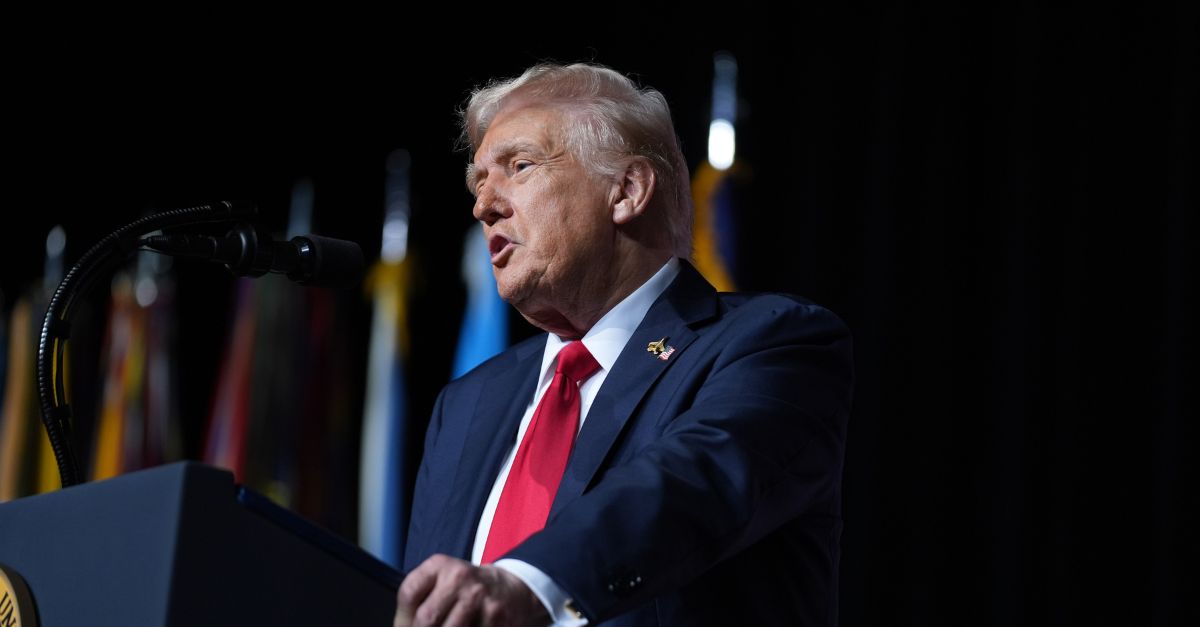
In a December 29th, 2020, email to Rosen’s deputy, John Moran, Olsen wrote, “As I said on our call, the President of the United States has seen this complaint, and he directed me last night to brief AG Rosen in person today and discuss bringing this action. I have been instructed to report back to the President this afternoon after this meeting.” The Texas-style challenge he promoted was never adopted by the Justice Department.
According to the affidavit, Olsen was later appointed as a special government employee in October 2025 and tasked with reviewing never-proven claims of widespread fraud during the 2020 election, with an emphasis on gathering information from states. His referral to federal law enforcement is identified as the catalyst for the Fulton County investigation.
From Debunked Fraud Claims to Federal Search Warrant
The affidavit repeats a series of allegations about Fulton County’s 2020 vote counting that have circulated for years, many of which have been investigated and publicly addressed. It states that the document “maintains widely and long debunked claims of electoral impropriety” while presenting them as allegations related to ballot handling and tabulation.
The affiant acknowledges that the record is mixed, stating that “some of those allegations have been disproven while some of those allegations have been substantiated, including through admissions by Fulton County.” The affidavit does not claim that the presidential outcome in Georgia was affected, but instead focuses on whether record-keeping and counting practices complied with federal law.
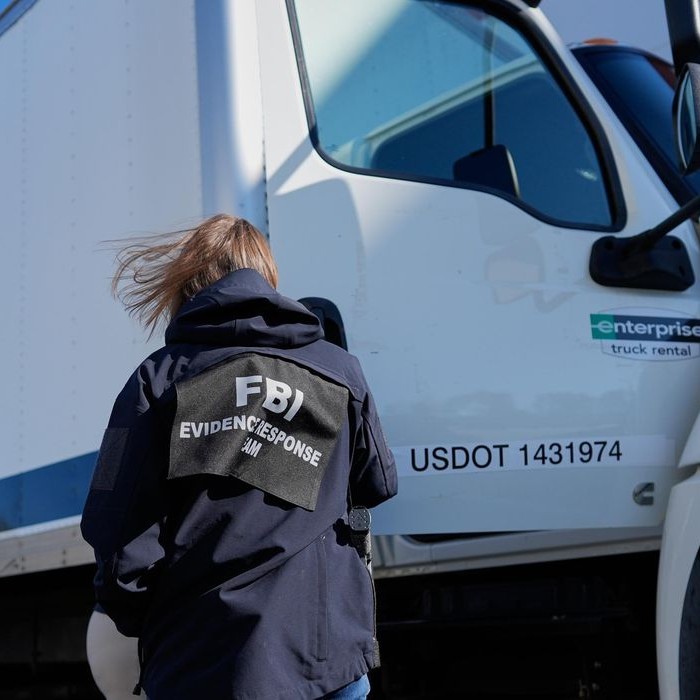
After reviewing the affidavit, U.S. Magistrate Judge Catherine Salinas approved a federal search warrant in late January. The FBI raid at Fulton County’s election center took place later that day. According to the filing, agents removed boxes of election records and related equipment for federal review. Director of National Intelligence Tulsi Gabbard and FBI Deputy Director Andrew Bailey appeared at the site as agents loaded materials into federal vehicles, underscoring the investigation’s visibility inside the government.
The FBI is investigating if “intentional acts” caused discrepancies in Fulton County’s 2020 election vote counts. https://t.co/715RY9M1c0 pic.twitter.com/GGI0DGB6Jy
— FOX 2 Detroit (@FOX2News) February 11, 2026
Ballot Errors, Missing Images, and Audit Discrepancies
Much of the affidavit centers on a set of documented errors and gaps that arose during Georgia’s multiple reviews of the 2020 presidential vote. Among the deficiencies, it cites a Fulton County admission that the county does not have scanned images of all ballots counted during either the original tally or the subsequent recount. County officials have previously maintained that there was no legal requirement to retain every image, according to Reuters.
The affidavit also notes that, during a later recount, some ballots were scanned more than once. The Georgia State Election Board reprimanded Fulton County in 2024 for double-scanning more than 3,000 ballots during the second and final recount, according to the Atlanta Journal-Constitution. To date, it remains unclear from public records whether those double-scanned ballots were ultimately included as votes in either candidate’s official total.
Federal investigators further highlight problems during Georgia’s Risk Limiting Audit, a hand count intended to confirm machine results. The affidavit states that auditors reported batch tallies that did not match the actual votes in the batches they reviewed, and that a state Performance Review Board confirmed inaccurate batch tallies from that audit. It also recounts auditors’ reports of purported absentee ballots that appeared never to have been creased or folded, which raised questions about whether those ballots had been mailed.
On the deadline day for reporting recount results, Fulton County initially reported a total of 511,343 ballots, which was 17,434 fewer ballots than the original count. The following day, the county reported 527,925 ballots. The affidavit points to this swing in reported totals as evidence that the recount process was error-prone and potentially vulnerable to abuse, although it does not allege that the change reflected a deliberate attempt to alter the outcome.
County Memo Says Affidavit Leans on Debunked Theories
Fulton County officials counter that the search warrant should never have been issued. In a memo supporting the emergency motion to recover the seized materials, the county argues that the Justice Department failed to establish probable cause that federal crimes occurred at the election center.
The county’s filing questions the weight the affidavit gives to long-disputed narratives about the 2020 election. “Given the lengthy history of widely debunked voter fraud theories, there is little reason to have confidence that the affidavit establishes probable cause,” the memo asserts. The county contends that the Justice Department’s own investigative history, as well as public documentation from prior state and federal reviews, contradicts the fraud theories that underpin the warrant application.
Officials in Georgia have previously acknowledged administrative errors in Fulton County’s 2020 counts, including misreported batches and issues with ballot scanning. At the same time, they have consistently said there is no evidence of widespread voter or electoral fraud in Georgia’s 2020 presidential contest. Joe Biden carried the state by an official margin of 11,779 votes, a result that has withstood multiple recounts, audits, and legal challenges. The affidavit itself does not allege that the contested practices changed that outcome.
This creates a tension at the center of the dispute. The affidavit leans on the same episodes that have fueled baseless fraud narratives, even as it acknowledges that many of those claims have been debunked. County lawyers argue that reframing those episodes as grounds for a criminal search, without new underlying evidence, falls short of the constitutional standard for probable cause.
Federal Law Focuses on Intent, Not Outcome
Federal election law requires that jurisdictions preserve certain records and conduct fair tabulations of votes. Those obligations apply regardless of whether errors ultimately affected who won an election. The affidavit emphasizes that point, arguing that the question for investigators is whether any failures were intentional, not whether they were outcome-changing.
“If these deficiencies were the result of intentional action, it would be a violation of federal law regardless of whether the failure to retain records or the deprivation of a fair tabulation of a vote was outcome determinative for any particular election or race,” the affidavit reads.
In effect, federal agents are asking the court to allow them to test whether the acknowledged problems in Fulton County’s administration of the 2020 vote reflected deliberate misconduct. The county responds that the same problems have already been explained as human error, workload strain, and procedural missteps during an extraordinary election cycle, and that no new evidence has emerged to recast them as potential crimes.
Probable cause requires a fair probability that evidence of a crime will be found in the place to be searched. The Justice Department argues that the mix of missing records, miscounts, and discrepancies meets that threshold. Fulton County insists that, standing on a record of repeated debunking of fraud theories, the affidavit does not cross that line.
What Comes Next in Fulton County Investigation
Judge Boulee now must decide whether the federal search of Fulton County’s election center will stand as written. He is considering Pitts’s emergency motion demanding the return of original election materials, which local officials say they are legally obligated to maintain and which they argue should not be stored under federal control.
The Justice Department, for its part, has already executed the warrant and obtained the records. The court could order some or all of those materials returned, limit how investigators may use them, or leave the search fully intact. Any ruling will carry implications beyond Fulton County, including how far federal authorities can reach into state-managed election systems years after ballots were cast.
At the core of the case is a narrow but consequential question. Will judges view the mix of acknowledged administrative errors, disputed audit findings, and long-litigated allegations as enough to justify a criminal search, or will they see an affidavit that repackages debunked 2020 narratives without new proof of intentional wrongdoing?