



Case overview
In September 1857, a woman’s dismembered torso was pulled from the Thames near Waterloo Bridge, launching one of Victorian London’s most sensational murder investigations. The case produced a suspect, a dramatic trial, and hundreds of column inches in the press, yet closed with more questions than answers about what actually happened and whether justice was served.
The discovery and what followed
On September 5, 1857, a Thames waterman named William Fisher retrieved a parcel from the river near Battersea. Inside was the torso of a woman, wrapped in cloth and weighted with stone. The head, arms, and legs had been removed with what medical examiners described as considerable anatomical skill. Two days later, additional parcels containing the victim’s legs surfaced near Limehouse and Battersea Bridge. The head and arms were never recovered.
Post-mortem examination confirmed the victim was a young woman, likely in her twenties, approximately five months pregnant at the time of death. Dr. Thomas Bond, a police surgeon who would later consult on the Jack the Ripper murders, determined death had occurred within days of the discovery. The precision of the dismemberment suggested familiarity with surgical technique or butchery.
The wrapping materials provided the first investigative leads. The cloth included a distinctive patterned fabric traced to a draper’s shop in Camberwell. Marks on the torso indicated the body had been tightly bound, possibly to delay decomposition or facilitate concealment. The weighted parcels suggested a deliberate attempt to keep the remains submerged.
The suspect and circumstantial web
Within weeks, investigators focused on William Godfrey Youngman, a 28-year-old artist and drawing instructor with lodgings near Westminster Bridge. Police attention turned to Youngman after witnesses reported seeing him with a woman matching general descriptions of the victim in the days before the discovery. His residence was searched, and investigators found bloodstains on floorboards and clothing, along with a saw that appeared recently cleaned.
Youngman maintained the blood came from nosebleeds and injured fingers. He acknowledged knowing several women but denied involvement in any disappearance or crime. No missing person report matching the victim had been filed, and without a head, formal identification proved impossible. The investigation relied entirely on circumstantial alignment between Youngman’s movements, the physical evidence, and witness accounts.
Additional testimony emerged from Youngman’s landlady, who reported hearing unusual sounds late at night and noticing the smell of burning fabric. A neighbor claimed to have seen Youngman carrying a heavy bundle toward the river around the estimated time of disposal. Each piece of evidence carried ambiguity. The sounds could have had innocent explanations. The bundle was never directly observed being disposed of. The bloodstains, while suspicious, were not definitively linked to the victim.
The inquest and media frenzy
The coroner’s inquest stretched across multiple sessions in October 1857, drawing enormous public interest. London’s newspapers covered every development in vivid detail, often printing sketches of the remains, the wrapping materials, and Youngman himself. The Times, The Illustrated London News, and regional papers competed for readership with increasingly speculative reporting about the victim’s identity and possible motive.
Press coverage framed the case through prevailing Victorian anxieties about urban anonymity, sexual morality, and class boundaries. Journalists speculated the victim might have been a domestic servant, a mistress, or a woman involved in prostitution. The lack of a confirmed identity allowed these projections to flourish unchecked by verifiable facts.
The inquest heard from more than 30 witnesses, including medical experts, watermen who worked the Thames, and individuals who claimed to recognize either the victim or Youngman from various sightings. Contradictions emerged quickly. Some witnesses placed Youngman near the river on relevant dates. Others provided conflicting descriptions of the woman he was allegedly seen with. The medical testimony agreed on cause of death, strangulation, but could not conclusively tie any physical evidence directly to Youngman.
The jury returned an open verdict, determining that the woman had been murdered by person or persons unknown. While this formally closed the inquest, it left the investigative door open and public speculation unresolved.
The trial that never proved guilt
Despite the lack of a definitive inquest conclusion, Youngman was charged with willful murder in November 1857 and committed for trial at the Central Criminal Court. The prosecution case rested on the accumulation of circumstantial details: Youngman’s proximity to the disposal sites, the bloodstains in his lodgings, his inability to account convincingly for his movements, and witness testimony linking him to a woman who had since vanished.
The defense attacked the foundation of the case. Without a confirmed victim identity, there was no proof anyone was actually missing. The bloodstains could not be forensically tied to the recovered remains, as blood typing and DNA analysis did not yet exist. The saw, while cleaned, showed no definitive traces of human tissue. Witness descriptions varied widely, and none could positively identify the torso as belonging to any specific individual they claimed to have seen with Youngman.
The trial proceeded in December 1857 before a packed courtroom. Press coverage intensified, with daily summaries of testimony and courtroom sketches filling pages. Public opinion divided sharply. Some saw Youngman as clearly guilty, trapped by a web of damning coincidences. Others viewed the case as dangerously thin, built on assumptions rather than proof.
After deliberation, the jury acquitted Youngman. The judge’s instructions emphasized the standard of proof required for conviction, and the absence of direct evidence linking the defendant to the crime proved insurmountable. Youngman walked free, though his reputation remained destroyed by months of public suspicion and press attention.
What the records still reveal
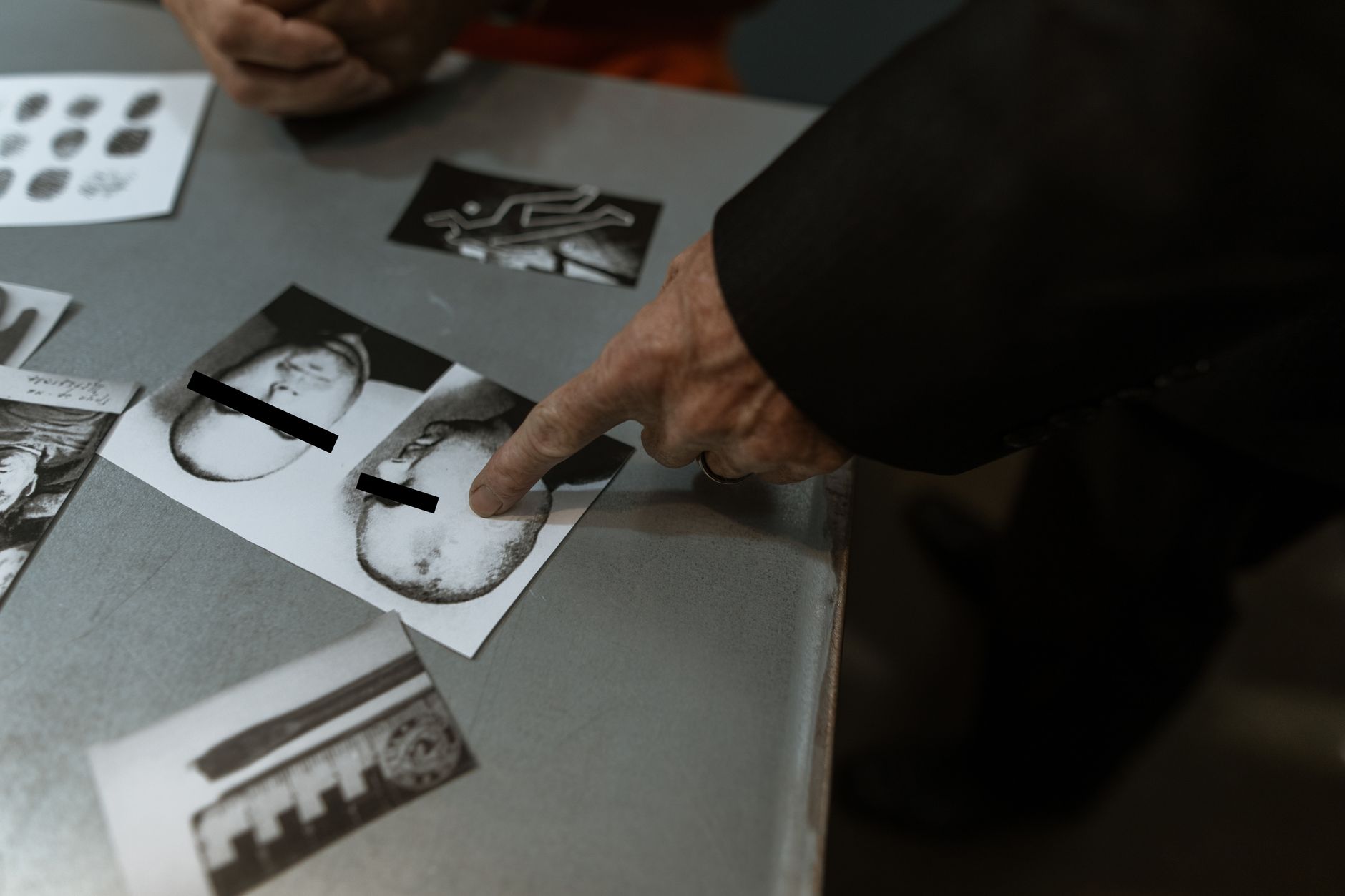
The torso in the Thames case generated extensive documentation that survives in court records, coroner’s reports, and newspaper archives. These materials illustrate both the investigative methods of the period and their significant limitations. Fingerprint analysis was decades away from adoption. Forensic pathology existed in rudimentary form. Photography was emerging but not yet systematically integrated into police work.
The absence of a central missing persons bureau or coordinated record-keeping across London’s divisions meant that identifying unknown remains depended almost entirely on public recognition or direct reports from concerned parties. In a city of over two million people, with constant movement and transient populations, this system left enormous gaps.
Period records also reflect the extent to which press coverage shaped public perception and possibly influenced the investigation itself. Newspapers did not merely report developments but actively theorized about the crime, published speculative illustrations, and framed the case within moral narratives about urban danger and female vulnerability. This coverage created pressure for resolution while simultaneously feeding public doubt about the conclusions reached.
The enduring ambiguity
No further remains were recovered, and no missing person was conclusively matched to the torso. Youngman relocated after his acquittal, and little reliable documentation exists about his later life. Theories persisted for years, occasionally resurfacing in true crime retrospectives and criminal history studies, but no new evidence emerged to change the case’s unresolved status.
The case remains significant not because it was solved but because it demonstrates the investigative and evidentiary challenges of its era. The torso in the Thames became a symbol of urban anonymity, the limits of Victorian forensic science, and the gap between public certainty and legal proof. It also set a template for sensational crime coverage that influenced how similar cases were reported and understood in subsequent decades.
Modern analysts examining surviving records note the absence of systematic scene documentation, the reliance on subjective witness testimony, and the lack of protocols for handling and preserving physical evidence. These gaps, routine for the period, are now recognized as critical vulnerabilities that allowed cases like this to remain perpetually open to reinterpretation.
Where to look next
- Documentary: “The Victorian Slum” (BBC)
- Book: “The Invention of Murder: How the Victorians Revelled in Death and Detection and Created Modern Crime” by Judith Flanders
- Podcast: “Victorian Murders” (“Casefile True Crime”, Casefile Presents)