

Case overview
Between July and August 2000, five people were murdered in California by two brothers who called themselves the Children of Thunder. Glenn and Justin Helzer, along with Dawn Godman, carried out a series of killings they believed would fund a divinely ordained mission and hasten the apocalypse.
The leaders and the doctrine
Glenn Taylor Helzer grew up in the Church of Jesus Christ of Latter-day Saints in Concord, California, and served a mission in Brazil. After returning, he worked as a stockbroker and became involved in recreational drugs. By the late 1990s, he had developed a belief system that mixed apocalyptic visions, distorted LDS theology, and grandiose claims about his own spiritual authority. He claimed to be a prophet tasked with accelerating the end times through violent acts.
Glenn convinced his younger brother Justin and his girlfriend Dawn Godman that they were part of a divine mission. He called their group Transform America and referred to himself and Justin as the Children of Thunder, a reference drawn loosely from scripture. He told them that killing was justified if it served a higher spiritual purpose, and that committing murders and using the proceeds to fund an operation in Brazil would trigger the apocalypse and elevate him to spiritual leadership.
The ideology was incoherent but dangerous. Glenn used manipulation and emotional control to bind his co-conspirators to him. Dawn Godman, a former girlfriend, remained enmeshed in his worldview. Justin, who had intellectual disabilities, was especially vulnerable to his brother’s influence.
The first victims
On July 25, 2000, the group murdered Ivan and Annette Stineman, an elderly couple from Concord. The Stinemans were bludgeoned to death in their home. Glenn told his co-conspirators the killings were practice, a test run for larger murders to come. Their bodies were dismembered and dumped in the Sacramento-San Joaquin River Delta.
The motive appeared to be both financial and ideological. Glenn viewed each killing as a step toward his apocalyptic vision.
The victim and the plan
In the summer of 2000, Glenn identified his next target: Selina Bishop, a 22-year-old client he had met while working as a stockbroker. Bishop came from a wealthy Marin County family and had access to significant financial resources. Glenn decided that murdering her and her family would provide the money he needed to fund his mission.
On July 30, 2000, Glenn, Justin, and Dawn lured Selina Bishop to their apartment in Concord under the pretense of a social visit. Once inside, they attacked her. Glenn used a stun gun to incapacitate her, and Justin struck her with a hammer. She was suffocated with a bag. Her body was dismembered in a bathtub, placed in duffel bags, and dumped in the Delta.
The group forged documents to access Bishop’s financial accounts. When her mother, Jennifer Villarin, and her boyfriend, James Gamble, began asking questions about Selina’s whereabouts, Glenn decided they had to be killed as well.
The second and third murders
On August 3, 2000, Glenn contacted Jennifer Villarin and arranged to meet her at her home in Marin County. He brought Dawn Godman with him. Once inside, they attacked Villarin and Gamble with hammers. Both were killed. Glenn and Dawn dismembered their bodies in a bathtub at the residence. The remains were transported to the Delta and discarded in the water.
The murders were brutal and methodical. Glenn had planned the logistics carefully, including the disposal method, the forgery of financial documents, and the coordination of alibis. He believed the plan would allow him to access hundreds of thousands of dollars without detection.
The unraveling
Glenn had recruited another accomplice, Keri Furman, a former girlfriend who worked at a bank. She helped process fraudulent withdrawals from Selina Bishop’s accounts. But Furman became uneasy about the scope of the operation and Glenn’s evasiveness. On August 8, 2000, she contacted authorities and told them she believed Glenn Helzer was involved in something criminal.
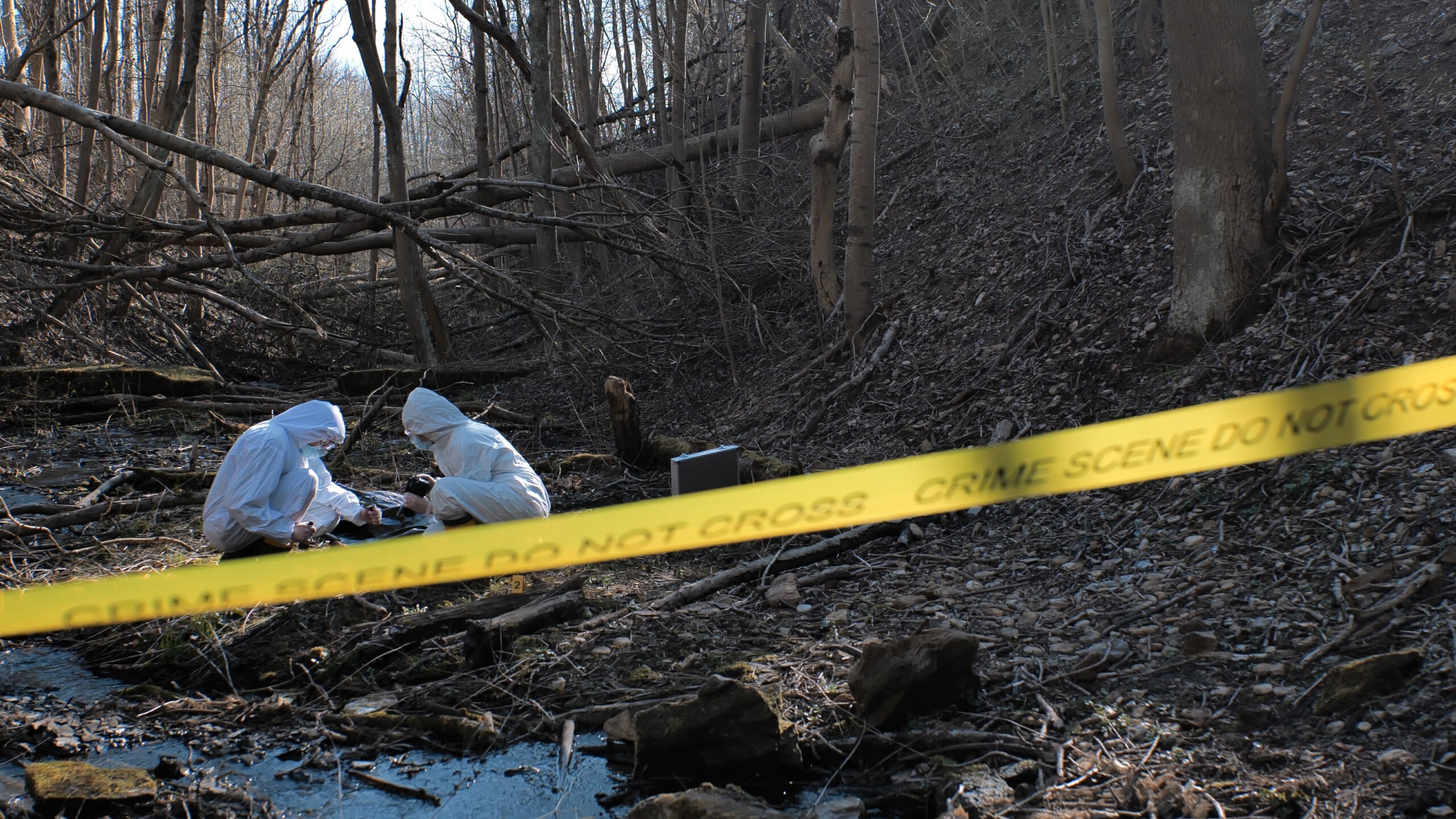
Investigators moved quickly. When they interviewed Glenn, his answers were inconsistent. A search warrant was executed at the Concord apartment where the murders had occurred. Forensic teams found blood evidence in the bathroom and other material consistent with violent homicide and dismemberment. Detectives also discovered financial records, forged signatures, and other documents linking Glenn to Selina Bishop’s accounts.
On August 13, 2000, Glenn Helzer, Justin Helzer, and Dawn Godman were arrested and charged with multiple counts of murder. Keri Furman was charged as an accessory.
What the investigation revealed
The scope of the crime became clearer as the investigation progressed. Authorities confirmed that the group had murdered five people in total. Forensic evidence played a central role in the prosecution. Blood spatter analysis, DNA recovered from dismemberment sites, and tool mark evidence from the weapons used all corroborated witness testimony. Investigators were able to piece together a detailed timeline of the murders, the disposal of remains, and the fraudulent financial activity that followed.
Glenn had convinced his co-conspirators that the Stinemans were practice and that killing them was necessary to prepare for the larger plan. Each killing appeared to serve both financial and ideological purposes in Glenn’s distorted worldview.
The trials and outcomes
Glenn Helzer was convicted in 2004 of five counts of first-degree murder. He was sentenced to death and placed on California’s death row at San Quentin State Prison. On July 16, 2013, he was found dead in his cell. Authorities determined the cause of death to be suicide by hanging.
Justin Helzer was also convicted of five counts of first-degree murder. He was sentenced to death in 2005. In 2013, shortly after his brother’s death, Justin also died by suicide in his cell at San Quentin.
Dawn Godman pleaded guilty to two counts of first-degree murder and three counts of second-degree murder in exchange for testimony against the Helzer brothers. She was sentenced to 38 years to life in prison and remains incarcerated.
Keri Furman pleaded guilty to being an accessory after the fact. She was sentenced to four years in prison and has since been released.
The case’s lingering questions
The Children of Thunder murders stood out not only for their brutality but for the delusional framework that drove them. Glenn Helzer’s belief system was not part of any established cult or organization. It was a private ideology built from distorted religious ideas, personal narcissism, and manipulation. His ability to convince others to participate in such extreme violence raised questions about coercion, mental illness, and culpability.
Justin Helzer’s intellectual disabilities became a focal point in his defense. His attorneys argued that he was not capable of forming the intent necessary for first-degree murder and that he acted entirely under his brother’s control. The jury rejected that argument, but the case highlighted the legal and ethical complexities of prosecuting individuals with diminished capacity who participate in group violence.
The case also drew attention to the vulnerability of victims who were targeted because of their wealth and perceived isolation. Selina Bishop’s trust in Glenn, built through a professional relationship, became the entry point for a deadly scheme.
Where to look next
- Documentary: “Evil Twins: Helzer Brothers” (Investigation Discovery)
- Book: “Unholy Sacrifice” by Robert Scott
- Podcast: “The Children of Thunder” (“Sword and Scale”, Incongruity)