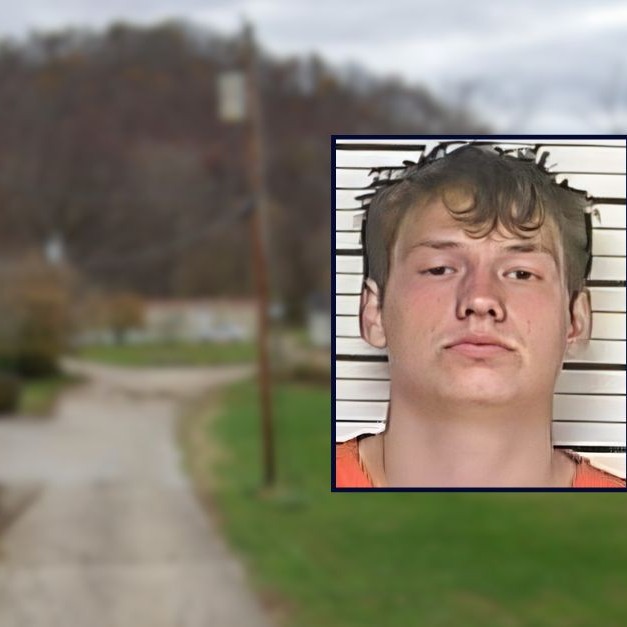


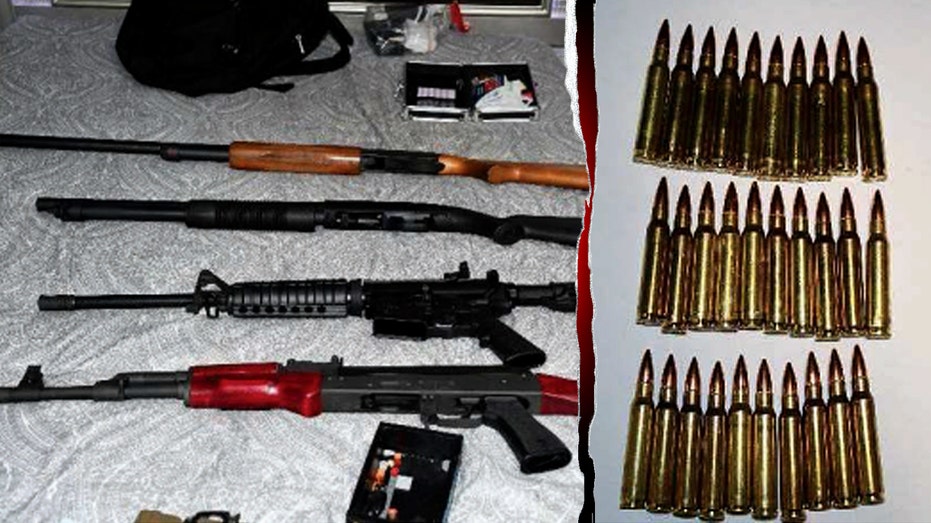
Federal agents say a 21-year-old in Columbus typed a handful of crude, angry posts about immigration officers. When they entered his home weeks later, they found rifles and body armor. The dispute now is about where free speech ends and a federal crime begins.
What Prosecutors Say Happened
According to a summary released by the U.S. Attorney for the Southern District of Ohio and reported by Fox News, federal investigators began looking into online threats against U.S. Immigration and Customs Enforcement (ICE) personnel in late 2025. The posts appeared on X, the platform formerly known as Twitter, under the handle @Father2High.
In one message on June 8, 2025, the account allegedly stated, “they should blast every ice agent they find.” Prosecutors say a later post on November 9, 2025, escalated the rhetoric, reading: “can’t wait to shoot these p—y ice agents and r——d maga maggots.”
The U.S. Department of Justice says the posts were directed at federal immigration officers and that they crossed the line from generalized political rage into explicit threats to kill or assault identifiable federal employees. In a criminal complaint, those statements are described as threats transmitted in interstate commerce, since messages on X travel through online networks that cross state lines.
The suspect, identified as 21-year-old Columbus resident Justin Mesael Novoa, has been charged with making threatening interstate communications and with threatening to assault or murder a federal law enforcement officer. At this stage, those are allegations, not findings of guilt.
Homeland Security Investigations arrested a Columbus man for alleged social media threats against Immigration and Customs Enforcement posted last year. https://t.co/6E2pG5JSHp pic.twitter.com/HH3IBfGRSW
— FOX 28 Columbus (@fox28columbus) January 22, 2026
The Search of the Home
After reviewing the social media posts, Homeland Security Investigations (HSI) obtained a search warrant for Novoa’s residence in Columbus. That search took place in December 2025, according to the court filings referenced in the Fox News report.
Inside the home, federal agents seized:
Item 1: Two rifles.
Item 2: Two shotguns.
Item 3: One handgun.
Item 4: Ammunition in unspecified quantities.
Item 5: Two helmets and body armor.
None of those items are inherently illegal to possess in Ohio, and prosecutors have not alleged that the guns or protective gear were unlawfully owned. Their significance in the complaint lies in their presence alongside the alleged threats. Investigators are effectively arguing that the combination of explicit threats to shoot officers and access to firearms and armor increases the credibility of the threat.
Prosecutors also note that a pro-Palestinian flag was hanging near the firearms and body armor, based on a photo included in the case materials and described by Fox News. The complaint, as reported, does not claim that the flag itself is unlawful or that support for any political cause is part of the criminal charge. Political expression, including controversial or unpopular viewpoints, is generally protected by the First Amendment so long as it does not constitute a “true threat” of violence.
No injuries were reported, and there is no indication in the available reporting that Novoa attempted to carry out any of the threats described in the complaint. The case is focused on the content of his online posts and the interpretation of those posts under federal law.
Charges and Potential Penalties
The Department of Justice states that Novoa faces two main federal charges, as described in the Fox News account:
Item 1: Threatening to kill a federal officer. Prosecutors say this charge carries a maximum of 10 years in prison.
Item 2: Making threatening interstate communications. This offense carries a potential sentence of up to 5 years in prison.
The threat-to-officer allegation appears to be brought under 18 U.S.C. 115, the federal statute that criminalizes threats to assault, kidnap, or murder certain federal officials and their immediate family members. The law allows punishment of up to 10 years if the threat involves the intent to impede, intimidate, interfere with, or retaliate against the official on account of their duties.
The alleged interstate communications violation is likely based on 18 U.S.C. 875(c), which makes it a crime to transmit in interstate or foreign commerce “any communication containing any threat to kidnap any person or any threat to injure the person of another.” That statute sets a maximum penalty of five years in prison for each qualifying threat.
Sentencing in federal cases depends on more than the statutory maximums. If there is a conviction, a judge would consult the U.S. Sentencing Guidelines, which look at factors such as a person’s criminal history, the nature of the threat, and any concrete steps taken toward carrying it out. At this point, there is no public sentencing recommendation, and the government has not suggested a specific term of imprisonment in the materials reported so far.
How Federal Law Treats Online Threats
Cases like this one sit in a legally sensitive area. On one side is broad protection for angry, offensive political speech, including harsh criticism of government agencies like ICE. On the other side is the government’s interest in preventing harm to identifiable officials and deterring serious threats that could intimidate public servants from doing their jobs.
Federal law does not criminalize every violent phrase that appears online. Courts distinguish between constitutionally protected hyperbole and what they call “true threats” of violence. A true threat is a statement that a reasonable person could interpret as a serious expression of intent to commit unlawful violence.
In 2023, the U.S. Supreme Court addressed this issue in Counterman v. Colorado, a case about persistent, disturbing messages on social media. The Court held that to convict someone for a threatening statement, “the State must show that the defendant consciously disregarded a substantial risk that his communications would be viewed as threatening violence.”
That ruling means prosecutors must prove not just that the words could be taken as a threat, but also that the sender had at least a reckless mental state about how the words would be understood. Courts still evaluate individual cases by looking at context, including:
Item 1: The specific language used.
Item 2: Whether a particular person or group is targeted.
Item 3: Any history of similar statements by the same person.
Item 4: Evidence of planning or preparation, such as weapons or surveillance.
Item 5: How and where the message was delivered.
In Novoa’s situation, the government appears to be relying on both the graphic language of the posts and the later discovery of firearms and body armor in his residence to argue that the threats were serious. His defense, when it is presented, may focus on whether the posts were specific enough, whether they named any individual officer, and what was in his mind when he wrote them.
Who Is Bringing the Case
The case is being led by the U.S. Attorney’s Office for the Southern District of Ohio. U.S. Attorney Dominick S. Gerace II and Jared Murphey, the acting special agent in charge of ICE Homeland Security Investigations in Detroit, publicly announced the charges, according to Fox News.
Assistant U.S. Attorney Timothy D. Prichard is prosecuting the case. On the investigative side, Homeland Security Investigations is handling the lead role, since its mission includes protecting ICE personnel and investigating threats related to immigration enforcement.
At the time of the announcement described in the Fox report, the Department of Justice had not indicated whether additional charges were expected. There is no public information in that reporting about a trial date, a plea offer, or whether the defense plans to challenge the sufficiency or constitutionality of the charges.
What Remains Unknown
Even with the detailed description of the posts and the search, significant parts of this case are not yet visible to the public.
Important unanswered questions include:
Item 1: Whether the government has any evidence beyond the posts and the firearms, such as private messages, search histories, or statements suggesting concrete plans to attack ICE agents.
Item 2: How Novoa’s defense team will characterize the posts, including whether they will present them as exaggerated online venting rather than genuine threats.
Item 3: Whether the court will treat the presence of a pro-Palestinian flag as relevant context or as protected political expression that should not influence the evaluation of the threat.
The Justice Department itself notes a basic principle that applies here. As the Fox article puts it, “A criminal complaint contains allegations, and defendants are presumed innocent unless proven guilty in a court of law.” The line between online rage and criminal threat will now be drawn in a federal courtroom, not in a social media feed.