

Rescued from one abduction, a Utah family later learned that the man who took their 14-year-old relative had already moved on to a second target, just streets away, while police were still searching.
A New Allegation About an Old Case
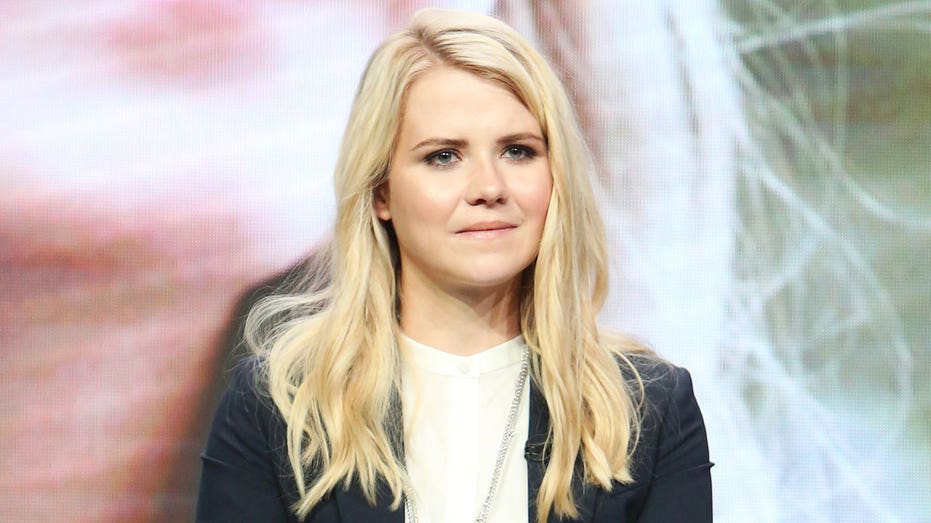
Elizabeth Smart, whose 2002 kidnapping in Utah drew national attention, now says that her captor, Brian David Mitchell, was actively preparing to abduct her teenage cousin as his next “wife” while Smart was still being held. The account appears in a recent interview with Fox News Digital that coincides with a new Netflix documentary and Smart’s latest book about living with trauma.
Mitchell is serving a life sentence in federal prison for kidnapping Smart and transporting her across state lines for sexual purposes, following his conviction in 2010. His crimes and trial have been extensively documented in court records and media coverage, including the detailed case history on Wikipedia, which notes that Smart was taken from her bedroom in Salt Lake City in June 2002 and found alive in March 2003 in Sandy, Utah, alongside Mitchell and his then-wife, Wanda Barzee (source).
Smart’s Account of a Planned Second Abduction
In her new interview, Smart, now 38, describes learning while in captivity that Mitchell was looking past her to a new victim. She told Fox News Digital that Mitchell fixated on her teenage cousin, Olivia Wright, and spoke about her in explicitly possessive, religious terms.
“I remember he said to me, ‘She’s supposed to be the next wife,'” Smart said. “He had a whole plan to kidnap seven young girls, and we would all be his wives. I just happened to be the first girl he kidnapped” (source).
According to Smart, Mitchell watched her cousin’s home repeatedly and became familiar with the property. Fox News Digital reports that she “prayed constantly” for her cousin’s safety as she listened to his alleged plans. The outlet also notes that Mitchell had previously done handyman work for the Smart family, giving him knowledge of their neighborhood layout.
Smart says Mitchell saw a Utah state holiday as the ideal time to act because families would be distracted by celebrations. She recalls the moment he told her of his focus on Olivia: “When he said that, my stomach dropped,” she said. “It felt like I had directed him to her” (source).
A Nighttime Break-In That Never Became a Case File
Smart’s most concrete allegation involves what she describes as an actual attempted break-in at her relatives’ house. In her telling, Mitchell moved beyond surveillance and tried to climb in through a bedroom window at night.
“It was actually my older cousin’s bedroom window that he tried to climb through,” Smart told Fox News Digital. She says that the window had small objects arranged along its sill, and contact with those items unintentionally created noise.
“She had trinkets on the windowsill, and some of them had fallen off. He paused and didn’t hear anything, then pushed further, and more trinkets fell. My uncle woke up, heard the sounds and ran into the room, screaming at my cousin in complete panic and fear. That was enough to foil my captor’s attempt to kidnap her,” Smart said (source).
Smart’s description suggests a close call that may never have been formally connected to her case while Mitchell was still free. Publicly available records of Mitchell’s federal prosecution focus on Smart’s abduction and the nearly nine months she spent in captivity. There is no widely reported indication that prosecutors charged Mitchell with attempting to abduct another family member, or that a separate investigation into a break-in at the cousin’s home resulted in criminal charges.
That does not mean the event did not occur. It does indicate that if there was a police report about the nighttime disturbance, it did not become a central part of the federal case that eventually sent Mitchell to prison for life.
What The Courts Established About Mitchell
The federal trial held in Utah in 2010 centered on Smart’s abduction and the abuse she endured, rather than on possible future victims. Jurors heard evidence that Mitchell broke into the Smart home in the early hours, took Smart at knifepoint, and held her captive while traveling through Utah and into California, subjecting her to repeated sexual assaults under a self-styled religious framework (source).
Mitchell was convicted of kidnapping and transporting a minor across state lines for sexual purposes. In 2011 he received a sentence of life in prison. His legal insanity defense was rejected after experts testified about his mental state and religious beliefs. The court findings establish that Mitchell viewed Smart as a plural wife within a homemade religious cosmology and believed he was acting under divine command, according to trial summaries and appellate decisions referenced in the public record (source).
Smart’s new allegation that Mitchell was working from a longer list of intended “wives” fits that framework. However, the idea of “seven young girls” as part of a plan, and the specific targeting of her cousin, have emerged most clearly through Smart’s own recent statements rather than through courtroom evidence.
Language Of Threat, Evidence Of Pattern
Mitchell’s expressed intent, as relayed by Smart, would be significant even without an attempted break-in. Research on serial offenders and domestic abductions often treats detailed planning and explicit talk of future victims as important red flags for risk, especially when the first abduction has not yet ended.
In this case, Smart’s testimony indicates that while she was still a missing child in active FBI bulletins, Mitchell was allegedly scouting a second victim and adjusting his plans to public holidays and household routines. The Fox News Digital report states that he circled the cousin’s home and looked for vulnerabilities in the structure before deciding on a point of entry.
Because those alleged preparations and the reported window entry did not feature in the public charging documents, it is not clear whether investigators ever had the opportunity to test Smart’s account against physical evidence or witness statements from that night. Fox News Digital does not indicate that local police or federal agents commented on the cousin’s reported near abduction for its story.
Smart’s Platform And The Limits Of The Record
Smart has spoken publicly for years about safety for children and young adults, including practical steps she believes can help families reduce risk. The new Fox News Digital interview accompanies the Netflix documentary “Kidnapped: Elizabeth Smart” and her book “Detours: Hope & Growth After Life’s Hardest Truths,” in which she discusses how trauma affects a person’s life trajectory.
She now occupies a dual position in the public eye. She is both a survivor whose lived experience provides detail that no official report can match and a prominent commentator whose words may be received as definitive even when they describe events that were never litigated in court.
In that context, the story of her cousin’s narrow escape does two things at once. It broadens the known picture of Mitchell as someone who allegedly continued to hunt for victims while one child was already missing. It also highlights a gap between the formal boundaries of a criminal case and the often wider circle of people placed at risk.
More than two decades after her rescue, Smart is still adding pieces to the public understanding of what happened around her abduction. Whether law enforcement agencies or courts will ever formally address the reported break-in at her cousin’s home remains uncertain. For now, it exists primarily as part of Smart’s own account of how close her family came to losing a second child.