

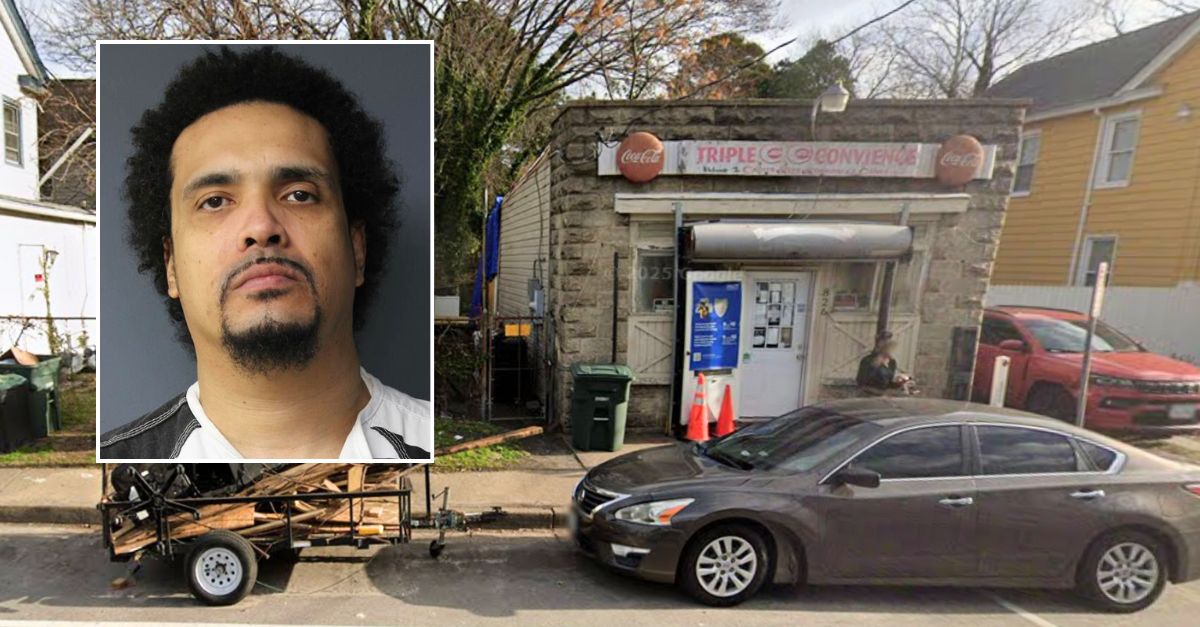
According to prosecutors in Norfolk, Virginia, 84-year-old convenience store owner James Robert Carter was trying to calm a dispute near his business when he was shot and killed. In December 2023, a judge sentenced 42-year-old Bruce Hisle to 38 years in state prison for Carter’s death and for wounding another man across the street from Carter’s Triple-C convenience store.
The core facts are not in dispute. Carter died from gunshot wounds. A 10 millimeter handgun found in a van that drove away from the scene was forensically matched to the bullets and shell casings. Hisle’s jury conviction and lengthy sentence are documented in a news release from the Norfolk Commonwealth’s Attorney and in a detailed account by Law & Crime, which relied on statements from that office and court records.[1][2] Other pieces of the story, including the exact timing of events and the role of witnesses in the van, are more complicated.
Liquor Sales Across From A Neighborhood Fixture
On an evening in December, Hisle and his older brother, Dennis Hisle Jr., parked a van across from the Triple-C convenience store on Lindenwood Avenue in Norfolk. Authorities said the brothers were selling liquor out of the back of the vehicle, and that the mother of Bruce Hisle’s children, Tamika Credle, sat in the front passenger seat.[1]
Two men approached from across the street. One, who authorities described as intoxicated, started taunting Hisle about his long trench coat and suggested he was hiding guns underneath. The other man later told investigators he could see Hisle getting angry and decided to intervene. He crossed the street and tried to defuse the situation by talking with Dennis Hisle.
That witness said he noticed that Bruce Hisle and the intoxicated man were still arguing near the front of the van. He told police he felt “trouble was imminent” and began walking back toward his friend, across from the store. At that point, Carter stepped outside his shop and, according to witness accounts described in the prosecutor’s statement, told the men to move their dispute elsewhere.
They did not. Within moments, the argument turned into gunfire.
From Argument To Eleven Shell Casings
Witnesses reported hearing a burst of shots from the direction of the van. One bullet struck the man who had tried to calm the dispute, near his rib. Two hit Carter, one in the torso and one in the face. The store owner collapsed back inside his business. The wounded witness later drove himself home and sought medical help. Carter was taken to a nearby hospital, where he was pronounced dead around 8:30 p.m., according to the Norfolk Commonwealth’s Attorney.
People at the scene told investigators they believed the shots came from the front of the van. Prosecutors later argued that Hisle was firing at the man who had mocked him, not at Carter, who by all accounts had tried to intervene. Carter became a bystander killed in the gunfire that followed a street dispute.
Crime scene technicians collected 11 spent shell casings around the area. That number helped anchor the later forensic analysis. It also underscored what prosecutors would characterize as a “blaze of bullets” in a residential neighborhood.
A Stolen 10mm Pistol And A Fast Arrest
After the shooting, the Hisle brothers climbed back into the van and Credle drove away, authorities said.[1] One witness followed the vehicle long enough to record its license plate number and reported it to police. Officers stopped the van around 20 minutes later and arrested all three occupants.
During a search of the vehicle, officers found a 10 millimeter handgun and a box of matching ammunition in the glove compartment. Forensic testing later concluded that the gun had fired the bullet recovered from Carter’s body, and that the shell casings at the scene had been ejected from the same weapon, according to the prosecutor’s office.
The gun, authorities said, had been reported stolen by a man who last remembered having it when he was spending time with Dennis Hisle. That detail linked the firearm not only to the shooting but also to the older brother, who would later take a plea deal.
Silent Witnesses And Recorded Jail Calls
All three people in the van were jailed. Prosecutors charged Bruce Hisle with felony homicide, second-degree murder, malicious wounding and several firearm offenses. He pleaded not guilty.
According to the Norfolk Commonwealth’s Attorney, Dennis Hisle eventually agreed to plead guilty after investigators concluded that Bruce was the one who pulled the trigger. The older brother received a sentence of four years in prison, with another four years suspended, conditioned on two years of supervised probation and good behavior after release.[1]
When Dennis later refused to testify against his younger brother during Bruce’s jury trial, the judge held him in contempt of court and imposed an additional six months in jail.
Credle, who had been in the front passenger seat during the shooting, was also called as a witness. After being sworn in, she invoked her Fifth Amendment right against self-incrimination and declined to answer questions. Prosecutors responded by introducing recordings of phone calls she made from a Norfolk police interview room after her arrest.
In those calls, Credle told family members that “Bruce shot Mr. Carter” and that “he was shooting just to shoot, and he hit Mr. Carter,” according to the Law & Crime report that cites the prosecutor’s office.[1] Jurors heard those statements, even though Credle herself did not testify from the witness stand.
Credle was charged as an accessory after the fact to a felony. She pleaded not guilty but was convicted and initially sentenced to one year in jail. The Law & Crime story states that she appealed, was convicted again, and that in “March 2025” she received a six-month sentence. That date sits in the future relative to the article’s December 2023 publication, so the exact timing of the appeal and resentencing remains unclear from the public record available in that account.
The same story also describes the shooting as occurring on December 20, 2023 and says that Bruce Hisle was convicted “last summer.” That internal timing conflict suggests the crime itself may have taken place earlier than December 2023, although the article does not specify an alternate year. Without direct access to the underlying court docket, that discrepancy cannot be resolved here.
A Sentence Above The Guidelines, A Community In Mourning
Whatever the exact dates, the outcome for Hisle is clear. A Norfolk jury found him guilty of felony homicide, second-degree murder, malicious wounding and multiple firearm counts. The judge imposed a total sentence of 38 years in prison.
The Norfolk Commonwealth’s Attorney’s Office said that figure was significantly higher than the top end of Hisle’s advisory sentencing guidelines, which called for 29 years and 3 months of active time. Sentencing guidelines in Virginia are not mandatory. Judges can depart above or below them, but such departures are typically noted in the record and can be the focus of later appeals.
Commonwealth’s Attorney Ramin Fatehi publicly defended the length of the sentence. He said it “offers a measure of closure for the family of Mr. Carter and an appropriate sanction for Mr. Hisle, whose decision to start shooting led to his killing Mr. Carter, a totally innocent bystander who devoted his long life to the community and who was trying to keep the peace.”[2]
Carter’s neighbors remembered him in similar terms. Local NBC affiliate WAVY reported that handwritten notes at a memorial described him as a beloved presence in the neighborhood, including one that read, “Thanks for looking out for the kids” and another that said, “thanks for always being family.”[3]
What the public record does not fully explain is how a stolen handgun, liquor sales from a van and a street argument converged on Carter’s store that night, or why two people who shared the van with the shooter chose silence once in court. The available documents confirm a verdict and a sentence, and they preserve voices from recorded phone calls and from a grieving community. The uncertainties sit in the gaps between those voices and the paper trail.