

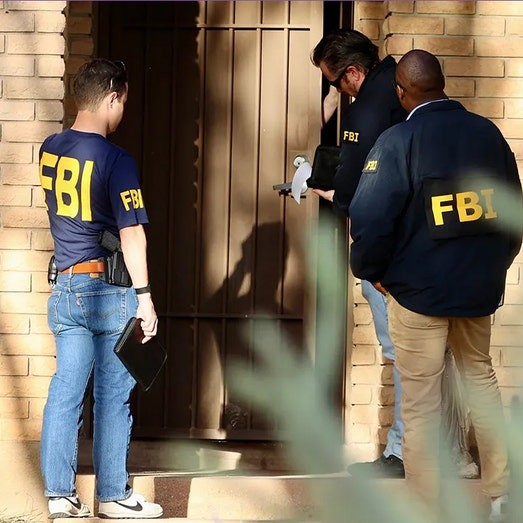
Specialized FBI video forensic specialists have brought high-end analysis gear into the Tucson home of 84-year-old Nancy Guthrie, where investigators previously documented blood, yet authorities have not publicly identified the masked figure seen on her doorbell camera or fully explained gaps in the overnight timeline before she vanished.
TLDR
Federal video experts are analyzing surveillance and electronic data from Nancy Guthrie’s Tucson home, using advanced tools and height measurements to clarify a narrow overnight window in which the 84-year-old disappeared, while investigators continue to seek public tips and have not publicly named a suspect.
Specialized Video Team at a Residential Crime Scene
According to Fox News, members of the FBI’s Video Forensic Analysis Unit, part of the FBI Laboratory and Operational Technology Division, were seen carrying multiple hard cases of equipment into a tent at the front of Guthrie’s home in the Tucson area. The deployment places a rarely visible specialist team directly into a neighborhood missing-person investigation.
Photographs reviewed by Fox News show agents bringing in a forensic height board and a box for a Blackmagic Design UltraStudio 4K Mini, a device normally used in professional broadcast production. The presence of both suggests that investigators are focusing less on traditional canvassing and more on extracting and standardizing video and audio for close technical review.
The same FBI digital evidence unit has previously assisted in major cases, including the University of Idaho student killings linked to Bryan Kohberger, whom Fox News reports is now serving a life sentence after his conviction. Historically, the FBI Laboratory’s digital evidence teams have also contributed to investigations ranging from the 9/11 attacks to complex corporate fraud, providing technical analysis rather than leading the investigative strategy.
What Investigators May Be Doing With the Footage
FBI materials describe the Video Forensic Analysis Unit as responsible for clarifying and enhancing surveillance images, authenticating recordings, detecting possible edits or tampering, extracting still images for comparison, interpreting timestamps and metadata, and offering expert testimony about what the images can and cannot show.
Tech commentator Kurt “CyberGuy” Knutsson told Fox News that the UltraStudio 4K Mini is designed to capture and convert high-resolution video and audio across multiple formats. He said, “It allows you to ingest video from various sources and convert it into high-quality digital formats for analysis or sharing.” In a case like Guthrie’s, that means legacy camera systems, doorbell footage, and other consumer devices can be consolidated into standardized files for careful frame-by-frame review.
Retired FBI Supervisory Special Agent Jason Pack told Fox News that investigators appeared to be taking precise measurements of fixed structures at the house, including the entryway. Those measurements can then be matched against images from Guthrie’s doorbell camera, which reportedly recorded a masked figure near the front door, to estimate that person’s height and build using the forensic height board as a reference.
Used together, the equipment and measurements could allow analysts to test competing interpretations of the video, such as whether shadows, camera angle, or lens distortion are affecting apparent height or movement. Any conclusions would later be documented in formal reports and, if the case leads to charges, could be presented in court.
A Compressed, Conflicted Overnight Timeline
Even with federal assistance, investigators are still working within a narrow and fragmented series of events between the evening of January 31st, 2026, and late morning on February 1st, 2026. The known timeline, as described by Fox News from law-enforcement briefings, looks like this:
- January 31st, 2026, between 9:30 p.m. and 9:45 p.m.: Family members drop Guthrie off at her home.
- January 31st, 2026, 9:50 p.m.: The garage door closes, according to authorities.
- February 1st, 2026, 1:47 a.m.: The doorbell camera disconnects.
- February 1st, 2026, 2:12 a.m.: A separate security camera detects motion.
- February 1st, 2026, 2:28 a.m.: Guthrie’s pacemaker disconnects from a phone application.
- February 1st, 2026, 11:56 a.m.: Family members check on Guthrie after she misses a weekly church livestream gathering.
- February 1st, 2026, 12:03 p.m.: A 911 call is placed.
- February 1st, 2026, 12:15 p.m.: Sheriff’s deputies arrive at the home.
This sequence sketches a critical window of less than five hours between the family leaving and the first documented sign of trouble with the doorbell camera. Yet there is another fifteen-minute gap between the camera disconnecting and separate motion being detected, and another sixteen minutes before Guthrie’s pacemaker connection is lost.
Investigators have not publicly explained what occurred in those intervals, whether the camera disconnection was intentional, or whether the pacemaker’s last contact reflects a medical event, an interruption in power or connectivity, or some other cause. Video forensic work, including correlation of timestamps across different devices, may help narrow these possibilities.
Because consumer security devices often store time settings based on different clocks, analysts can also look for clues in metadata, such as when files were created or transmitted. That type of analysis can reveal whether clocks were off by several minutes or even more, which in turn affects how precisely investigators can match movement, phone records, and vehicle sightings to the events at Guthrie’s home.
Experience Gaps and Reliance on Federal Support
As attention turns to the sophistication of the FBI’s tools, questions have also been raised about local investigative capacity. Fox News has reported, citing unnamed individuals familiar with departmental staffing, that only one local detective assigned to Guthrie’s case has more than two years of homicide-squad experience.
Local agencies routinely request FBI technical support when they confront complex digital evidence or limited in-house lab capacity. In practice, that means federal analysts may process and interpret video and audio, while local detectives handle interviews, search warrants, and the broader investigative theory.
That division of labor can create both strengths and tensions. On one hand, an experienced federal lab can prevent digital evidence from being mishandled or misinterpreted, particularly when it may later be central at trial. On the other hand, when a local team is relatively new to major violent-crime investigations, there can be delays as they learn how to formulate precise questions for specialists, decide which footage to prioritize, and integrate technical findings into a coherent investigative plan.
Sheriff disputes claim that he is blocking FBI from evidence in Nancy Guthrie investigation
READ: pic.twitter.com/SLnqOlfBir
— KTTC TV (@KTTCTV) February 13, 2026
For the public, the combined involvement of local detectives and an elite FBI unit underscores both the seriousness with which authorities are treating Guthrie’s disappearance and the complexity of turning raw images into admissible, comprehensible evidence.
Public Images, Private Data, and the Masked Figure
Authorities have already released at least one image related to the case, prompting outside observers to parse clothing, gait, and body shape. According to Fox News, that image shows a masked individual near Guthrie’s front door, captured before the doorbell camera went offline.
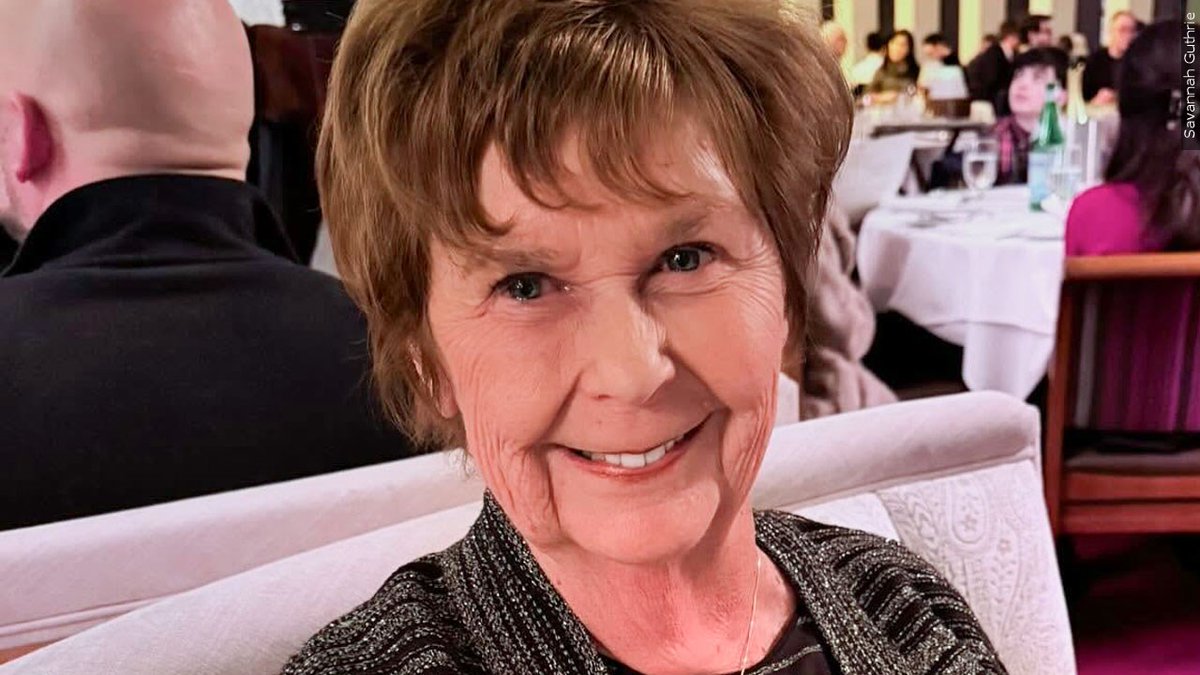
Video forensics can go further than public stills. Analysts can compare that figure’s apparent height and proportions to the measured doorframe and surrounding brickwork, test whether lighting could be obscuring features, and evaluate whether motion blur is hiding or exaggerating movements. They can also assess whether the footage appears continuous or whether there are unexplained gaps in the recording.
At the same time, much of the material under review is not public. Footage from neighboring properties, license-plate readers, or commercial cameras, as well as data from Guthrie’s pacemaker system, are treated as investigative records. The FBI’s role includes preserving those records in a forensically sound manner so that their reliability can be defended later if the case leads to charges or a civil proceeding.
Reward, Community Leads, and What Comes Next
The FBI has announced a reward of $50,000 for information leading to Guthrie’s whereabouts. That reward, combined with national media coverage, is designed to encourage residents who may have seen a person, vehicle, or unusual activity around the time of the disappearance to contact law enforcement rather than assume someone else has already done so.
According to Fox News, investigators have canvassed for vehicle and doorbell footage and are examining multiple vehicles of interest. The involvement of the Video Forensic Analysis Unit suggests that any relevant footage is being subjected to a level of technical scrutiny more commonly seen in large federal prosecutions than in a single-house disappearance.
For now, Guthrie’s legal status remains that of a missing person, not a confirmed homicide victim, and no one has been charged in connection with her disappearance. The investigative focus on video evidence may ultimately help resolve basic questions that remain unanswered: who the masked figure was, what happened inside the home after Guthrie was dropped off on January 31st, 2026, and whether the overnight electronic anomalies can be aligned into a clear narrative or continue to resist definitive explanation.