

The toddler on the Bronx apartment floor was not breathing, relatives were already on the phone with 911, and two NYPD officers had only seconds as their body cameras recorded every move.
According to reporting by Fox News, Officer Freddy Cerpa, a recent NYPD academy graduate, and his partner Officer Megan Ficken responded to a 911 call in mid January about an unconscious 2-year-old boy who was choking in the Bronx. By the time they reached the child, his airway was blocked, and he was unresponsive.
What the Bodycam Footage Captured
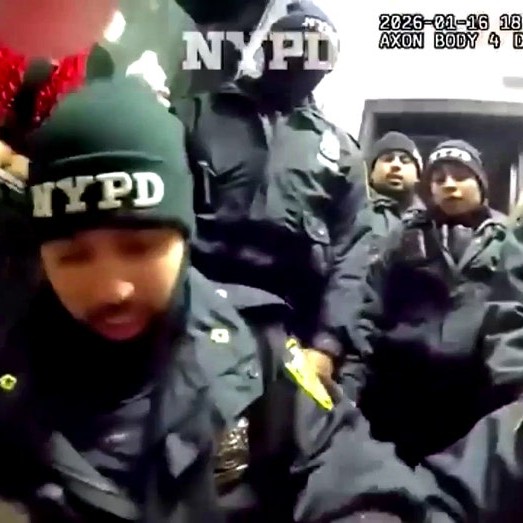
Body-worn camera video, cited in the Fox News report, shows the officers entering a residence and moving quickly to assess the boy, who was lying on the floor while visibly not breathing. Relatives can be heard in distress as the officers begin basic life support steps to clear his airway.
Police told Fox News that the child had been choking on mucus. In the video, Cerpa and Ficken reposition the boy and work to open his airway. Within moments, the officers see signs that he is beginning to breathe again.
The child was taken to Jacobi Hospital in the Bronx as a precaution and was reported to be doing well, according to the same Fox News account that cited NYPD statements. The boy’s name has not been released, which is common practice when police discuss medical calls involving young children.
In a social media post highlighted by Fox News, the New York City Police Foundation publicly praised the officer’s response. The foundation wrote, “Just weeks after saving an infant who was choking, Officer Freddy Cerpa once again stepped in to help save the life of a 2-year-old child in distress” and framed the officers’ actions as an example of NYPD members responding when “seconds matter most.”
A Second Choking Rescue in Weeks
The January call was not the first time Cerpa had been dispatched to a similar emergency involving a baby or toddler.
In December, Cerpa assisted another choking child, a 1-year-old girl, according to a separate report from WABC-TV’s ABC7NY. In that earlier incident, he helped clear the child’s airway and restore her breathing after responding to a different 911 call.
Cerpa told ABC7NY that the December experience informed how he handled the January case. Describing the first rescue, he said, “The first one was definitely surreal.” Speaking about the Bronx toddler, he added, “But in my opinion, this one is all Officer Ficken, and she was there first. I was just glad I was able to assist her.”
Those comments place Officer Ficken at the center of the initial on-scene decision-making. While her role is less prominent in the foundation’s social media praise that names Cerpa directly, both officers appear to have participated in the life-saving efforts captured on video, according to the Fox News description of the bodycam footage.
Police, Medical Calls, and Training
This incident did not begin as a crime report. It was a medical emergency routed through the same 911 system that handles shootings, assaults, and other criminal complaints across New York City.
Uniformed NYPD officers frequently arrive at scenes like this before paramedics or emergency medical technicians, especially when patrol units are already in the area. They carry basic first aid equipment and receive training in cardiopulmonary resuscitation, using automated external defibrillators and responding to choking, including pediatric cases.
When calls involve children who are not breathing, the decisions made in the first minute can determine whether a child survives and what kind of long-term health they may have. That is why officers are taught to move quickly from assessing responsiveness, to checking breathing to attempting to clear an airway if a choking hazard is suspected.
In the Bronx case, police told Fox News that the obstruction was mucus rather than a solid object. That detail matters because it shapes the techniques that officers and later medical staff use. A small toy or piece of food might require abdominal thrusts or back blows, while thick mucus may respond to repositioning, suction, or assisted ventilation.
On camera, Cerpa and Ficken appear to follow that basic pattern. They reposition the toddler, work to clear his airway, and continue until they see signs of breathing. Only then is the child prepared for transport to Jacobi Hospital.
Body Cameras Beyond Use of Force
Most public attention on police body cameras has focused on use of force and disputed encounters. In this case, the footage documents officers attempting to save a child’s life in a non-criminal call.
According to the Fox News report, the bodycam video was central to how the incident was presented to the public. The same images that might one day be reviewed in an internal investigation or court proceeding instead served to show the sequence of quick medical decisions made in a cramped Bronx home.
The NYPD has not released a detailed written report of the incident to the public, and there is no indication from the Fox News or ABC7NY coverage that any criminal charges are connected to the child’s medical emergency. What remains available is the combination of short video clips, brief police statements, and the officers’ own words in local media interviews.
What Remains Unsaid
Several elements of the case are not publicly detailed. The child’s family has not been identified, nor has there been public comment from relatives beyond what is heard in the bodycam audio described by Fox News. There is no public information on how long the child had been in distress before the 911 call or how long it took officers and medics to arrive.
It is also not clear from available reporting whether the boy required any ongoing medical care after his evaluation at Jacobi Hospital, or whether hospital staff made any referrals for follow-up support for the family. Those are typical questions in pediatric medical emergencies, but they are rarely covered in brief summaries of police responses.
What is documented is narrow but important. A pair of NYPD officers was dispatched to a Bronx apartment on a medical call. Their body cameras recorded a 2-year-old boy who was unconscious and choking on mucus. Within minutes, according to police accounts, he was breathing again and on his way to the hospital.
Between those fixed points, the record consists of a short video clip and a handful of public statements that portray a successful rescue. For families who rely on 911 when a child stops breathing, and for officers who train for that moment but may never face it, the unanswered questions about timing, training, and follow-up remain in the background while one fact stands out. On that day in the Bronx, the boy survived.