


The argument started over a tip jar and some suspicious cash. It ended with a manager lying on the floor of a fast-food kitchen and a judge saying the punishment still did not feel like enough.
According to court records and police accounts reported by Law & Crime, 19-year-old Adiah Roberson of Texas has been sentenced to 40 years in prison for murdering 33-year-old Sonic Drive-In manager Daniel Shrewsbury after a dispute that began with counterfeit money at a San Antonio location in July 2024.
The Confrontation at the Drive-In
On a July day in 2024, Roberson arrived at the Sonic on Babcock Road with two friends, including 29-year-old driver Joshua Joseph, according to a San Antonio Police Department account summarized in earlier reporting by Law & Crime. Police said members of the group tried to pay for their order with fake cash.
Shrewsbury, the manager on duty, noticed the suspected counterfeit bills and refused to accept them. That decision triggered a heated argument between him and Roberson in the kitchen, according to police statements cited in those reports.
Despite the confrontation, the situation appeared to cool down. The group ultimately paid with legitimate money and began to leave. According to investigators, Roberson then grabbed money from a tip jar before walking out, escalating the conflict again.
From Counterfeit Money to a Fatal Shot
As the trio headed back to their vehicle, Shrewsbury followed them outside. According to the police narrative quoted by Law & Crime, he attempted to photograph the car’s license plate, presumably to document the suspected forgery and theft.
Investigators said Joseph, the driver, became angry and warned Shrewsbury that he was about to be shot. At that point, Roberson reportedly stepped out of the car, drew a gun, and fired at the manager.
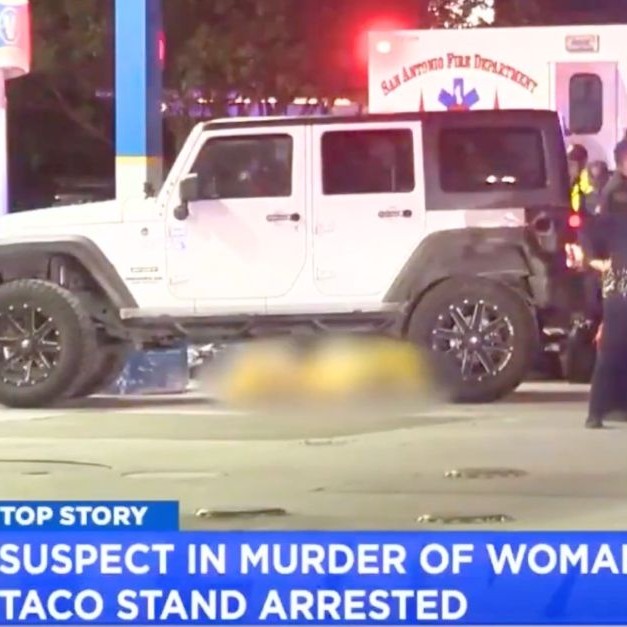
Shrewsbury managed to stumble back inside the restaurant before collapsing. Emergency responders pronounced him dead at the scene.
On an online obituary tribute page, Shrewsbury’s mother described him as someone who loved both his job and the people he supervised. She wrote that “Daniel was a jokester who made everyone he worked with happy, and they all loved him so much.”
A Teen Fugitive and the Texas ‘Most Wanted’ List
Within days of the shooting, San Antonio police obtained arrest warrants for both Roberson and Joseph on counts that included murder and forgery of a government document. Joseph was arrested by the U.S. Marshals Service about a month later.
Roberson did not surrender. The Texas Department of Public Safety (DPS) placed her on its Texas 10 Most Wanted list while she remained a fugitive, according to Law & Crime’s summary of DPS actions. The Most Wanted program is operated by DPS in coordination with local and federal agencies and highlights fugitives wanted for violent offenses across the state.
Authorities eventually tracked Roberson to an apartment complex in Dallas, roughly 275 miles from San Antonio. She was arrested in October 2024. At the time of the shooting and of her arrest, she was 17 years old, according to the Law & Crime report.
Joseph, speaking to reporters after his own arrest, tried to distance himself from the killing. “I apologize for the actions of somebody who happened to be with me, and none of that should have happened,” he said. “That person made a decision they shouldn’t have made.”
Authorities later dismissed the charges against Joseph. Publicly available reporting has not detailed the specific reasoning or evidence that led prosecutors to drop the counts against him.
The Plea Deal and a Reluctant Judge
Roberson eventually faced charges including murder, assault causing bodily injury, and forgery. According to Law & Crime, she entered a no-contest plea to all three counts in Bexar County’s 226th Criminal District Court.
A no contest plea, or nolo contendere, means the defendant does not admit guilt but accepts conviction and sentencing as if a guilty plea had been entered. It is often used as part of negotiated plea agreements.
As part of such an agreement in this case, Roberson received a 40-year prison sentence for murder and a 20-year sentence for assault. The sentences will run at the same time, not one after the other, so the controlling term is 40 years. No sentence was entered on the forgery charge, according to the Law & Crime account.
Woman convicted for the murder of a sonic manager was sentenced to 40-years in prison.https://t.co/YYdAH0hFx6
Adiah Roberson’s sentencing comes after she accepted a plea deal in the death of 33-year old Daniel Shrewsbury. pic.twitter.com/2MZvl5Bi9r— News 4 San Antonio (@News4SA) January 31, 2026
At sentencing, Judge Benjamin Robertson voiced concern that four decades in prison might still be too light for the conduct at issue. Law & Crime, citing a courtroom report by San Antonio station KSAT, reported that the judge told both prosecution and defense that 40 years did not seem sufficient for Roberson’s crimes. In the end, the judge “reluctantly” accepted the plea deal that both sides had negotiated.
By accepting the agreement, the court avoided a trial that would have required witnesses, including Sonic employees and customers, to relive the shooting in public proceedings. The deal also spared Shrewsbury’s family the uncertainty of a jury verdict and possible appeals, while locking in a lengthy prison term for a defendant who was a teenager at the time of the crime.
What Is Known, What Is Missing
The public record offers a clear timeline of the major events. A suspected counterfeit cash attempt at a Sonic in San Antonio. A confrontation in the kitchen. A theft from a tip jar, followed by a fatal shot in the parking lot. A teenage suspect on the Texas 10 Most Wanted list. An arrest in Dallas months later. A negotiated 40-year sentence that even the judge regarded as low.
Other details remain less clear. Court filings available in media reports have not fully explained how Roberson obtained the firearm or what evidence persuaded prosecutors to drop all charges against Joseph, despite his alleged warning that Shrewsbury was about to be shot.
For Shrewsbury’s family, the court outcome confirms what police and prosecutors allege happened that day, but it does not answer why a dispute over counterfeit money and small cash from a tip jar escalated into lethal violence. For Roberson, who was 17 at the time of the killing, the 40-year sentence reflects a legal system that treated her as an adult while still prompting a sitting judge to question whether the punishment matched the harm.
The basic facts are now fixed in a conviction and a lengthy prison term. The harder questions about how quickly a workplace argument turned into a homicide, and what could have prevented it, remain largely outside the four corners of the case file.