

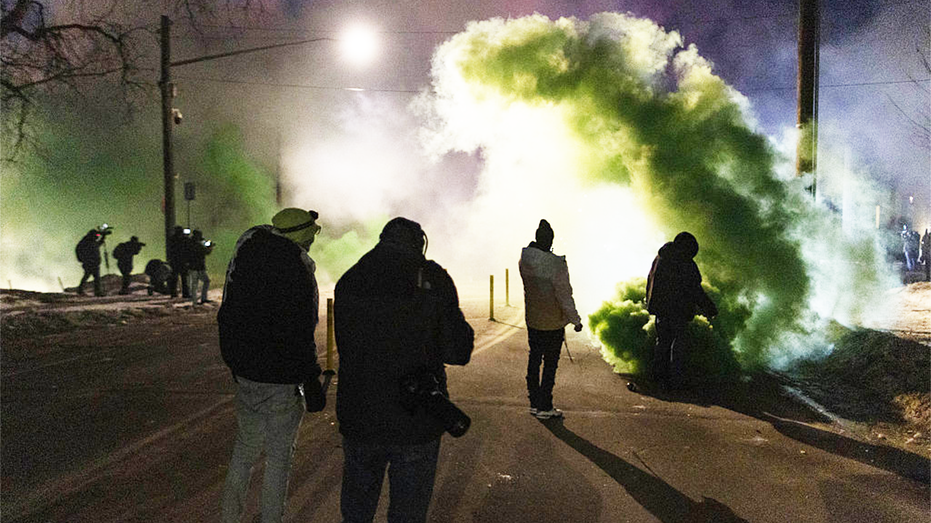
Federal officers in tactical gear facing tear gas, fireworks and shouted demands to leave. City officials accusing them of causing more gunfire than they stop. Yet the federal agency says its officers are the ones under attack.
Those are the competing storylines emerging from Minneapolis after two recent Immigration and Customs Enforcement, or ICE, shootings. One incident left a U.S. citizen dead. The other wounded a person the agency describes as being in the country without authorization. What happened in each case, and who is actually in charge on the streets, remains sharply disputed.
Two Shootings In Rapid Succession
The most recent incident involved an ICE arrest attempt in Minneapolis, reported by Fox News. According to that account, an ICE agent shot a man in the leg while trying to take him into custody. The Department of Homeland Security, which oversees ICE, has said the agent fired because he was “fearing for his life and safety” after the individual resisted arrest and “violently assaulted the officer.”
Fox News reported that the man who was shot is now in custody and in stable condition. The agent was also hospitalized, according to the same outlet. No independent investigative report has been released publicly that would allow a fuller reconstruction of that encounter, such as body camera footage, witness statements or forensic detail. Those gaps have left the public reliant on agency statements and media summaries.
That shooting came shortly after a separate and more deadly incident in the city. In an earlier encounter, also described by Fox News, a masked ICE agent, identified as Jonathan Ross, shot and killed Renee Nicole Good, a U.S. citizen. Ross allegedly fired into the vehicle’s windshield and an open side window. Fox News reported that he then used an expletive as the car crashed into a parked vehicle.
In that killing, the political lines formed quickly. Fox News reported that Democratic officials and local residents have called the shooting murder and demanded Ross be prosecuted. The Trump administration and Republican lawmakers, by contrast, have characterized the killing as a justified use of force. Without a public investigative file, the factual narrative in that case has also split along political and institutional lines.
Street Protests And Crowd Control
The second shooting drew protesters back into the streets. By Fox News’ count, at least one hundred people gathered near the scene. Demonstrators used horns and whistles, held signs including messages such as “f— ICE” and called for the agency to leave Minneapolis entirely.
Protests against ICE planned across US after shootings in Minneapolis and Portland, Oregon: https://t.co/Dfo24neTSI pic.twitter.com/n1UlWMrLIe
— WBKO News (@wbkotv) January 11, 2026
Federal officers responded with crowd control tactics. According to the same reporting, officers deployed tear gas, pepper spray and so-called pepper balls. Flash-bang devices were also used. Some people in the crowd threw items, including fireworks, in the direction of federal officers.
Minneapolis Police Chief Brian O’Hara described the scene as crossing the line from protest into criminal conduct. Fox News quoted him as saying that people in the crowd were committing “unlawful acts,” including throwing fireworks at officers, and urging those present to “leave immediately.” He added, “This is already a very tense situation, and we do not need this to escalate any further.”
Governor Tim Walz called for restraint while sharply criticizing former President Donald Trump. In a post on X, quoted by Fox News, Walz told residents, “I know you’re angry. I’m angry. What Donald Trump wants is violence in the streets. But Minnesota will remain an island of decency, of justice, of community, and of peace. Don’t give him what he wants.” Walz also renewed his public demand that ICE leave the state, though the practical mechanism for pushing a federal agency out of a city or state is limited.
City Leaders Versus Federal Agents
Minneapolis Mayor Jacob Frey has been one of the most vocal local critics of ICE’s presence. At a news conference, he said the current deployment was putting the city in an untenable position. Fox News quoted him saying, “This is an impossible situation that our city is presently being put in,” and reporting that he estimated roughly 3,000 ICE agents had been deployed in Minneapolis and across Minnesota.
Frey argued that the influx of federal officers was increasing volatility rather than reducing it. According to the Fox News account, he said that a large share of shootings in Minneapolis so far this year involved ICE agents. That is a serious allegation. The article did not provide separate citywide shooting statistics or independent confirmation of the mayor’s claim, and no public data set has been widely circulated that would allow outside verification.
The mayor also drew a direct link between the masked appearance of ICE agents and fear in the community. Fox News reported him saying that “American citizens are getting picked up off the street by people in masks” and that this “is not the way things should be conducted in any city in America.” Those comments reinforce a long-running conflict between some local governments and federal immigration authorities over tactics, information sharing and the presence of federal task forces in local neighborhoods.
That conflict is not new in Minnesota. The state previously filed suit against the Trump administration over what it described as sweeping immigration raids in the Twin Cities, as covered in earlier Fox News reporting that the outlet linked from its latest story. The current dispute extends that fight into the realm of armed encounters, civilian deaths and the question of who is accountable when a federal officer pulls the trigger inside city limits.
How Use Of Force Is Supposed To Work
ICE is part of the Department of Homeland Security, and its officers are covered by DHS law enforcement policies. Public materials from DHS describe a use-of-force framework that allows deadly force only when an officer reasonably believes a person poses an imminent threat of death or serious bodily injury to the officer or another person. Those standards are similar to those used by many police departments across the United States and are summarized in DHS law enforcement guidance available on the department’s website at dhs.gov.
When a DHS officer fires a weapon, several oversight bodies can become involved. Historically, shootings have triggered reviews by the component agency’s internal affairs arm and sometimes by the DHS Office of Inspector General, which maintains its own hotline and investigations unit at oig.dhs.gov. Those reviews can examine whether the use of force met department standards, whether any criminal laws were violated and whether policy changes are needed.
The Fox News article that first described the Minneapolis shootings does not detail which specific investigative bodies are examining the two ICE incidents or whether any agent has been formally placed under investigation. Nor does it reference publicly released investigative findings. Absent such documentation, the public picture consists largely of brief DHS justifications, political statements from elected officials and on-the-ground descriptions from reporters and demonstrators.
What We Still Do Not Know
Several key facts remain unclear from the information currently available.
In both shootings, the full sequence of events leading up to the gunfire has not been laid out in public investigative records. The Fox News reporting relays the DHS position that the man shot in the leg assaulted the officer, prompting the agent to fear for his life. It does not specify whether that account is corroborated by independent witnesses, video footage or other evidence.
In the killing of Renee Nicole Good, Fox News reports that the ICE agent fired into the windshield and through an open window, then used a slur as the vehicle crashed. The article does not describe, for example, how many rounds were fired, whether the vehicle was moving toward officers at the time, how many officers were present, or what exact threat assessment Ross made before pulling the trigger. Those details would typically be central to any legal evaluation of whether a shooting met the standard for justified deadly force.
On the accountability side, it is not yet clear from public reporting whether any criminal investigation by state or federal prosecutors is underway regarding Ross or the agent involved in the leg shooting. Nor is there public information on whether ICE has placed either agent on administrative leave, a common step in many police departments after a shooting while reviews take place.
Finally, the scale of ICE activity that Minneapolis leaders describe has not been independently quantified. Mayor Frey’s claim that a large share of the city’s shootings this year involve ICE agents, if accurate, would represent a major shift in who is using lethal force on city streets. As of now, that assertion appears only as a statement attributed to him in Fox News reporting, without separate supporting data released by the city, the state or federal authorities.
For residents of Minneapolis, the immediate realities are more concrete. A U.S. citizen is dead after being shot by a federal immigration officer. Another person has been wounded. Protesters are clashing with federal agents in their neighborhoods. City and state leaders are openly urging a federal law enforcement agency to leave.
Whether forthcoming internal reviews, if and when they are released, will support DHS’ account of officers under attack or the local claims of wrongful killings and excessive force is not yet known. Until those details surface, the struggle over who controls public safety in Minneapolis and who must answer for these two shootings remains unresolved.