

A short, viral clip told one story. A trooper’s dashcam, released later by state officials, appeared to tell another. The gap between the two now sits at the center of a debate over what really happened on a Memphis roadway.
In January 2026, the Tennessee Highway Patrol (THP) posted dashcam footage from a patrol vehicle in Memphis, Tennessee. The video was released after social media users claimed a trooper had struck a protester with a state vehicle. According to a Fox News report, the agency said those claims were false and that the unedited video showed the person walking away under his own power.
What The Viral Claims Alleged
The incident occurred during a protest in Memphis. Details about the demonstration itself, including who organized it and what specifically was being protested, were not included in the material reviewed for this article.
What is clear is that a short clip from the encounter began circulating on social platforms. According to Fox News, users sharing the video claimed a Tennessee state trooper had hit or run over a protester with a patrol vehicle. Those posts did not typically include the full context around the approach to the crowd or what happened immediately afterward.
Key facts that remain unclear from the public record available so far include:
Item 1: Whether the person seen in the video has been publicly identified or has spoken about the encounter.
Item 2: Whether any criminal charges or traffic citations were issued in connection with the incident.
Item 3: Whether an outside agency, beyond THP itself, has reviewed the footage or investigated the contact between protester and vehicle.
In the absence of those details, the first wave of commentary online appears to have relied largely on partial video snippets and secondhand descriptions.
What The Dashcam Video Shows
After the claims went viral, THP posted its own footage from the patrol vehicle’s dashcam. That video is described in the Fox News account and in the agency’s public statement.
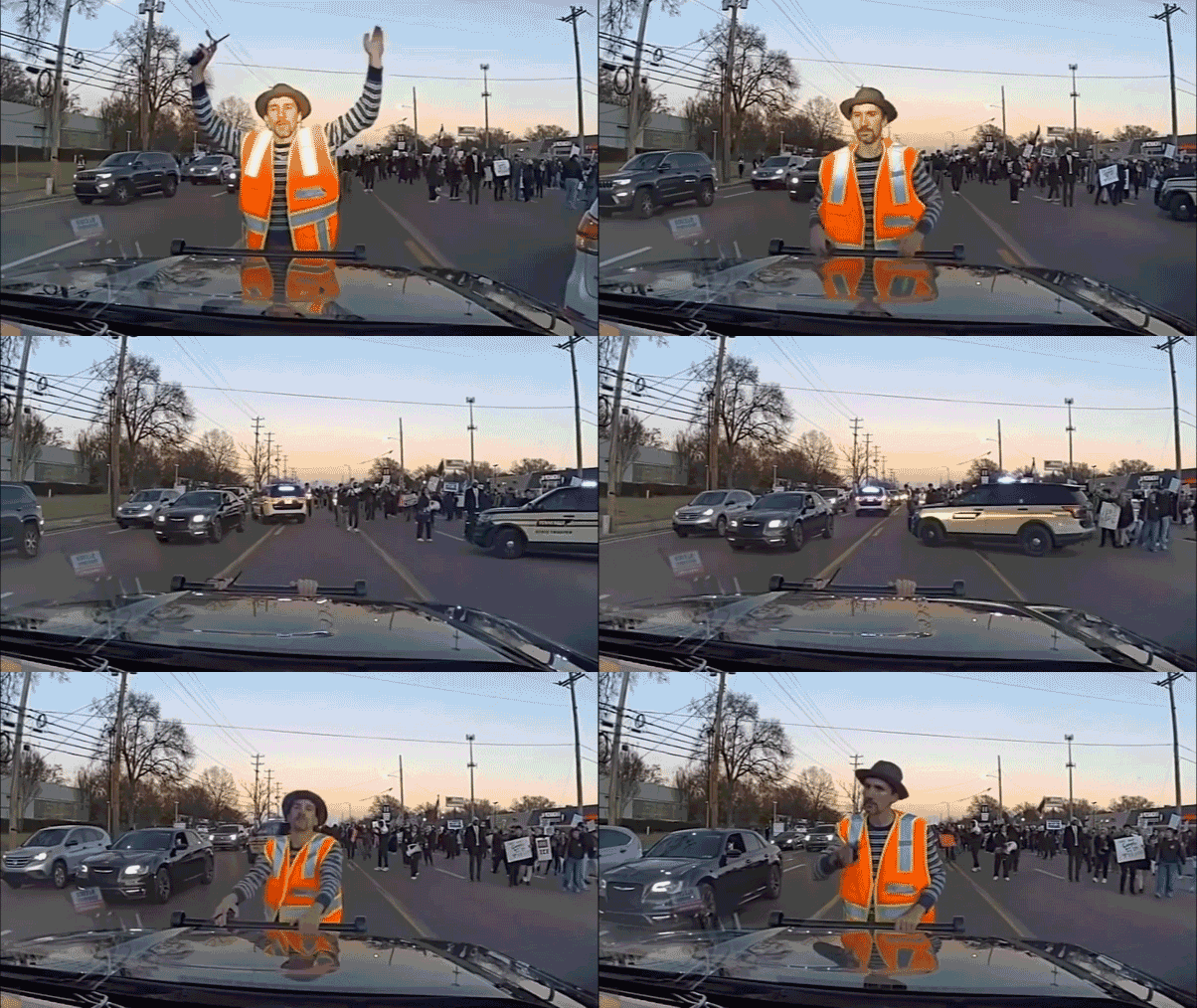
In the video, a trooper drives toward a group of protesters and appears to slow while navigating around people in the roadway. A man wearing a bright orange construction vest and holding what looks like a handheld radio steps out from behind a white SUV and into the view of the camera.
The man raises his hands and moves directly in front of the patrol car. According to Fox News, the trooper can be heard shouting, “Move! Get out of my way! Get out of my way! Move!” The man does not comply. Instead, he reportedly shakes his head and lifts a finger as if signaling the trooper to wait.
As the vehicle inches forward, the man places his hands on the front push bars of the patrol car. The Fox report states that he then falls backward onto the roadway, creating the appearance in some clips that he had been struck.
The same video, as summarized by Fox News, then shows the man getting up. He again raises a finger toward the trooper, then walks back toward a nearby vehicle and out of the frame. No injury or medical treatment is visible in the portion of the footage described.
This description is based on secondary reporting. The full, original video was not independently reviewed for this article beyond the details provided in the Fox News story and the quoted statement from THP.
How The Highway Patrol Responded
Faced with online claims that a trooper had hit a protester, THP publicly rejected that narrative and framed the incident as an example of dangerous behavior in an active roadway.
Tennessee Highway Patrol says viral claim of trooper hitting protester in Memphis is false. https://t.co/CbzVh0dgdx
(Photo: Tennessee Highway Patrol) pic.twitter.com/r1hNq4m05o
— FoxNashville (@FOXNashville) January 13, 2026
According to the statement quoted by Fox News, the agency said, “We respect and protect the right of people to protest peacefully. That right, however, does not include entering active roadways or placing themselves in danger.”
The agency went on to say, “In this case, video clearly shows the individual holding onto the front of the trooper’s vehicle, lying down, then standing back up afterward and leaving the scene under his own power. At no point does the video show the individual being run over or injured, despite the narratives circulating on social media.”
THP also emphasized its focus on preventing harm. In the statement, the agency added, “When someone enters the roadway, it creates a serious and immediate risk, and troopers are trained to respond to prevent injuries or worse outcomes.”
On its official site, the Tennessee Highway Patrol states that its mission includes promoting highway safety and enforcing traffic laws to reduce crashes and injuries on the state’s roads.[1] Using dashcam footage to rebut online claims fits into a broader pattern seen in recent years, where police agencies publish their own video quickly in an effort to shape public understanding of disputed encounters.
Where Public Safety Law Fits In
The dispute over what happened in Memphis is not only about perception. It also touches on specific legal rules about who can occupy the roadway and under what circumstances.
Tennessee law makes it a criminal offense to obstruct a highway or passageway in a way that renders passage “unreasonably inconvenient or hazardous.” Under Tennessee Code Annotated section 39-17-307, a person who substantially blocks or interferes with a highway, and who fails to remove the obstruction after a reasonable request, can be charged with a Class B misdemeanor.[2]
The law applies broadly and does not distinguish between political protesters and any other member of the public. It also does not authorize the use of force by vehicles against people on foot. Instead, it gives law enforcement leverage to order people out of the road, then issue citations or make arrests if those orders are ignored.
THP’s statement in the Memphis case mirrors that framework. The agency acknowledged the right to protest but drew a line at entering “active roadways.” By pointing to the dashcam video, the patrol sought to show that the trooper tried to maneuver around people on foot and that the protester was not struck or pinned by the car.
From the information currently available, it is not clear whether troopers issued any citations or made arrests in relation to this specific encounter.
What We Still Do Not Know
The public record on the Memphis roadway incident remains thin. Several important pieces of information have not been made public in the material reviewed for this article.
First, the identity of the man in the orange vest has not been reported. Without his name, there has been no opportunity for reporters to seek his account of why he stepped into the roadway, what he perceived the trooper to be doing, or why he appeared to fall backward while holding the push bars.
Second, there is no publicly available documentation in the sources reviewed that describes any medical evaluation at the scene. THP has stated that the video does not show the individual being injured. That is a description of what appears on camera rather than a formal medical finding.
Third, it is not clear whether any independent oversight body has examined the encounter. Some serious uses of force in Tennessee are reviewed by external agencies or local prosecutors. In this case, the Highway Patrol’s own statement and video release are the primary sources shaping public understanding.
Finally, the shorter clips that initially fueled claims of a trooper striking a protester have not been cataloged in any official record. Without direct access to those snippets and the full, high-resolution dashcam footage, it is difficult for outside observers to reconstruct precisely how the narrative shifted as more video became available.
For now, the episode exists in a kind of split screen. On one side is the viral claim that a protester was hit by a state vehicle. On the other is the Highway Patrol’s insistence that the same footage, viewed in full, shows a person entering an active roadway, grabbing a moving car, and staging a fall before walking away. Until more documentation or direct testimony surfaces from the person in the video, the public will have to weigh those two accounts against the limited evidence in view.