Case overview
Between February and May 1946, a series of brutal attacks in Texarkana left five people dead and three wounded, creating widespread fear across the border towns of Texas and Arkansas. The unidentified assailant, dubbed the Phantom Killer by local media, targeted couples in parked cars and a residential home before the attacks abruptly ceased. Despite one of the largest manhunts in Texas history, the case remains unsolved.
The first attacks
On February 22, 1946, Jimmy Hollis and Mary Jeanne Larey were parked on a lovers’ lane on the outskirts of Texarkana when a man approached their vehicle with a flashlight and a pistol. The assailant ordered them out of the car, struck Hollis with the weapon, and sexually assaulted Larey before fleeing. Both survived, though Larey sustained severe head injuries from repeated blows. The attack occurred on a secluded stretch near Richmond Road.
Three weeks later, on March 24, Richard Griffin and Polly Ann Moore were found dead in Griffin’s 1941 Oldsmobile on a rural road. Both had been shot in the back of the head at close range. Griffin’s body was slumped over the steering wheel. Moore was found in the back seat. Evidence indicated the killer had repositioned the victims after shooting them. The murders occurred approximately four miles from where Hollis and Larey were attacked.
Pattern recognition
Texas Ranger Manuel “Lone Wolf” Gonzaullas arrived in Texarkana on April 6 to lead the investigation. Gonzaullas coordinated efforts across multiple jurisdictions, as the attacks occurred on both sides of the state line. The FBI joined the investigation, sending agents to process evidence and interview witnesses. By mid-April, law enforcement had identified a pattern: attacks occurred roughly three weeks apart and targeted couples in isolated areas.
On April 14, Paul Martin and Betty Jo Booker disappeared after attending a dance. Their bodies were discovered the following morning. Martin had been shot four times. Booker had been shot twice in the face. Booker’s body was found two miles from Martin’s, and her saxophone, which she had brought from the dance, was recovered near the scene. The timing matched the established pattern.
The final confirmed attack
On May 3, the pattern shifted. Virgil Starks was shot through a window of his farmhouse while reading a newspaper. His wife, Katie Starks, was shot twice but survived by feigning death. When the assailant entered the home, she fled to a neighbor’s house. This marked the only attack that did not involve a parked couple and the only one that occurred at a residence.
The Starks home was located approximately 10 miles from the previous crime scenes. The weapon was identified as a .22 caliber firearm, consistent with ballistics from the Martin-Booker murders. Investigators recovered spent casings and determined the shooter had fired from outside the house. Katie Starks provided limited descriptions of a man she briefly glimpsed.
The investigation response
The attacks generated one of the largest criminal investigations in the region’s history. Law enforcement established roadblocks, implemented curfews, and conducted mass interviews. More than 400 suspects were questioned. The Texas Department of Public Safety assigned additional personnel, and local officers worked extended shifts.
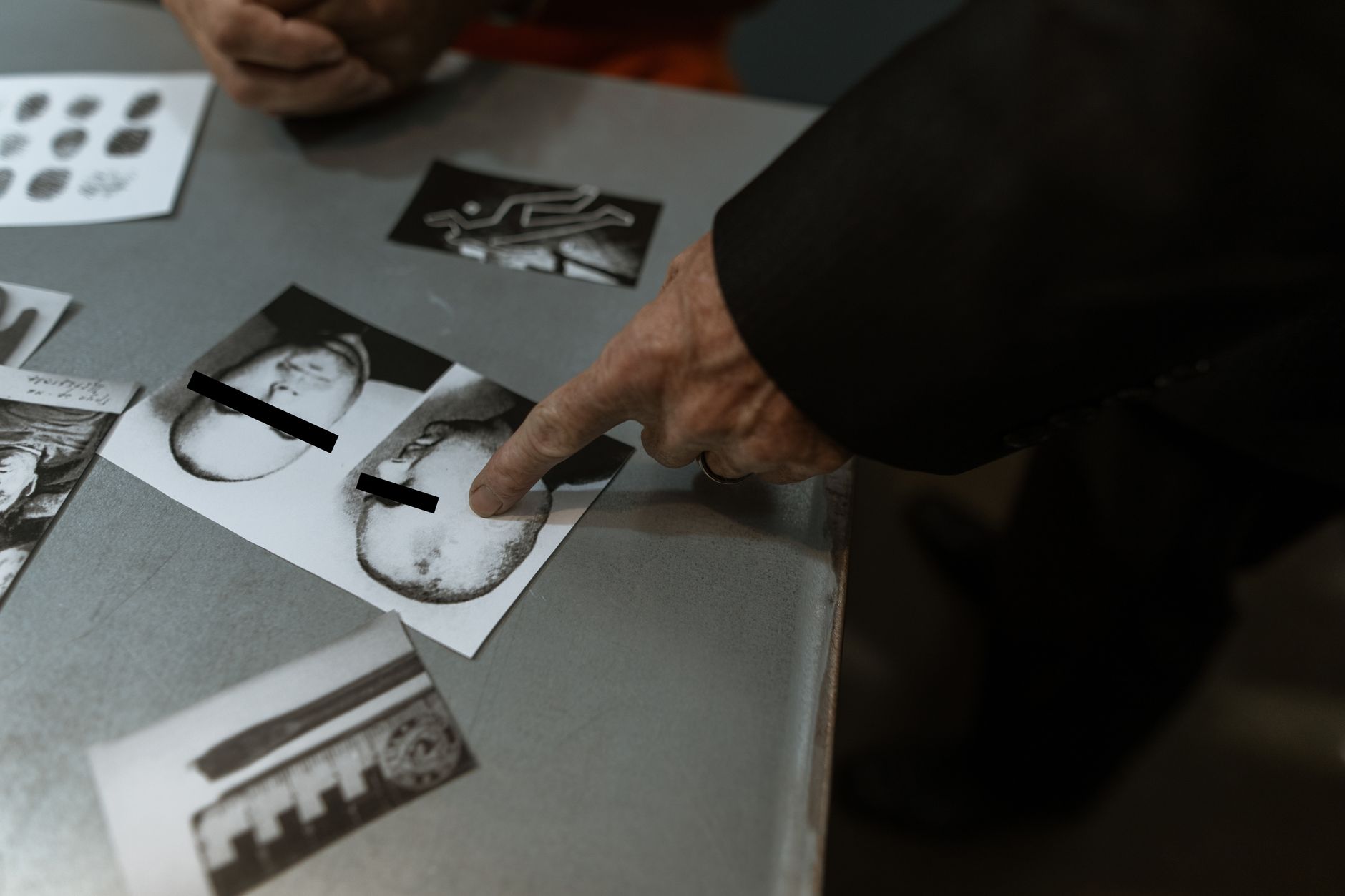
Physical evidence remained limited. Tire tracks and footprints were documented at several scenes, but forensic technology of the era could not produce definitive matches. No fingerprints were recovered that led to identification. Witness descriptions varied, with some reporting a man in a white cloth mask and others describing different physical characteristics. The investigative file eventually exceeded 5,000 pages.
Geographic concentration
All five attacks occurred within a 15-mile radius of Texarkana, a border city straddling Texas and Arkansas. The locations shared characteristics: isolated roads, limited lighting, and minimal traffic. Three of the four incidents involving couples occurred on weekends. The clustering suggested familiarity with local geography.
The dual-state jurisdiction complicated coordination. Arkansas and Texas law enforcement operated under different protocols, and evidence had to be processed through separate systems. The FBI’s involvement helped standardize procedures, but jurisdictional complexity created delays in information sharing during the critical early weeks.
Suspects and theories
Youell Swinney emerged as a primary suspect in the late 1940s. Swinney’s wife, Peggy, told investigators he had confessed to the murders, though she later recanted. Swinney was never charged with the Phantom killings but was convicted of car theft in 1947 and sentenced to life in prison as a habitual offender. He died in 1994. Investigators could not corroborate Peggy Swinney’s account with physical evidence, and her credibility was questioned due to inconsistencies.
Other theories focused on transient workers, military personnel from nearby Red River Army Depot, and individuals with documented violent histories in the region. No suspect was ever formally charged. Case files were maintained by multiple agencies, and access to certain documents remained restricted for decades.
Cultural impact and documentation
The attacks influenced local behavior for years. Attendance at rural social events dropped, and couples avoided isolated areas. The Texarkana Gazette documented the investigation extensively. The 1976 film “The Town That Dreaded Sundown” dramatized the events, though it took significant creative liberties with the facts.
In 2014, the Texas Rangers reviewed the case using modern forensic methods. DNA testing was attempted on preserved evidence, but degradation limited results. The review did not produce new leads but provided updated documentation of existing evidence. The case remains officially unsolved, with investigative files held by the Texas Department of Public Safety and the Miller County Sheriff’s Office in Arkansas.
Unresolved questions
The abrupt cessation of the attacks after May 1946 has never been explained. Theories include the possibility the assailant died, was incarcerated for unrelated crimes, or left the area. No similar pattern of attacks was documented in surrounding regions during subsequent months. The shift from targeting couples in cars to attacking a married couple at home raised questions about whether all five incidents were connected, though ballistics evidence supported a single shooter in at least three of the murders.
The lack of physical evidence linking any suspect to the crime scenes, combined with the passage of time, has made resolution increasingly unlikely. Surviving evidence remains in storage, and periodic reviews have not yielded breakthroughs. The Phantom Killer case stands as one of the most documented unsolved serial murder investigations in Texas history.
Where to look next
- Documentary: “The Town That Dreaded Sundown” (American International Pictures)
- Book: “The Phantom Killer: Unlocking the Mystery of the Texarkana Serial Murders” by James Presley
- Podcast: “The Texarkana Moonlight Murders” (“Unresolved”, Unresolved Podcast Network)