

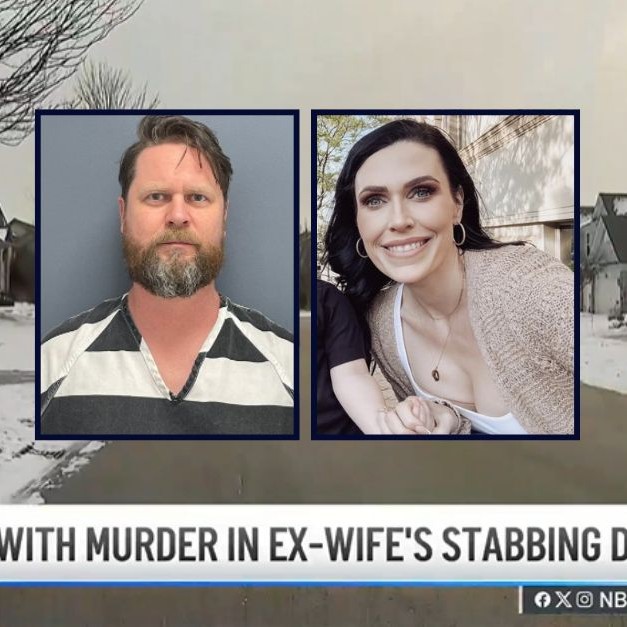
By the time officers reached the front door of the Oswego house, the man who had called 911 already knew his spouse was not moving. He had watched someone chase her into their garage on a home security feed. What he could not see on the screen were the allegations that would emerge in the hours that followed.
Authorities in Oswego, Illinois, say 44-year-old Ryan D. Dodd followed his former spouse, 41-year-old Ashley Stewart, to the home she shared with her husband and children, then fatally stabbed her in the middle of the day. The account comes from police and prosecutors whose charging allegations were summarized by the legal news outlet Law & Crime. Dodd is charged but has not been convicted, and he is legally presumed innocent.
A Midday 911 Call on Valentine Way
According to Law & Crime, police in Oswego responded shortly after 1 p.m. to a report of a home invasion in progress at a residence on the 400 block of Valentine Way, roughly 40 miles west of Chicago. The caller was Stewart’s husband.
Investigators say the husband had been monitoring cameras at the home when he saw a man chasing his wife into their garage. Believing he recognized the pursuer as Dodd, Stewart’s ex-husband, he dialed 911 and told dispatchers what he was seeing on the live feed.
Officers arrived at the address minutes later. By the time they entered the home, Stewart was already dead. Police say she had sustained numerous stab wounds.
At that point, the person seen on the cameras was no longer at the scene. The description the husband provided, coupled with his belief that the intruder was Dodd, shaped the initial direction of the investigation.
An Ex-Husband Accused of Lying in Wait
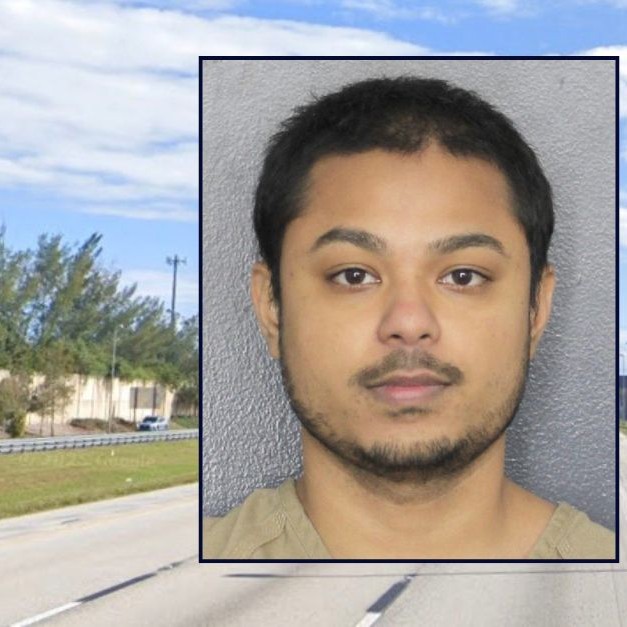
Roughly 30 minutes after officers found Stewart’s body, another officer spotted a vehicle matching information connected to the case, according to the Law & Crime report. Police say that the traffic stop led to Dodd’s arrest.
Investigators later released still images from nearby surveillance that appeared to show a man, identified by police as Dodd, concealed behind bushes outside the home before the attack. Authorities allege that he followed Stewart into the residence and then assaulted her.
Prosecutors in Kendall County have charged Dodd with first-degree murder, home invasion, armed violence, residential burglary, and aggravated stalking. The stalking charge suggests that, in the state’s view, the alleged confrontation at the garage was not an isolated occurrence but part of a pattern of following or monitoring Stewart.
Details about any prior police reports, protection orders, or documented threats between Stewart and Dodd have not been described in the Law & Crime article. Without those records, it is not yet clear from public reporting how long any alleged pattern of stalking may have gone on or what, if any, interventions were attempted before the killing now described in the charges.
Charges and What Prosecutors Must Prove
The most serious charge Dodd faces is first-degree murder. Under Illinois law, that charge generally requires prosecutors to prove that a person either intended to kill another person, knew that their actions would likely cause death or great bodily harm, or was committing a forcible felony such as home invasion when the death occurred.
Home invasion and residential burglary charges relate to unlawful entry into a dwelling. Armed violence is typically charged when a person is alleged to have committed a felony while armed with a dangerous weapon. In this case, police say Stewart died from multiple stab wounds, so the weapon described is a knife rather than a firearm.
As of the most recent Law & Crime reporting, Dodd is being held without bond at the Kendall County Jail. Prosecutors have said his next court date is scheduled for March 9. The article does not specify whether he has entered a plea, and there is no mention of a set trial date.
All of the factual claims about what happened inside the garage remain allegations from law enforcement and prosecutors. Dodd will have the opportunity through counsel to challenge the evidence, question witnesses, and present his own account in court.
A Family Left Without a Mother
Stewart leaves behind six children, including a 2-year-old son, according to the Law & Crime report. Friends and relatives turned to an online fundraiser to help support the family after her death. The description on that GoFundMe, quoted by Law & Crime, called Stewart “a devoted wife and loving mother” and said “her loss has left an immeasurable void in the lives of those who loved her.”
One of Stewart’s friends, Robin Ross, told local NBC affiliate WMAQ that her life revolved around her children. According to the quotation carried in the Law & Crime story, Ross said, “She really, really loved her family. She loved her kids. Nobody could ever, ever mistake how much love she put into her family.”
Ross also described Stewart as someone who routinely put others first. “She would drop anything she needed to do to help out anybody, no matter,” Ross said in that televised interview, as later summarized by Law & Crime. WMAQ is the NBC station serving the Chicago area.
Together, those brief public statements build only a partial picture. They show how friends saw Stewart in life, but they do not explain how her relationship with Dodd changed over time, or when those closest to her first grew concerned about her safety.
Patterns of Intimate Partner Violence
Authorities have described Dodd as Stewart’s ex-husband. The charges against him include aggravated stalking, which Illinois law applies when stalking behavior is accompanied by factors such as violations of protective orders, threats of bodily harm or possession of a deadly weapon.
While the specific history between Stewart and Dodd has not been publicly detailed in the Law & Crime report, the allegation that an ex-partner tracked and confronted a former spouse outside her home echoes broader patterns documented by researchers.
According to the U.S. Centers for Disease Control and Prevention, more than one in three women in the United States report experiencing contact sexual violence, physical violence, and or stalking by an intimate partner during their lifetime. Many of those affected report fear, concern for their safety, or symptoms of post-traumatic stress as a result.
Public health and criminal justice researchers have also found that the period after a separation or divorce can be particularly dangerous for some survivors of intimate partner violence. For a subset of people, behaviors such as following a former partner, monitoring their movements, or appearing uninvited at a residence can escalate to physical assaults that result in serious injury or death.
In this case, prosecutors say Stewart was pursued into the garage of the home where she lived with her husband and children. They allege that Dodd concealed himself outside, waited, and then followed her inside before stabbing her. Those claims have not yet been tested in a courtroom.
Unanswered Questions Ahead of Trial
As with many fatal domestic incidents, crucial details remain outside public view. The Law & Crime report does not address whether police had been called to prior incidents involving Stewart and Dodd or whether any civil protection orders were in place in local or neighboring counties.
There is also no public accounting yet, at least in the reporting summarized here, of how long it took officers to arrive after the 911 call or whether any neighbors saw or heard parts of the confrontation. Those facts may appear later in court filings, testimony, or additional reporting.
The presence of home security cameras will likely shape the eventual legal case. Prosecutors will point to the footage as a contemporaneous record that can either support or contradict witness memories. Defense attorneys, if the case goes to trial, may focus on what the cameras did not capture, such as the lead-up to the encounter or any prior communications between Stewart and Dodd.
For now, the most complete narrative available to the public comes from charging documents described by prosecutors and summarized by Law & Crime. It begins with an ex-husband accused of hiding in the bushes outside a family home, a husband watching a grainy video feed in real time, and a set of criminal charges that will require a court to scrutinize every minute of a deadly afternoon in Oswego.