

TLDR
Nearly two dozen people were evacuated from a Snohomish County courtroom after an evidence scale later found to have fentanyl residue was opened. No one became ill, but fire officials, court administrators, and legal experts say the incident raises new questions about how drug evidence is stored and displayed during trial.
Evacuation Over Residue, Not a Visible Spill
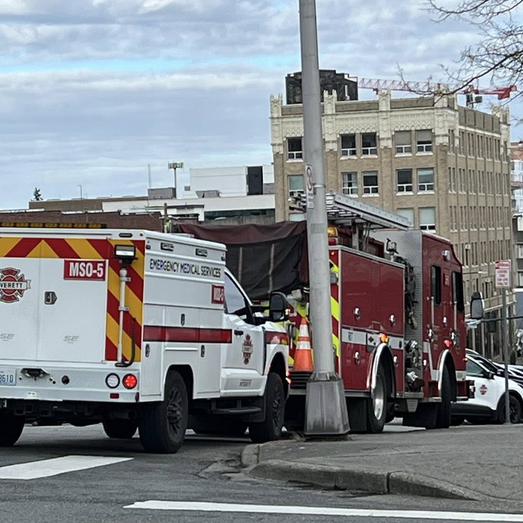
According to Everett Fire Department accounts reported in public records, the incident occurred around 11:55 a.m. in a second-floor courtroom at the Snohomish County Courthouse in Everett, Washington. An evidence envelope that initially had been described as containing a scale was handled and opened. The scale later tested positive for fentanyl residue, although officials have not said why it was produced in court in that manner.
After a courthouse participant reported seeing a small amount of powder, fire officials initiated a hazmat response. Nearly two dozen people in the courtroom, including court staff, attorneys, and others present for the hearing, were moved to the building’s fourth floor for medical evaluation while the room itself was closed off.
Rachael Doniger, a spokesperson for the Everett Fire Department, said one person believed they saw material fall from the scale. “One person thought that they saw a small powder that kind of came off the scale,” she said. Medical teams checked vital signs, monitored breathing, and watched for any signs of overdose, including loss of consciousness or difficulty breathing.
Despite the alarm, responders did not identify any apparent exposure-related illness. “No one showed any symptoms or was taken to the hospital,” Doniger said, and everyone who had been evaluated was allowed to leave. The Snohomish County Sheriff’s Office shut down the second-floor courtroom while a specialized hazmat team decontaminated and secured the area. Officials have said the exact amount of fentanyl residue is unknown, and there was no visible cloud or obvious airborne release.
Evidence Handling Under Scrutiny After Courtroom Scare
In the wake of the evacuation, the decision to bring the scale itself into the courtroom has drawn scrutiny from former prosecutors. Mark Lindquist, a former Pierce County elected prosecutor and former trial chief of the county’s drug unit, said in interviews that the situation was unlike anything he had encountered in his own work. “Either somebody dropped the ball here or a rule needs to be changed,” he said.
Lindquist noted that trial lawyers often rely on photographs of drugs or paraphernalia instead of the actual items, both to reduce risk and to simplify courtroom logistics. “This is the first time I’ve ever heard of a courtroom being cleared because of potential exposure to drugs,” he said. “And it highlights why prosecutors use pictures rather than the actual drug.”
In many criminal cases, evidence containing controlled substances is stored in secure property rooms and is only briefly handled in court, often by law enforcement witnesses wearing protective gear. The Snohomish County incident highlights how even small deviations from routine practices, such as opening packaging that contains an item with residue, can trigger a large-scale response when fentanyl is involved.
Public reporting indicates that it remains unclear who requested that the envelope be opened, whether any advance risk assessment was completed, and what instructions, if any, were given to staff about handling the scale. Court officials have not publicly explained whether written protocols governed how drug-related evidence should be presented to the jury or judge in the underlying case.
In available accounts of the incident, news outlets did not specify whether any jurors were in the courtroom at the time, or whether the proceedings were paused or continued later in a different room. That leaves unanswered questions about how the scare affected the people whose cases were being heard that day.
Court Leadership Promises Review, but Details Are Limited
In a written statement provided after the evacuation, Snohomish County Superior Court acknowledged that the episode had prompted an internal review. “We take all matters impacting staff and court users very seriously, especially with regard to the spaces in which the public frequently occupies,” the court said. “We are committed to taking all steps necessary to make sure events like this don’t happen again, including examining policies and procedures and working collaboratively with stakeholders.”
The court did not specify what changes are under consideration, what timeframe governs the review, or whether any outside agencies will be asked to examine the response. Potential areas include how evidence is packaged and transported, when physical items may be displayed in court instead of photographs, and who has the authority to halt proceedings when a health concern arises.
Beyond the specifics of this case, the event underscores how fentanyl has reshaped safety planning for justice system workplaces. Drug evidence that might once have been treated as routine now prompts questions about ventilation, personal protective equipment, and training for clerks, deputies, judges, and attorneys who are not first responders but nonetheless work near seized contraband.
So far, officials have not publicly accused any individual of violating policy or breaking the law in connection with the incident. The emphasis instead has been on understanding the chain of decisions that led to an opened evidence envelope in a crowded courtroom, and on reducing the likelihood that a similar scare will interrupt future trials.
As Snohomish County’s review continues, the basic facts remain straightforward: a scale with fentanyl residue was opened in court, no one became ill, and the room was cleared anyway. The harder question is what new safeguards, if any, will emerge to ensure that crucial evidence can be presented without sending everyone out of the room.