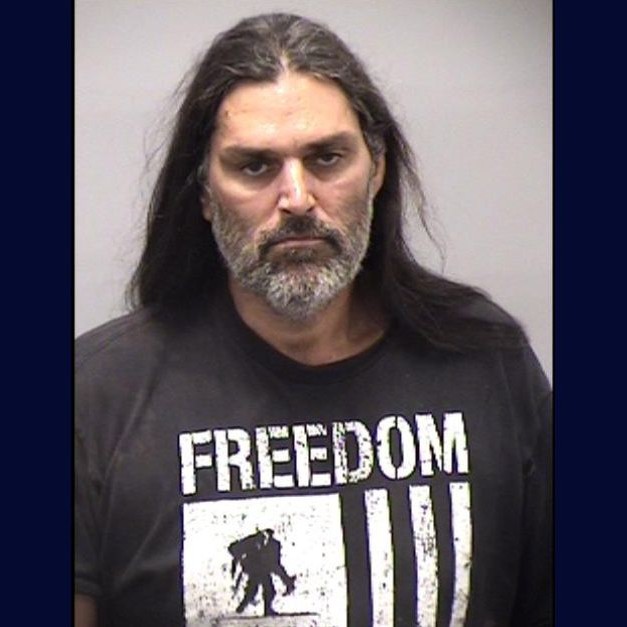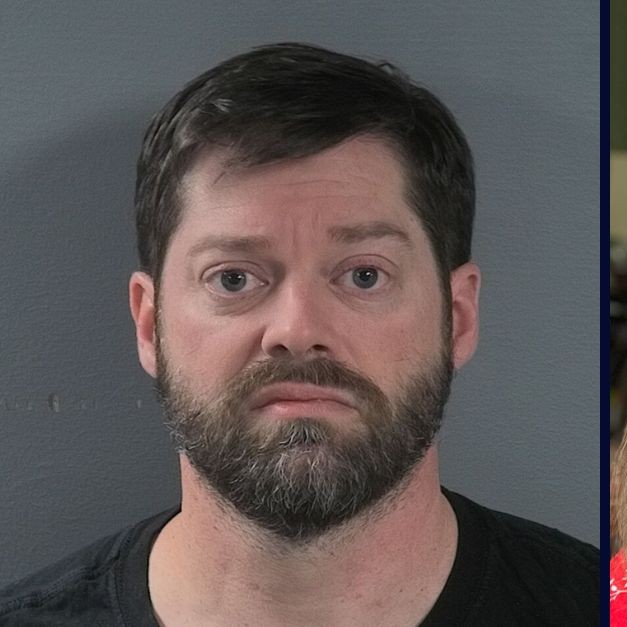



New Jersey businessman Paul Caneiro was convicted of murdering his younger brother, his sister-in-law, and their two children in 2018, then setting fires at two homes, a verdict that resolves one central question while leaving defense claims about alternative suspects and investigative gaps in dispute.
TLDR
A Monmouth County jury found Paul Caneiro guilty of four counts of murder, aggravated arson, and weapons offenses in the 2018 killings of his brother’s family in Colts Neck, New Jersey. Prosecutors said a failing business relationship was the motive. He faces a potential life term at sentencing on May 12th.
According to the Associated Press, “New Jersey tech boss Paul Caneiro was found guilty Friday of killing his brother and his brother’s family before setting their home on fire.” The jury reached its decision after roughly five hours of deliberation in Monmouth County Superior Court.
JUST IN: Jury reaches verdict in Paul Caneiro quadruple murder trial.#News12 #NewJersey #PaulCaneiro #QuadrupleMurder #JuryVerdict #Court #TrueCrime #News #LocalNewshttps://t.co/MnSs7oma0l pic.twitter.com/mwiUDBPxlB
— News12NJ (@News12NJ) February 13, 2026
The case involved the deaths of Keith Caneiro, 50, his wife, Jennifer, 45, and their two children at the family’s large home in Colts Neck, a community in Monmouth County. The killings took place in 2018, with prosecutors arguing that a business dispute between the brothers escalated into lethal violence.
Keith and Paul were partners in a technology firm, Square One, based in Asbury Park. Prosecutors said mounting financial tensions inside that company, and across related ventures, formed the backdrop for the homicides, while defense attorneys insisted that the investigation narrowed too quickly on Paul and failed to meaningfully explore other leads.
Family, Business, and the 2018 Killings
The killings occurred in November 2018 at the Colts Neck mansion where Keith and Jennifer lived with their children. Fire crews responded to a blaze at the home and discovered Keith’s body outside the house, while the bodies of Jennifer and the children were found inside.
From the outset, investigators treated the scene as both a homicide and arson investigation. According to reporting from the Asbury Park Press and NJ.com, authorities ultimately alleged that Paul attacked the family at night while they slept, then used fire to obscure the cause of death and destroy potential evidence inside the home.
The business relationship between the brothers and their roles at Square One quickly became central. Prosecutors contended that Keith had uncovered financial misconduct involving Paul, including alleged theft from company accounts and from Keith personally. According to prosecutors’ theory, that discovery threatened Paul’s income and standing, and they argued that this provided a motive for the killings.
The defense did not contest that the family had been killed or that the house had been set on fire. Instead, defense attorneys worked to distance Paul from the crime, arguing that the state lacked direct physical evidence tying him to the scene at the time of the killings and that financial tensions alone did not prove he was responsible.
Competing Narratives Inside the Courtroom
At trial, prosecutors portrayed the events as deliberate and planned. They argued that Paul, then 59 years old, had the motive, means, and opportunity to attack his brother’s family and to stage a broader threat to both households. The jury ultimately agreed, convicting him on four counts of murder, two counts of aggravated arson, and two weapons charges.
Prosecutors told jurors that the killings were not an impulsive act but a targeted response to what they described as a collapsing business partnership. They framed Paul as a partner under scrutiny, whose alleged financial misconduct had been discovered by Keith, and who then chose to eliminate his brother and his brother’s immediate family.
Defense attorneys countered that investigators built their case on assumptions about motive and patched together circumstantial evidence. They argued that police did not seriously investigate anyone else, including a third Caneiro brother, and that they overlooked other people who might have had access to the Colts Neck property.
According to AP and local reporting, defense lawyers highlighted witness accounts that two unidentified individuals were seen near the Colts Neck home shortly before emergency crews arrived. They suggested that these individuals, not Paul, could have been involved in the killings, and they criticized investigators for not adequately pursuing those leads.
The prosecution’s position was that those alternative narratives did not fit the timeline, financial records, and patterns of conduct they presented to the jury. In the end, jurors sided with the state’s reconstruction of events, although the details of their deliberations have not been made public.
The Fires Prosecutors Called a Cover Story
Central to the prosecution’s narrative were two fires on the same day. One was the mansion fire in Colts Neck, where the bodies were found. The other was a fire at Paul’s own home in Ocean Township, also in Monmouth County.
Authorities said Paul used gasoline to start the Ocean Township fire while his wife and two daughters were inside the house. No one was injured there. That second fire was not framed as an attempt to harm his immediate family but as part of a greater effort, according to prosecutors, to make the violence appear to be a wide-ranging attack on both brothers and their households.
Prosecutors argued that by setting his own home ablaze after the Colt Neck killings, Paul tried to cast himself as a fellow target rather than a perpetrator. They told jurors that this was intended to create confusion for investigators and to shift suspicion away from him during the early hours of the inquiry.
Defense counsel responded by stressing that the state’s account of the fires depended heavily on inference and motive. They argued that investigators worked backward from the assumption that Paul set both fires, rather than allowing the physical evidence and witness statements to guide them to all possible suspects.
What is not in dispute is that the Ocean Township fire did not claim any lives, while the Colts Neck fire was intertwined with the discovery of four homicide victims. The jury’s verdict signals that they accepted the prosecution’s view that the two fires were connected parts of a single criminal plan.
Verdict, Sentencing, and Possible Appeal
The Monmouth County jury deliberated for about five hours before finding Paul Caneiro guilty on every major count presented to them. The convictions include four counts of murder for the deaths of Keith, Jennifer, and the couple’s two children, along with two counts of aggravated arson and two weapons offenses.
New Jersey does not have the death penalty, so the most severe punishment available is a life term in prison. According to AP, Paul now faces a potential life sentence when he is formally sentenced on May 12th. The specific structure of that sentence, including whether any terms run consecutively, will be determined by the trial judge.
Sentencing in New Jersey homicide cases typically involves consideration of aggravating and mitigating factors. In a case involving multiple victims and deliberate use of arson, prosecutors are likely to argue that the aggravating factors, such as the number of victims and the alleged planning involved, outweigh any mitigating circumstances presented by the defense.
Defense attorneys have not publicly detailed their post-verdict strategy, but in a case with this level of potential punishment, appeals are expected. Any appeal would likely revisit the issues they raised at trial, including the scope of the investigation, the handling of alleged alternative suspects, and the trial court’s rulings on evidence and testimony.
For the victims’ relatives and the broader community, the jury’s decision provides a legal resolution to the question of who is responsible for the killings and the fires. Yet, as with many complex homicide cases, the defense’s claims about investigative blind spots and the precise sequence of events in November 2018 may continue to be examined in appellate filings and, potentially, in future hearings.
What is clear from the verdict is that jurors accepted prosecutors’ account that business and family ties, once shared between the Caneiro brothers, had deteriorated into a motive for murder. What remains uncertain is how appellate courts will view the investigation and trial record, and whether the conviction and eventual sentence will withstand that next round of legal scrutiny.