Prosecutors in St. Louis have charged a 58-year-old man with first-degree murder in the killing of figure skating coach Gabrielle Sam Linehan at a Starbucks drive-thru, but how the alleged earlier robberies were handled remains an open question for investigators and the courts.
TLDR
Prosecutors in St. Louis have charged Keith Lamon Brown with first-degree murder, robbery, armed criminal action, and unlawful firearm possession in the killing of skating coach Gabrielle Sam Linehan at a Starbucks drive-thru, while investigators examine possible links to additional recent robberies.
What Police Say Happened at the Drive-Thru
Linehan, a 28-year-old former Team USA synchronized skater who later coached at the Metro Edge Skating Club, was shot while waiting in her car at a Starbucks drive thru in the city’s Tower Grove East neighborhood on a weekday morning. According to a probable cause statement cited by the New York Post and reporting by Fox News Digital, the shooting occurred shortly after 10 a.m.
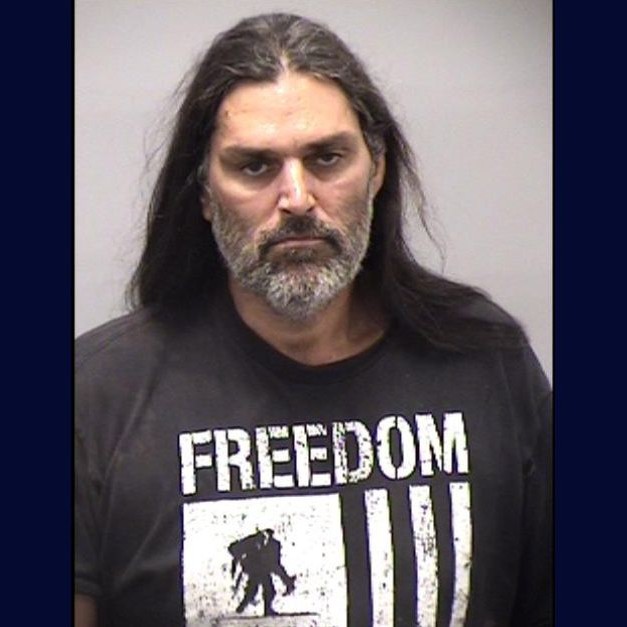
Police have identified the suspect as Keith Lamon Brown, a 58-year-old St. Louis resident. Authorities allege that Brown approached Linehan’s vehicle while wearing a high-visibility vest and helmet, then opened fire during what investigators describe as an attempted robbery. Law enforcement officials say several of Linehan’s bank cards and her driver’s license were taken before the suspect left the scene.
Linehan was transported from the drive-thru to a nearby hospital, where she was pronounced dead, according to the New York Post, which reviewed the probable cause statement. She had been a visible figure in the local skating community, working with young athletes in St. Louis after competing at the national and international level in synchronized skating.
The St. Louis Metropolitan Police Department later announced that an arrest had been made in the case. In a statement posted on X, formerly Twitter, the department said, “Intelligence detectives have taken a 58-year-old man into custody in connection to the homicide on S. Grand,” and added that the man was armed at the time of his arrest. Police also noted that a SWAT team executed a search warrant at the suspect’s home and that homicide detectives found evidence linked to two prior robberies.
The Charges and What They Mean
According to court documents obtained by Fox News Digital, prosecutors have charged Brown with first-degree murder, three counts of first-degree robbery, four counts of armed criminal action, and one count of unlawful possession of a firearm. He is being held without bond at the St. Louis City Justice Center pending further court proceedings.
Under Missouri law, first-degree murder generally covers intentional killings carried out after deliberation, as well as certain killings that occur during specified felonies. Charging documents in high-profile cases often include both intentional and felony-related theories of liability, though the precise theory in Linehan’s case has not been publicly detailed beyond the allegation that the shooting occurred during an attempted robbery.
The armed criminal action counts reflect prosecutors’ allegation that Brown used a firearm while committing the charged robberies and the homicide. The unlawful possession of a firearm charge indicates that, under state law, Brown was legally barred from having a gun at all. Authorities have not publicly outlined the full basis for that disability, but Fox-affiliated station FOX 2 reported that his criminal record extends back to the mid-1980s.
Being held without bond means Brown remains in custody while the case moves forward. In Missouri, judges may order detention without bond in serious felony cases if they determine that no conditions of release would adequately protect the community or ensure a defendant’s appearance in court. Brown has not been convicted in this case, and he is presumed innocent unless and until prosecutors prove the charges beyond a reasonable doubt.
A Suspect With a Long Record
Authorities say Linehan’s killing did not occur in isolation. According to FOX 2 and Fox News Digital, Brown was also wanted in connection with two other armed robberies in the days leading up to the Starbucks shooting. Police allege that evidence recovered during the SWAT search of his home is linked to those earlier incidents.
Investigators have not publicly detailed the specific businesses or victims involved in the earlier robberies, nor have they said when, exactly, Brown became a suspect in those cases. The police statement citing “evidence from two prior robberies” suggests that detectives are now examining whether the same person was responsible for a short series of robberies, culminating in Linehan’s killing at the drive-thru.
FOX 2 has reported that Brown’s criminal history dates back to the mid-1980s. Public records for defendants with long arrest or conviction histories can include a wide range of offenses over decades, combined with periods of incarceration and supervision. At this stage, however, officials have not released a full chronology of Brown’s prior convictions or sentences, and it remains unclear what his legal status was at the time of the alleged robberies and shooting.
The emerging outline leaves key accountability questions unresolved. When did investigators first connect the earlier robberies to a single suspect? Were there specific leads or patterns that pointed to the same person before the Starbucks killing? Those questions, which turn on timelines and internal decision-making, are likely to be explored in future court filings or public statements but have not yet been fully addressed in the available records.
Community Loss and Next Steps in the Case
For the skating community in St. Louis and beyond, the legal details exist alongside a substantial personal loss. Linehan, who once skated for Team USA in synchronized competition, had become a coach and mentor at the Metro Edge Skating Club. She worked with youth skaters and competitive athletes, traveling to practices, competitions, and shows.
In a public tribute on social media, Metro Edge described Linehan as “a cherished skater, coach, mentor, and friend” whose impact extended far beyond competition results. The club said she had been a central presence at the rink, shaping how younger skaters thought about discipline, teamwork, and resilience.
“A dedicated leader, Coach Sam devoted time and heart to supporting and developing skaters while instilling the values of discipline, teamwork, integrity, and resilience,” the club wrote, reflecting on her role in the community.
Those tributes underscore how frequently violent crime intersects with public spaces. In this case, the alleged robbery and fatal shooting took place in a coffee shop drive-thru on a weekday morning, not far from homes and businesses. For Linehan’s family, colleagues, and students, the path forward now runs through the criminal courts, where they may have opportunities to attend hearings, deliver impact statements if there is a conviction, and follow any appeal.
Procedurally, Brown is expected to face an initial appearance and, if he has not already, a formal arraignment where the charges are read and a plea is entered. Prosecutors will be required to turn over investigative materials to the defense through discovery, and defense counsel can file motions challenging the admissibility of evidence, the sufficiency of the charging documents, or aspects of police conduct.
If the case proceeds toward trial, additional information about the investigation, Brown’s alleged role in the earlier robberies, and the precise sequence of events at the Starbucks drive-thru is likely to emerge through testimony and exhibits. If there is a plea agreement instead, court records may still outline key facts that both sides accept as part of the resolution. For now, Linehan’s killing sits at the intersection of an ongoing homicide prosecution, an alleged robbery pattern, and a long but only partially described criminal history, leaving open how each of those threads will be examined under oath in the months ahead.