

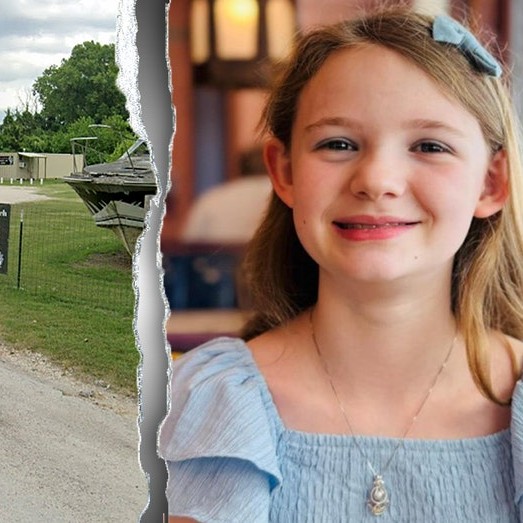
The parents of 12-year-old Dylan Harrison, who died during an open water scuba certification class in Texas, allege in a new lawsuit that their daughter remained alive underwater for several minutes while no one realized she was missing, and that industry and instructor failures made her death preventable.
The 40-page civil complaint, filed by Dylan’s parents in Texas, names a local dive shop, a scuba training lake, and two major international training agencies as defendants. According to Fox News Digital and FOX 4, the lawsuit centers on what happened during a class at the Scuba Ranch in Terrell on August 16th, 2025, and on what the family says are long-standing safety issues in recreational dive training.
What the Lawsuit Alleges About the Fatal Dive
According to reporting by FOX 4 and Fox News Digital, Dylan’s parents purchased what they understood to be a private open water certification course from Scubatoys, a dive shop in the Dallas area. When the family arrived at the Scuba Ranch, a training lake near Terrell, they were told Dylan would instead join a group class with seven students.
The complaint states that a divemaster reassured Dylan’s parents before the dive, allegedly telling them, “I will not take my eyes off your daughter.” The lawsuit claims that this promise was not kept once the group entered the water.
At the time, William Armstrong, an assistant chief deputy at the Collin County Sheriff’s Office, was also working part time as a scuba instructor. According to FOX 4’s account of the lawsuit, Armstrong had worked a full day as a deputy, then an overnight security shift, before teaching the class at the lake.
The lawsuit alleges that as Dylan and her 12-year-old dive buddy entered the water, Armstrong failed to confirm that Dylan was properly weighted for the dive. In scuba diving, weight checks are a basic step meant to ensure that divers can control their buoyancy and safely reach and leave the surface.
Dylan was reportedly last seen when the class initially descended at 9:36 a.m. According to the complaint, the class resurfaced at 10:12 a.m. after what the lawsuit describes as a miscommunication with another student. At that point, the filing alleges, Dylan was missing.
A Timeline Under Scrutiny Underwater
How long Dylan remained alive underwater, and how quickly others responded, are central disputes in the family’s case.
The lawsuit, as described by Fox News Digital, states that emergency services were not called to the scene until about 15 minutes after Dylan was discovered missing. The filing argues that this delay, combined with earlier alleged lapses in supervision, contributed to her death.
Attorneys for the family cite the remaining air in Dylan’s scuba tank as key evidence. In the complaint, quoted by Fox News Digital, the lawyers assert that the amount of air consumed indicates she lived for several minutes after she was last seen by the group.
“Based on the amount of air left in [Dylan’s] scuba tank on the surface before she went missing and the amount of air left in the tank when she was found, it can be surmised that [she] was alive and breathing off her tank for several minutes after she was last seen. During this time, [Dylan] was alone, in poor visibility, and unable to reach the surface,” the lawsuit states, according to Fox News Digital.
Public investigative findings about the incident have not been detailed in the coverage from Fox News Digital or FOX 4. The lawsuit does not, at least in those reports, include an official medical estimate of Dylan’s time of death, and the defendants will have the opportunity to challenge the family’s interpretation of the tank data in court.
Fox News Digital reported that after Dylan’s death, Armstrong resigned from his position at the Collin County Sheriff’s Office. The outlet also reported that it was unable to immediately identify an attorney representing Armstrong.
Alleged Pattern of Safety Concerns
Beyond the circumstances of the single class, the Harrisons’ complaint attempts to frame Dylan’s death as part of broader, preventable safety problems in the scuba training business.
A wrongful-death lawsuit has been filed over the fatal scuba training dive of 12-year-old Dylan Harrison in Texas.
The claim alleges preventable failures, instructor negligence, and systemic safety issues within dive training. The case builds on earlier eyewitness accounts and… pic.twitter.com/Wlg9QkpOuU
— The Scuba News (@TheScubaNews) February 3, 2026
The lawsuit, as summarized by Fox News Digital, alleges that Dylan’s death was the result of “multiple failures” by Scubatoys, the Scuba Ranch, and the training agencies involved, identified in coverage as NAUI and PADI. The filing claims that industry players had, for years, been aware of serious safety concerns, yet did not adequately change practices or enforce standards.
According to the reporting, the complaint highlights a 2017 staff meeting at Scubatoys in which the shop’s owner, Joe Johnson, allegedly made comments about prior deaths connected to the business. The video is not quoted in full in the public reporting, but the lawsuit, as described by Fox News Digital, attributes stark language to Johnson.
“All I know is we have killed, what? 4 people? 5 people? And we have never even done a deposition,” Johnson is quoted as saying in the video. “Our insurance company just settles. John Witherspoon says we can kill two people a year and we are fine.”
The lawsuit cites this video as evidence that management treated deaths as an acceptable cost of doing business, and that, in the plaintiffs’ view, safety concerns were not taken seriously enough.
The reporting by Fox News Digital notes that Johnson’s remarks, as described in the lawsuit, have not yet been tested in court. It is not clear from those accounts whether the full recording has been provided to regulators or made publicly available beyond the lawsuit filings.
How Scuba Training Is Supposed to Work
Recreational scuba classes in the United States are typically offered by private shops or independent instructors who affiliate with training agencies such as NAUI or PADI. Those agencies establish standards for student-to-instructor ratios, required skills, and emergency procedures, while day-to-day oversight is often left to the instructor and shop.
In open water training, instructors are expected to monitor students closely, perform pre-dive safety checks, and confirm that each diver is properly weighted and equipped before descent. Training materials from major agencies emphasize the need for continuous head counts, buddy systems, and clear communication before, during, and after dives.
According to the lawsuit, as reported by FOX 4, Dylan’s parents believed they were paying for a private class that would provide closer supervision than a standard group session. The complaint alleges that instead, Dylan was placed in a larger group without sufficient individual monitoring, in conditions the filing describes as having poor visibility.
The Harrisons’ attorneys argue that the training agencies named in the lawsuit, not only the local shop and lake facility, bear responsibility because they certify instructors, authorize shops to use their brand, and set the curricula and standards under which classes are marketed to families.
None of the defendants’ written responses to these claims have been made public in the reporting by Fox News Digital or FOX 4. The lawsuit’s allegations remain unproven, and the agencies, shop, and individuals identified in the complaint will be able to contest both the facts and the legal theories.
Silence From Defendants, and the Road Ahead
Fox News Digital reported that Scubatoys, NAUI, PADI, the Scuba Ranch, and the Harrison family’s attorney did not respond to requests for comment at the time of its story. The outlet also reported that it could not immediately locate an attorney for Armstrong.
That means the public record, so far, is dominated by the family’s account and by passages from their lawsuit, rather than by a detailed explanation from the dive shop, the training agencies, or the instructor about what they say happened underwater on August 16th, 2025.
Procedurally, the defendants are expected to file formal answers to the complaint in court, which may include denials of liability, alternative timelines of events, or arguments that other parties bear responsibility for Dylan’s death. The case could proceed through discovery, where internal documents and training records might be requested, or could be resolved earlier if a judge dismisses some claims or if the parties reach a settlement.
Until those filings are made and any evidence is presented in court, central questions remain open, including how closely Dylan was being watched once she entered the water, how quickly instructors and staff realized something was wrong, and whether a judge or jury will agree that the failures described in the lawsuit rise to the level of legal liability for her death.