Get curious. Get excited. Get true news about crimes and punishments around the world. Get Gotham Daily free. Sign up now.
How A Venezuelan Prison Gang Reached An Aurora Neighborhood
Jan 11, 2026
0
Share:
By the time heavily armed men appeared on surveillance video pacing the hallway of a Colorado apartment building, pointing rifles and kicking at doors, local police were dealing with something that had not started in Aurora at all. It began inside a Venezuelan prison that was supposed to be under state control.
That prison is Tocoron, in north central Venezuela. The gang is Tren de Aragua, which U.S. officials now describe as a transnational criminal organization and, according to U.S. authorities, a designated foreign terrorist organization. How a group that grew inside one facility came to be blamed for terrorizing tenants in a mid-sized American city shows both the reach of organized crime and the cost of delayed state action.
From Tocoron To A National Power Base
Tocoron prison sits in the Venezuelan state of Aragua. For years, journalists and researchers documented how it operated less like a conventional correctional facility and more like a semi-autonomous enclave, with areas that resembled a private compound more than a secure jail. The Associated Press described swimming pools, a nightclub and even a small zoo inside the complex, amenities that were controlled by inmates rather than guards, in coverage of a major raid there in 2023, citing Venezuelan officials and people who had been inside the prison (Associated Press).
According to Fox News reporting, the prison effectively fell under inmate control during the presidency of Nicolas Maduro, with organized extortion and kidnapping operations allegedly directed from inside Tocoron itself (Fox News). After Maduro won election in 2013, a convicted killer named Hector “Nino” Guerrero returned to serve more time there. From inside, he expanded an emerging group into what became known as Tren de Aragua.
David Pyrooz, a criminologist at the University of Colorado Boulder who studies gangs and prisons, told Fox News Digital that economic crisis and weak state control can make prisons incubators for powerful organizations. “When a country undergoes a sort of economic whiplash or a sort of economic negative indicator, it can lead groups to come together,” he said. He added that competition over contraband and informal markets behind bars can help those groups consolidate power.
Within Tocoron, inmates were reported to pay regular dues to gang leaders. Fox News, citing local monitoring groups, reported that internal payments from prisoners alone generated millions of dollars annually for Tren de Aragua, with additional funds coming from crimes committed outside the walls. Venezuelan civil society researchers, including the Venezuelan Observatory of Violence, have described similar patterns of prison-based criminal economies that spill into surrounding communities (Observatorio Venezolano de Violencia).
A Gang That Outgrew Its Prison Walls
For years, Venezuelan authorities did not mount a full-scale effort to retake Tocoron. That changed in 2023, when the government deployed roughly 11,000 security personnel to storm the facility, according to the interior ministry and independent reporting cited by the Associated Press. Officials presented the raid as an attempt to restore state control and dismantle the prison-based operations of Tren de Aragua (Associated Press).
By that point, however, the group had already expanded beyond Tocoron. The Venezuelan Observatory of Violence estimated that Tren de Aragua had thousands of members and a presence in nearly half of Venezuela’s states by the time of the 2023 operation, a figure also referenced in Fox News’ account of the raid and its aftermath.
Critically, Guerrero did not remain in custody. Venezuelan officials acknowledged that he escaped during the period when troops moved to retake Tocoron. Fox News, citing police sources and U.S. court records, reports that he is now considered the fugitive leader of a transnational organization with activity across South America and into the United States (Fox News).
“The fact that it was a leader, there’s no coincidence behind that,” Pyrooz told Fox. “So it does say a lot that there could be some sort of internal strife or corruption that would lead to that sort of escape.” His assessment is consistent with broader research on so-called “prison-bred” gangs that have grown when correctional authorities relinquish day-to-day control to inmate leaders.
By 2024, U.S. authorities had publicly tied Tren de Aragua to criminal activity north of the border. The U.S. government added alleged senior figures to federal wanted lists, including the FBI’s Most Wanted fugitives page, describing them as leaders of a violent transnational organization involved in extortion, drug trafficking and human smuggling (FBI Ten Most Wanted). U.S. officials also announced sanctions and terrorism-related designations against the group and its leadership, as reflected on the State Department’s foreign terrorist organization list (U.S. State Department).
Aurora Apartment Buildings Under Siege
In Aurora, Colorado, the abstract notion of a Venezuelan prison gang became a concrete neighborhood problem. According to local police reports and interviews compiled by Fox News, suspected Tren de Aragua members moved into several apartment complexes in 2023 and 2024, in some cases allegedly taking over units that did not belong to them and using intimidation to retain control.
One property management company told Denver television station FOX31 that a representative who found a group living in a vacant unit at the Whispering Pines complex in 2023 was attacked after refusing a cash offer to ignore the trespass. The company said the employee later received online threats that included his home address and his spouse’s name, and that federal investigators linked the threats to suspected Tren de Aragua members, according to FOX31 and Fox News Digital (Fox News).
“I think they were trying to kill me. I do not know how I got out, but I got out,” that employee said in an on-camera interview with FOX31. The management company posted a photograph of his injuries on X and accused gang members of the assault.
Aurora terrorized by Venezuelan gang as dictator Maduro let Tren de Aragua seize power https://t.co/xscMg4XAW4#FoxNews
Aurora, Colorado is the heart of congressman Jason Crow’s district. You know the guy who is constantly mugging for the cameras telling us he is a veteran.… pic.twitter.com/zHDFfnm3m7
Surveillance footage from another complex, The Edge at Lowry, showed a group of heavily armed individuals moving through corridors with rifles and tactical gear, according to Aurora police and Fox News reporting. In a separate incident, a property manager was assaulted at yet another building in November 2023. A police report obtained by Denver7 identified the alleged assailant as a known Tren de Aragua member.
One tenant reportedly returned from vacation to find that suspected members had occupied their apartment, forcing them to relocate. In response to escalating reports of violence and intimidation, a Colorado judge ordered at least one Aurora complex temporarily closed, citing an “immediate threat to public safety,” while city officials helped dozens of families relocate so they would not be further victimized.
Aurora Police Chief Todd Chamberlain described a pattern of predation not only against the general public but particularly against other Venezuelan migrants. “The gang specifically targeted its own community, Venezuelan immigrants, through violence, intimidation, extortion and even kidnapping,” he said at a news conference, according to Fox News. He added that the complex “became a hub for drug trafficking, home invasions, shootings and violent assaults.”
Federal Cases And Unresolved Responsibilities
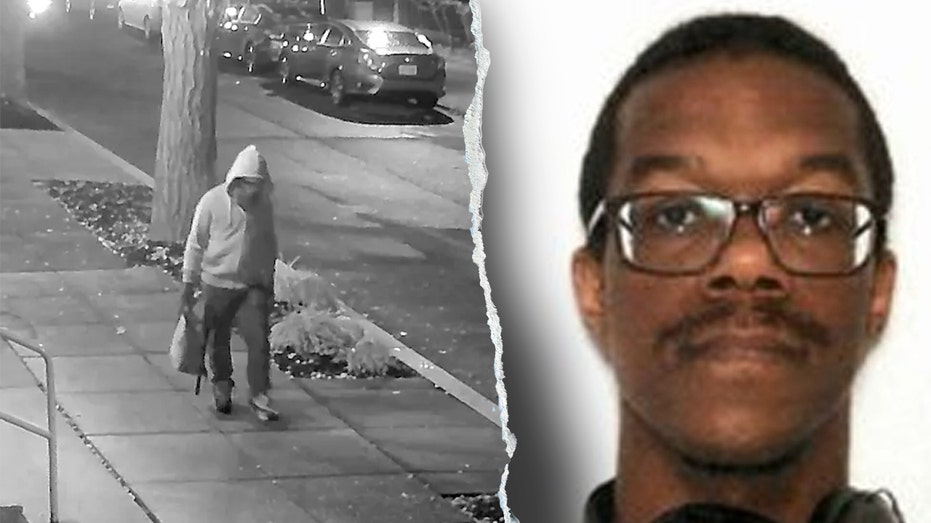
Federal agencies have since moved to bring high-profile cases. U.S. Immigration and Customs Enforcement announced the arrest of Anderson Zambrano-Pacheco in New York City, identifying him as a Venezuelan national and alleging that he was one of the heavily armed men seen in Aurora apartment surveillance video. At the time of reporting, those allegations had not been tested in court, and Zambrano-Pacheco was presumed innocent unless and until proven guilty.
In late 2024 and 2025, federal prosecutors in Colorado and New York unsealed indictments alleging that Tren de Aragua leaders ran racketeering and violent crime conspiracies that extended into U.S. cities. According to Fox News, two men identified as Brawins Dominique Suarez Villegas and Giovanni Vicente Mosquera Serrano were charged by a Colorado grand jury with a Racketeer Influenced and Corrupt Organization (RICO) conspiracy and related offenses tied to activity in Aurora. In New York, prosecutors charged Guerrero himself in a separate case related to his alleged role directing the gang’s broader operations.
The Department of Justice has grouped Tren de Aragua cases with other transnational gang prosecutions, describing its strategy as using racketeering, conspiracy and terrorism-related statutes to disrupt leadership and financial flows (U.S. Department of Justice). At the same time, investigators and researchers who spoke to Fox emphasized that enforcement in the United States addresses only one part of a problem that began in a foreign prison system.
Pyrooz told Fox News Digital that a key lesson from both U.S. and international experience is the importance of maintaining real state authority inside prisons. “If you let gangs take control of these institutions, it could be related to more of an abject failure of the state to either support the conditions of confinement,” he said. He also pointed to the need for effective correctional governance, “to stamp out these conflicts before groups can rise to power.”
Local officials in Aurora have said that aggressive policing, targeted operations and federal coordination have reduced visible Tren de Aragua activity in the city. “It has quieted down a lot in 2025,” Pyrooz told Fox, adding that it appeared enforcement actions had corresponded with a decline in the group’s influence in that specific area.
What remains unresolved is how durable those gains will be, and how much responsibility sits with the Venezuelan state that allowed Tocoron to become effectively self-governed for years. Guerrero, the man who rose from prisoner to alleged gang boss, remains at large according to U.S. and Venezuelan authorities. Whether his eventual arrest, if it occurs, will significantly weaken Tren de Aragua, or whether the gang has already outgrown any one leader, is a question U.S. and Venezuelan institutions have not yet fully answered.