

The bus was full of third graders headed home from a class trip when a rock came through the window, struck a child in the head, and left her with a fractured skull. Within days, police said a man camping in a nearby county park had confessed, but they also said they had no evidence of bias or a clear motive.
What Police Say Happened On The Turnpike
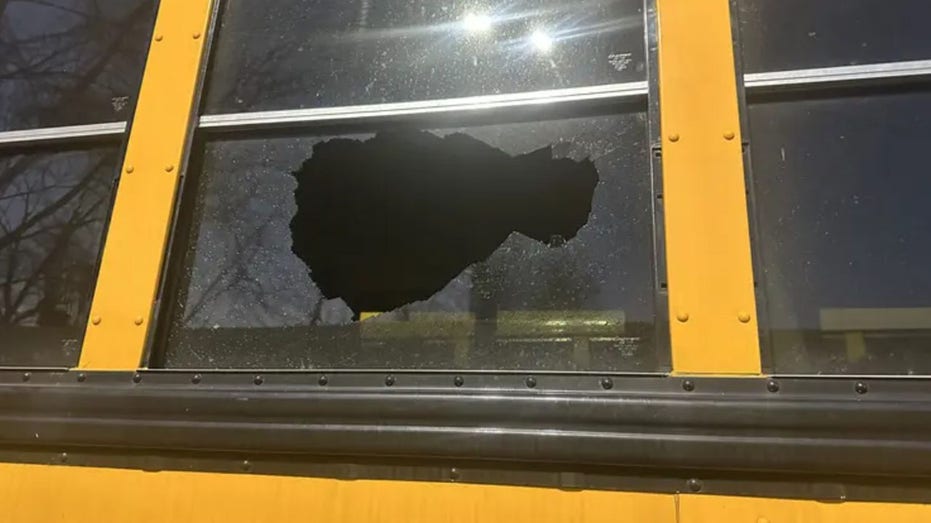
According to reporting by Fox News Digital, which cited the New Jersey State Police, a group of third-grade students from Yeshivat Noam, a Jewish day school in Paramus, was traveling north on the New Jersey Turnpike after a trip to the Liberty Science Center when a large rock broke through a school bus window and struck a girl in the head.[1]
The child, a student at the school, sustained a skull fracture. Teaneck Mayor Mark J. Schwartz told the New York Post that the student underwent surgery and survived. He said, “The girl will be OK. She did have surgery Thursday for a fractured skull, and she is recovering.” That quote has been widely repeated in coverage of the case.
New Jersey State Police described the event as a motor vehicle incident on the northbound Turnpike. Publicly available reporting has not included a detailed narrative of the minutes before the rock hit the bus, such as how close the suspect allegedly was to the road or how many vehicles may have been targeted.
What is clear from the charging language and public statements is that investigators are treating the case as a serious violent crime against a child, not as a minor act of vandalism involving passing traffic.
A Suspect, A Confession, But Few Public Details
The person identified by police as a suspect is 40-year-old Hernando Garciamorales of Palisades Park, New Jersey. Fox News Digital reported that state police said Garciamorales was arrested at a campsite in Old Croaker County Park in Bergen County, then booked into the Bergen County Jail to await a court appearance.[1]
✡️ CAUGHT: New Jersey State Police announced Saturday that Hernando Garciamorales, 40, of Palisades Park, was arrested in connection with a rock throwing attack on school bus carrying students to Yeshivat Noam. An 8-year-old Jewish girl was severely injured by the rock.
– Sol… pic.twitter.com/ND3n24ToCO
— Belaaz News (@TheBelaaz) January 11, 2026
Authorities have charged him with multiple offenses, including aggravated assault, possession of a weapon for an unlawful purpose, endangering the welfare of a child, criminal mischief, resisting arrest by flight, and hindering. Those are all criminal charges under New Jersey’s criminal code. For example, aggravated assault in New Jersey can include causing serious bodily injury to another person, and it is typically treated as a felony-level offense under state law.[2]
In a statement to Fox News Digital, Yeshivat Noam said that law enforcement agencies had told the school that Garciamorales had confessed to the Turnpike rock incident that injured their student, as well as several additional rock-throwing incidents in the area.[1] That detail, if accurate, could become significant at trial, since statements characterized as confessions are often central pieces of evidence that may be closely scrutinized by courts and defense attorneys.
At this stage, however, all of those claims remain allegations. Garciamorales is charged, not convicted. The publicly available reporting cited here does not include information about any plea he may have entered, any attorney representing him, or his account of events. Under U.S. law he is presumed innocent unless and until guilt is established in court.
The reports also indicate that investigators have linked him to what they describe as a series of rock-throwing incidents in the area, but they do not detail how many events are under review, whether all involved moving vehicles, or how far back in time the alleged activity might extend.
Community Response And Bias Concerns
Because the children were returning to a Jewish day school, and because many recent incidents of harassment and violence against Jewish institutions have been documented nationally, some community members quickly questioned whether this incident could be bias-motivated. The school itself raised that context when speaking with Fox News Digital.
According to that reporting, law enforcement told the school there was no evidence that the rock attack was motivated by antisemitism or other bias. Fox News wrote that “law enforcement has stated there is no evidence that the incident was bias-related.”[1] No further detail has been made public about how investigators reached that conclusion or what kinds of information they examined to make that assessment.
Rabbi Chaim Hagler, Head of School at Yeshivat Noam, issued a statement through the school that praised the rapid coordination among law enforcement agencies and local leaders. He said, “We are deeply grateful for the swift, coordinated response and outstanding communication among all law enforcement agencies, elected officials, and community organizations involved. Their collaboration underscores the importance of strong partnerships between schools, community leaders, and public safety officials. Our primary focus remains the safety of our children, and we are heartened to see justice being served so efficiently.”
The school’s statement emphasized safety procedures and cooperation, rather than focusing on speculation about motive. That tone mirrors what police have said publicly so far. Officials appear to be keeping the investigation relatively closed to the public while they pursue the criminal case.
Absent a public affidavit or detailed investigative report, the exact reasons prosecutors believe Garciamorales targeted the bus, or vehicles more broadly, remain unclear outside the courtroom and case files.
What The Charges Tell Us About Risk And Harm
While detailed evidence has not been released, the charging decisions themselves provide some insight into how authorities are viewing risk and harm in this case.
Aggravated assault and endangering the welfare of a child are among the most serious allegations. Those counts suggest prosecutors are focusing on the severity of the girl’s injury and on the vulnerability of school-age children riding a bus. A fractured skull that requires surgery generally meets the legal threshold of serious bodily injury, which can elevate a case from a lower-level assault to aggravated assault in New Jersey.
The charge of possession of a weapon for an unlawful purpose indicates that prosecutors consider the rock itself a weapon in this context. New Jersey law allows everyday objects to be treated as weapons if they are allegedly used to cause or attempt to cause serious injury.
Criminal mischief typically involves damage to property, such as broken windows or damaged vehicles. That count likely corresponds to the physical damage to the bus. Resisting arrest by flight and hindering charges usually involve a person attempting to avoid arrest or obstruct a criminal investigation, though the public accounts here do not describe the specific conduct that led to those counts.
None of this guarantees a conviction. It does, however, suggest that investigators and prosecutors are treating the case as a deliberate act that created serious danger for children, not an accident on a highway.
School Buses, Rocks, And Public Safety
Federal safety officials have long noted that school buses are statistically among the safest ways for children to travel, largely because of strict design standards and professional drivers.[3] Those standards, however, are designed primarily for crashes and rollovers, not deliberate attacks using thrown objects.
Rocks thrown at moving vehicles can pose a deadly risk. Past cases in other states have shown that even relatively small objects, if hurled or dropped at highway speeds, can penetrate windshields or windows and cause catastrophic injuries. In many such incidents, prosecutors have pursued serious felony charges, arguing that those who throw rocks at vehicles know or should know that the behavior can kill or severely injure occupants.
In this New Jersey case, the object appears to have gone through a side window of a school bus rather than a front windshield, but the result was still a grave head injury to a child. The facts as reported highlight a category of risk that is difficult to mitigate with traditional vehicle safety measures alone. Buses can add cameras and revise routes, but they cannot fully protect against heavy objects thrown from outside the vehicle.
Parents and schools reading about an incident like this may ask whether additional security measures are planned, such as more law enforcement patrols along bus routes, revised emergency procedures, or infrastructure changes near highways. As of the latest reporting cited here, officials had not laid out specific long-term prevention steps in public, beyond the law enforcement response that led to an arrest.
What Remains Unanswered
Key facts about this case are still not public. Available reporting does not explain why rocks were allegedly thrown at vehicles, how many incidents investigators are reviewing, or whether any mental health or substance use assessments will play a role in court proceedings.
Law enforcement has stated that there is no evidence of bias, yet they have also acknowledged a pattern of alleged rock-throwing behavior. Until more investigative documents or court records become accessible, outside observers have limited insight into how those two points fit together.
The young student is reported to be recovering after surgery. The person identified by police as responsible awaits his day in court. Between those two individuals lies a series of unanswered questions about motive, prevention, and accountability on a busy New Jersey highway.